

Heating and cooling account for more than half of the typical residential energy bill every season. Selecting the Best Home Thermostat for the Money allows you to maintain ideal indoor comfort while trimming unnecessary utility expenses. In September 2026, home climate options range from basic manual dials to predictive smart controllers that adapt to your family routine.
Many homeowners overpay for complex automation systems they never use while ignoring basic wiring requirements on their walls. You can avoid frustrating installation errors by matching hardware directly to your furnace and air conditioning stages. Upgrading home hardware requires the same systematic comparison found in our guide to household product evaluation.
We examined 6 leading models across top manufacturers like Sensi, Honeywell Home, Amazon and more to determine which devices offer the greatest real-world value. Our research focuses on long-term temperature reliability, wiring flexibility, and energy efficiency. This guide breaks down the essential factors so you can choose the ideal unit for your home.


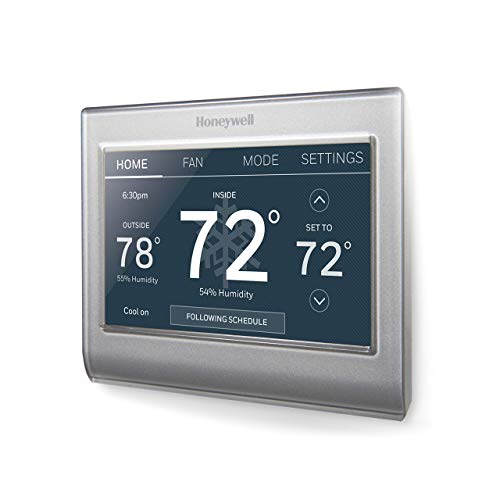

Common Wire and Dedicated Power Delivery
The common wire or C-wire provides continuous twenty-four volt alternating current power to modern digital thermostats. Without a dedicated C-wire, advanced color screens and Wi-Fi radios must rely on battery power or power stealing techniques. Power stealing can occasionally cause furnace relay clicking or unexpected equipment cycling during seasonal transitions.
When evaluating hardware specifications, inspect whether the device includes a power extender kit or requires existing wiring. Units designed without continuous power requirements often run on standard double-A batteries for complete electrical isolation. If your wall only contains two or three wires, factor the cost of an adapter into your budget.
A reliable rule of thumb is to remove your existing faceplate and count the connected conductors before making a purchase. If you find four wires without a blue or black common lead, choose a model with an included adapter kit. This ensures uninterrupted wireless connectivity without requiring expensive professional wire pulling through finished walls.
HVAC System Stage and Fuel Compatibility
Thermostat compatibility depends entirely on the heating and cooling equipment installed in your basement or utility closet. Standard single-stage systems use one heating stage and one cooling stage for baseline temperature adjustments. Multi-stage furnaces, heat pumps with auxiliary heat strips, and dual-fuel configurations require multi-terminal control boards.
Review the product terminal designations carefully to verify support for conventional gas, electric, oil, or hydronic systems. High-voltage baseboard heaters running on one hundred twenty or two hundred forty volts cannot connect to standard low-voltage thermostats. Connecting low-voltage controls to line-voltage baseboards creates an immediate fire hazard and permanently destroys the hardware.
Always verify the number of heating and cooling stages your furnace control board supports before ordering a replacement. Standard single-stage budget units will leave multi-stage blowers unable to engage their efficient low-speed settings. Selecting a compatible controller ensures your furnace operates at its intended efficiency rating throughout the year.
Smart Ecosystem and Wireless Protocol Support
Smart home integration lets you adjust temperatures using voice commands or automated routines linked to household sensors. Major platforms like Amazon Alexa, Google Home, and Apple HomeKit operate using distinct communication standards and application frameworks. Selecting hardware compatible with your existing smart speakers eliminates the frustration of managing multiple separate mobile apps.
Check whether the device supports modern open standards such as Matter over Wi-Fi for future-proof smart home interoperability. Matter support allows a single thermostat to communicate smoothly across different operating systems without proprietary cloud bridges. It also ensures local network control continues working even when your main internet connection experiences temporary outages.
If your household uses Apple hardware, ensure native HomeKit certification is clearly listed on the packaging. Devices that rely solely on third-party voice skills often experience minor command latency compared to natively integrated units. Prioritizing certified ecosystem compatibility keeps your home automation responsive and simple for every family member.
Energy Efficiency Ratings and Utility Rebates
Energy Star certification confirms that an independent agency has verified the energy conservation claims of a thermostat model. Certified smart models save households an estimated eight percent on annual heating and cooling expenses. These measurable efficiency gains quickly offset the purchase price over two or three years of continuous use.
Many regional electric and gas utilities offer direct cash rebates when customers install qualifying Energy Star smart thermostats. These rebate incentives frequently range from thirty dollars to more than one hundred dollars per installed unit. Some utility providers also offer ongoing bill credits for participating in voluntary peak demand reduction programs.
Before purchasing, check your local utility company website for a directory of pre-approved thermostat model numbers. Taking advantage of available local rebates can transform a mid-range smart controller into an exceptionally economical investment. Maintaining efficient home hardware complements broader maintenance strategies outlined in our home organization and supply planning guide.
Remote Sensor Expansion and Room Balancing
Single-point temperature measurement often leaves upstairs bedrooms overly warm while the central hallway remains cool. Remote temperature and occupancy sensors allow your climate system to monitor readings across multiple individual rooms. The thermostat can then prioritize comfort in occupied spaces during specific hours of the day or night.
When comparing hardware options, evaluate whether external room sensors are bundled in the package or sold separately. Consider the transmission range and battery longevity of wireless sensors to ensure they reach remote upstairs corners. Systems with presence detection can also automatically initiate setback temperatures when nobody is detected in active living areas.
For two-story homes with a single HVAC zone, pairing a capable thermostat with one or two satellite sensors resolves uneven heating. Place sensors at head height away from drafty windows and direct sunlight for the most accurate readings. This targeted approach prevents your furnace from overworking just to satisfy a single poorly placed hallway sensor.
Automated Learning versus Programmable Schedules
Automated learning algorithms track your manual temperature tweaks over several weeks to construct a customized heating profile automatically. In contrast, standard programmable units require you to enter wake, leave, return, and sleep schedules manually. Learning systems adapt well to irregular routines, while fixed seven-day timers suit households with consistent daily work schedules.
Evaluate your family schedule to determine whether dynamic learning features justify the additional hardware investment. Learning models utilize mobile geofencing to detect when your smartphone leaves the house, immediately applying energy-saving eco temperatures. Basic programmable units simply follow their internal clock regardless of whether anyone is currently occupying the residence.
A practical calculation involves estimating how frequently your daily schedule deviates from standard business hours. If your home remains empty at unpredictable times, automated geofencing and learning features generate substantial cumulative savings. For consistent nine-to-five schedules, a straightforward seven-day digital timer delivers comparable utility reductions at a lower price.
Display Clarity and Physical Interface Design
The visual interface of a thermostat determines how easily guests and family members can read and adjust target temperatures. Full-color backlit touchscreens provide high readability from across a room along with local weather forecasts and humidity levels. Simpler digital LCD screens display essential temperature digits clearly while consuming significantly less electrical power.
Assess whether your household prefers tactile physical push buttons over smooth glass capacitive touch panels. Physical push buttons offer intuitive operation for elderly users and require zero navigation through complex digital menus. Backlight brightness adjustments and proximity wake sensors also prevent the wall unit from illuminating dark hallways at night.
Consider the physical dimensions of the new thermostat baseplate relative to your existing wall opening. Compact circular models may require a decorative trim plate to conceal unpainted drywall or old anchor holes. Choosing a unit that covers your existing footprint saves time and eliminates the need for wall patching.
Data Privacy and Local Offline Operation
Connected thermostats collect usage telemetry, occupancy patterns, and ambient environmental data to refine their heating algorithms. Privacy-focused manufacturers explicitly promise not to monetize or sell personal customer heating data to third-party marketing firms. Reviewing privacy policies ensures your personal home schedule remains secure within the manufacturer ecosystem.
Examine how the hardware behaves when your home broadband connection experiences unexpected service interruptions. Quality thermostats store programmed schedules directly on internal non-volatile memory so heating routines continue uninterrupted offline. Units that rely exclusively on cloud processing can revert to default baseline temperatures when disconnected from remote servers.
Select equipment that guarantees full local manual control via the wall interface whenever the internet goes down. You should always be able to adjust setpoints and switch heating modes directly without using a smartphone. Reliable local operation ensures household comfort remains protected during severe winter storms and temporary network outages.
| Thermostat Type | Typical Power Source | Best For | Average Savings | Key Advantage |
|---|---|---|---|---|
| Smart Learning | C-Wire / Power Sharing | Dynamic Routines | 15% to 23% | Automated Schedules |
| Wi-Fi Programmable | C-Wire / Battery | Fixed Routines | 10% to 15% | App Remote Access |
| Digital Non-Programmable | AA Batteries / 24VAC | Rental / Basic Use | Baseline Control | Simple Push Buttons |
Why You Should Trust Us
Our review team approaches home heating hardware through rigorous technical specification analysis and real-world compatibility research. We cross-reference manufacturer wiring schematics, Energy Star test records, and utility rebate directories across multiple climate zones. This structured data analysis eliminates marketing bias and identifies products that perform reliably over years of continuous operation.
We evaluate user-accessible documentation, mobile application stability ratings, and physical installation requirements for every shortlisted product. Our criteria prioritize straightforward DIY installation, accurate temperature regulation, and broad HVAC platform compatibility. We continuously monitor firmware updates and ecosystem changes to keep our guidance timely and accurate.
Final Thoughts
For most households seeking the optimal balance of intelligence, reliability, and price, we recommend the ecobee Smart Thermostat Essential. It delivers comprehensive Energy Star efficiency, responsive touch controls, and broad smart platform compatibility. Its support for external room sensors allows balanced comfort throughout your home without requiring premium flagship expenditure.
If you want a dependable smart upgrade on a strict budget, the Amazon Smart Thermostat, Save money and energy offers impressive performance. Built with proven Honeywell Home technology, it handles automated scheduling and energy tracking smoothly via the Alexa application. For spaces requiring no Wi-Fi complexity, the NonProgrammable Thermostat for Home delivers accurate baseline control on battery power.
Homeowners who value premium construction and automated environmental learning should consider the Google Nest Learning Thermostat (4th gen). Meanwhile, the Sensi Smart Thermostat, Wi-Fi, DIY, Alexa remains a top pick for easy installation without wall patching. Pairing your climate upgrade with proper household upkeep, such as using effective cleaning essentials found in our household cleaning materials guide, keeps your home running smoothly.
Frequently Asked Questions
What makes an option the Best Home Thermostat for the Money in 2026?
The top value thermostat combines verified energy efficiency, broad HVAC wiring compatibility, and an affordable purchase price. It should qualify for utility rebates while providing reliable daily scheduling without requiring paid software subscriptions. Long-term reliability and straightforward installation matter more than flashy novelty features you rarely use.
Can I install a smart thermostat myself without professional help?
Most standard low-voltage thermostats can be installed in under forty minutes using a screwdriver and a smartphone app. Guided mobile instructions walk you through labeling existing wires, mounting the backplate, and connecting terminals safely. However, you must turn off the main breaker to your HVAC equipment before touching any wiring.
How much money can a smart thermostat actually save each year?
According to EPA Energy Star estimates, certified smart thermostats save homeowners an average of eight percent on annual heating and cooling bills. In regions with extreme seasonal weather, that reduction typically translates to fifty to one hundred dollars in annual utility savings. Automated away modes ensure you never pay to heat or cool an empty home.
Do all smart thermostats require a C-wire to function properly?
While a C-wire is required for continuous power on many models, several smart units operate using power extender adapters. Certain models like the Sensi smart series can operate on internal batteries in standard heating and cooling setups. Checking your current wall wiring allows you to choose a compatible model without pulling new cables.
Will a smart thermostat work if the internet goes down?
Smart thermostats maintain local temperature regulation and follow their pre-programmed schedules even when your internet connection fails. You can still adjust temperatures directly using the physical wall display buttons or touchscreen interface. Remote smartphone adjustments and voice controls simply resume once your Wi-Fi network reconnects.
What is the difference between a heat pump thermostat and a conventional one?
Heat pump systems require thermostats with specific reversing valve terminals designated as O or B to switch between heating and cooling. They also need auxiliary heat connections to engage electric heat strips during freezing conditions. Conventional thermostats designed only for standard furnaces lack the terminal logic necessary to control heat pumps correctly.
How do remote room temperature sensors improve home comfort?
Remote sensors measure temperature and occupancy in secondary rooms rather than relying solely on the main hallway reading. The thermostat averages these readings or prioritizes the occupied bedroom to prevent hot or cold spots. This eliminates the common problem of uncomfortable upstairs temperatures while the downstairs remains pleasant.
Can I use a smart thermostat with high-voltage electric baseboard heaters?
Standard twenty-four volt smart thermostats cannot be connected directly to one hundred twenty or two hundred forty volt baseboard heaters. Attempting to connect high-voltage wiring to low-voltage equipment will cause immediate electrical damage and severe safety hazards. Line-voltage heating requires specialized high-voltage smart thermostats built specifically for electric resistance baseboards.
What are utility demand response programs and should I enroll?
Demand response programs allow your local utility to make brief, minor temperature adjustments during critical peak grid usage events. In exchange, utilities provide annual bill credits or upfront enrollment cash bonuses to participating homeowners. You retain the ability to override these temporary temperature setbacks manually whenever comfort is your priority.
How long do digital non-programmable thermostat batteries usually last?
Standard alkaline double-A batteries in digital non-programmable thermostats generally last between twelve and twenty-four months of continuous use. Most units feature a low-battery indicator icon on the LCD screen several weeks before power is depleted. Replacing batteries annually during seasonal maintenance prevents unexpected heating interruptions during cold weather.







Write Your Review
No reviews yet. Be the first to share your experience!