

Precise angle cutting separates amateur carpentry from seamless interior woodwork. Choosing among the Best Miter Saws in September 2026 requires balancing crosscut capacity, motor power, and bevel flexibility. A quality tool eliminates trial-and-error trimming so your corner joints fit tightly on the first pass.
Many DIYers and home woodworkers mistakenly purchase undersized equipment that cannot clear wide baseboards or crown molding. Modern models offer advanced shadow line guides and compound sliding rails that substantially reduce workshop errors. Exploring our kitchen renovation guide will help you align tool investments with broader remodeling schedules.
We evaluated 10 leading options from respected manufacturers like DEWALT, Skil, DOVAMAN and more to determine which machines deliver true jobsite durability. Whether you need a compact portable tool or a heavy dual bevel workstation, this guide will clarify every essential specification.




Blade Diameter and Cutting Capacity
Blade diameter establishes the maximum depth and thickness of material your saw can crosscut in a single stroke. Common workshop sizes include 7-1/4-inch, 10-inch, and 12-inch blades, each catering to different lumber dimensions. Choosing the proper blade size ensures you can cut through baseboard standing vertically without awkward flipping.
A 10-inch blade provides an optimal balance between blade stiffness and cutting capacity for typical home framing. Larger 12-inch blades deliver exceptional reach for wide boards and tall crown molding, but they suffer from slightly higher blade deflection. Smaller 7-1/4-inch units prioritize compact transportability and run efficiently on battery power.
Always verify the vertical baseboard and nested crown molding capacities before committing to a specific blade size. If your projects involve framing standard two-by-four studs, a 10-inch setup easily handles the depth without requiring excessive storage space.
Sliding vs Non-Sliding Mechanisms
Non-sliding compound saws pivot downward on a fixed hinge to make quick, precise chop cuts through narrow stock. In contrast, sliding compound models feature rails that allow the motor assembly to travel forward and backward. This sliding travel dramatically expands horizontal crosscut capacity to handle boards up to 14 inches wide.
Sliding mechanisms introduce additional moving parts that require careful calibration to prevent flex along the cut path. You also need substantial rear clearance behind the workbench to accommodate the protruding guide rails during operation. Non-sliding saws take up minimal bench depth and offer superior rigidity for repeatable miters.
As a rule of thumb, choose a non-sliding saw if your work centers on narrow casing, picture frames, and standard deck boards. Select a sliding compound saw whenever you regularly crosscut wide shelving, stair treads, or dimensional lumber exceeding eight inches in width.
Single Bevel vs Dual Bevel Capability
Beveling allows the saw blade to tilt sideways at an angle relative to the horizontal table surface. Single bevel saws tilt in only one direction, which is typically to the operator left side. Dual bevel saws tilt both left and right, allowing complex compound angles without repositioning long boards.
With a single bevel tool, cutting matching crown molding corners forces you to flip the board upside down and backward. This flipping process increases layout confusion and heightens the chance of cutting on the wrong side of the pencil line. Dual bevel capability lets you keep the workpiece flat against the fence while simply swinging the motor head.
Woodworkers who frequently install multi-piece room trim will save substantial project time by selecting a dual bevel unit. Single bevel options remain lighter and more economical for basic crosscutting where bevel adjustments occur only occasionally.
Motor Power, Amperage, and Speed Control
Corded miter saws typically utilize robust 15-amp motors that deliver between 3,800 and 5,000 revolutions per minute. Adequate motor power prevents the blade from bogging down when slicing through dense hardwoods like oak or pressure-treated lumber. Consistent blade speed produces smoother edge finishes with minimal burning or tear-out.
Certain advanced units incorporate dual-speed gearboxes or intelligent motor control systems that adjust rotation based on material density. Lower rotational speeds around 1,100 to 3,200 RPM allow users to cut non-ferrous metals and plastics without melting edges. Higher speeds above 4,500 RPM yield glass-like cuts across fine cabinet-grade lumber.
When evaluating cordless models, examine battery voltage and brushless motor efficiency to ensure sustained cutting torque. A high-efficiency brushless motor maximizes battery life while matching the baseline performance of standard corded shop equipment.
Cutline Accuracy: Shadow Line vs Laser Guides
Cutline indicators show exactly where the spinning blade teeth will enter the lumber before you engage the motor. Traditional laser markers cast a red or green beam against the board, which can lose alignment after repeated blade impacts. Furthermore, standard laser lines become difficult to distinguish under bright sunlight or vivid jobsite floodlights.
Modern LED shadow line systems position bright lamps directly above the blade, casting a sharp physical shadow of the kerf onto the material. Because the shadow comes from the actual blade body, it never requires recalibration after blade swaps. The shadow line automatically accounts for varying blade kerf thicknesses, guaranteeing pinpoint accuracy across different teeth profiles.
If precision trim work is your priority, look for built-in LED shadow illumination rather than aftermarket laser add-ons. The shadow indicator remains visible across dark woods and stays completely reliable over years of heavy vibration.
Miter Scale, Detents, and Fence Height
The miter table swings horizontally to create angled joints, with positive detents locking the table into common positions like 45, 30, and 22.5 degrees. High-quality miter plates use machined stainless steel with positive stops that resist wearing loose over time. A reliable detent override mechanism lets you micro-adjust angles slightly off standard stops to match uneven drywall corners.
Tall sliding fences provide vertical support for standing baseboards and nested crown molding during compound cuts. When making steep bevel passes, the upper portions of these fences must slide aside smoothly to prevent blade collisions. Sturdy cast aluminum fences maintain absolute squareness against the cutting table under heavy clamping pressure.
Check that the fence features clear etched measurement scales and machined faces that do not bow inward. Discovering how square fences improve overall household joinery is easy when reviewing our home improvement advice for interior upgrades.
Portability, Weight, and Job Site Mobility
Workshop mobility depends heavily on the overall weight, frame dimensions, and carrying handle placement of the machine. Compact 10-inch single bevel units often weigh under 25 pounds, allowing easy one-handed carrying up stairs. Massive 12-inch dual bevel sliding saws can weigh upwards of 60 pounds, making solo transportation strenuous.
Transporting a heavy saw frequently risks knocking delicate fence alignments and bevel scales out of factory square. If your projects involve moving between client locations or job trailers, integrated head-locking pins and balanced carry handles become crucial features. Sturdy folding rolling stands can bridge the gap by converting heavy stationary saws into mobile workstations.
For home workshops with limited floor space, consider whether the saw can tuck neatly against a garage wall. Hanging rails and compact tool footprints make routine setup far more convenient for weekend craftspeople.
Dust Collection and Workspace Cleanliness
High-speed miter blades generate substantial volumes of fine airborne sawdust that rapidly coat indoor workspaces. Standard fabric collection bags capture only a modest fraction of debris, leaving fine particles suspended in your breathing zone. Efficient collection chutes wrap tightly around the rear of the blade shroud to funnel dust into extraction ports.
Connecting a dedicated workshop vacuum or dust extractor captures over 75 percent of generated debris. Maintaining a clean cutting table also prevents small offcut chips from wedging between the workpiece and fence. Trapped sawdust behind your material tilts the board slightly, ruining what would have been a perfect 90-degree square cut.
Always inspect the port diameter and chute angle to ensure compatibility with your existing vacuum hoses. Clean air and unobstructed sightlines allow you to concentrate fully on cut line precision and personal workshop safety. You can also explore our guide to curtain rod installation to see how clean cuts simplify room styling.
Material Versatility and Multi-Material Capabilities
While most woodworkers focus on dimensional lumber, versatile miter saws can also slice through plastics, aluminum, and mild steel. Cutting harder materials requires rigid clamping mechanisms, specialized carbide teeth geometries, and controlled motor rotation speeds. Standard high-speed wood saws can overheat steel blades and create dangerous flying sparks if pushed beyond their design limits.
Dedicated multi-material saws incorporate cold-cut technology with lower rotational speeds to slice mild steel without generating heat or burrs. These machines produce weld-ready joint edges while eliminating the caustic airborne dust associated with abrasive cutoff wheels. Having a single tool capable of handling structural conduit, copper pipe, and baseboard molding speeds up multi-trade remodeling tasks.
When planning to cut non-wood materials, confirm that your saw includes robust hold-down clamps and appropriate blade guards. Pairing the proper tooth count and feed rate with your chosen stock protects both the motor and your finished workpieces.
| Saw Configuration | Typical Crosscut Width | Best Suited For | Portability Rating |
|---|---|---|---|
| 10-Inch Non-Sliding Compound | Up to 2×6 lumber | Picture frames, baseboards, door casings | High (under 25 lbs) |
| 10-Inch Sliding Dual Bevel | Up to 2×12 lumber | Deck boards, stair treads, trim carpentry | Moderate (around 40 lbs) |
| 12-Inch Sliding Dual Bevel | Up to 2×14 lumber | Large crown molding, timber framing, architectural beams | Low (50 to 65 lbs) |
| 7-1/4-Inch Cordless Sliding | Up to 2×8 lumber | Jobsite punch lists, roof framing, mobile remodeling | Very High (around 30 lbs) |
Why You Should Trust Us
Our tool evaluations rely on exhaustive technical analysis, manufacturer blueprint evaluations, and real-world carpenter feedback across hundreds of project scenarios. We examine structural tolerances, fence squareness retention, bevel detent precision, and motor durability across varied workloads. By tracking long-term reliability metrics, we highlight machines that maintain cut accuracy after months of heavy transport.
We analyze performance specifications objectively, comparing motor amperage, maximum crosscut dimensions, and safety certifications without brand favoritism. Our editorial standards prohibit accepting promotional incentives or free product perks from tool manufacturers. We keep our evaluations grounded in measurable performance criteria that directly impact your workshop results and finished project quality.
Tool designs and internal drive assemblies evolve steadily, which is why our comparison databases undergo regular updates. We continuously reassess emerging gear designs, shadow line technologies, and cordless motor platforms to keep our guidance current. You receive transparent recommendations focused squarely on precision, safety, and long-term mechanical reliability.
Final Thoughts
Selecting the right machine from among the Best Miter Saws comes down to your primary cut dimensions and workshop mobility needs. For uncompromising crosscut capacity and professional trim accuracy, our top overall recommendation is the DEWALT Miter Saw, 12-inch Double Bevel Sliding. Its innovative shadow line indicator, massive cut width, and sturdy machined fence deliver unmatched accuracy across extensive home renovations.
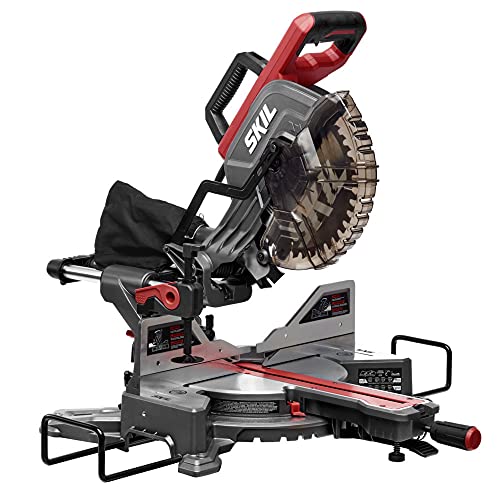
If you desire exceptional dual bevel capabilities and sliding crosscut reach without a premium price tag, consider the SKIL 10″ Dual Bevel Sliding Compound Miter. It combines an LED cutline guide with a generous crosscut capacity that handles standard framing lumber effortlessly. Budget-conscious woodworkers needing a lightweight jobsite companion will also appreciate the compact portability of the Metabo HPT 10-Inch Single Bevel Compound Miter.
Fabricators and multi-trade contractors requiring heavy metal cutting performance should look toward the specialized Evolution S14MCS 14″ Mitering Chop Saw. Its cold-cut motor technology and reinforced base deliver burr-free steel cuts that traditional wood saws cannot match. Meanwhile, mobile remodelers working without convenient electrical outlets can rely on the lightweight DEWALT 20V MAX 7-1/4-Inch Miter Saw, Tool Only for portable punch-list trim tasks.
Taking the time to square your fences and select the ideal blade tooth count ensures flawless joints on every project. For more creative ideas on outfitting comfortable living areas, browse our furniture and comfort guide to elevate your home projects. Investing in dependable cutting equipment will reward you with tight joints and professional carpentry finishes for years to come.
Frequently Asked Questions
What makes the Best Miter Saws in 2026 superior to older chop saws?
Modern miter saws incorporate compound pivot joints and dual sliding rails that expand cut capacities well beyond standard dimensional lumber. They also feature advanced LED shadow lines that never drift out of calibration like early laser guides.
Is a 10-inch or 12-inch miter saw better for general home projects?
A 10-inch saw handles most household remodeling tasks, offering lower blade costs, less blade deflection, and easier portability. Choose a 12-inch model if you frequently crosscut tall crown molding standing upright or wide dimensional framing timbers.
What is the main difference between single bevel and dual bevel miter saws?
Single bevel saws tilt in only one direction, forcing you to flip boards over when cutting opposing corner joints. Dual bevel saws tilt both left and right, allowing you to cut matching compound angles while keeping boards oriented flat.
Why are LED shadow cutline guides preferred over traditional laser guides?
LED shadow guides cast the physical shadow of the blade teeth directly onto the workpiece, ensuring calibration never shifts over time. They remain highly visible in bright outdoor lighting and automatically adapt to thin or thick blade kerfs.
Can I cut metal with a standard woodworking compound miter saw?
Standard wood saws run at high speeds that can overheat metal cutting blades and throw hazardous hot sparks. Dedicated multi-material tools like cold cut chop saws utilize slower motor speeds and heavy-duty guards designed specifically for metal stock.
How many teeth should my miter saw blade have for smooth trim cuts?
A 10-inch blade with 60 to 80 carbide teeth delivers glass-smooth cuts on delicate trim, casing, and crown molding. Blades with 24 to 40 teeth cut faster and work best for rough framing lumber where finish smoothness is less critical.
How often should I check and calibrate the squareness of my miter fence?
You should verify fence squareness with a reliable machinist square every time you transport the saw to a new location. Checking the 90-degree and 45-degree stops after blade changes or blade bind events ensures continuous joint accuracy.
What safety gear is essential when operating Best Miter Saws in 2026?
Always wear ANSI-certified safety glasses, hearing protection, and a tight-fitting dust mask or respirator while cutting lumber. Avoid wearing loose clothing, gloves, or dangling jewelry that could get pulled into the high-speed rotating blade arbor.
Does a sliding compound miter saw require extra clearance behind the workbench?
Yes, standard sliding saws require 8 to 12 inches of rear clearance to allow the guide rails to slide fully back. If you have a shallow workbench, look for forward-rail designs or fixed non-sliding units that can sit flush against a wall.
Can a cordless miter saw match the performance of a corded 15-amp model?
Modern brushless cordless miter saws deliver comparable cutting speed and torque on standard dimensional lumber and trim. However, heavy repetitive cutting of thick hardwoods may drain battery packs rapidly, requiring multiple spare batteries on the jobsite.




Write Your Review
No reviews yet. Be the first to share your experience!