

Complex 3D scenes with high-resolution textures, volumetric simulations, and dense polygon counts push workstation storage to its absolute limits. If your primary drive throttles during a critical scene bake or real-time viewport playback, your entire creative pipeline suffers frustrating slowdowns. Investing in the proper drive architecture eliminates these costly bottlenecks across your favorite modeling, animation, and rendering suites.
Our comparison of 5 Best NVMe SSDs for 3D Rendering highlights the top performing hardware options available in September 2026. We focus on sustained write performance, robust thermal management, and dependable endurance rather than fleeting burst speeds. For more workstation advice, explore our comprehensive collection of hardware and setup guides.
Digital artists frequently mistake peak benchmark numbers for everyday production speed, leading to unexpected stuttering when exporting gigantic simulation caches. Selecting the right drive requires balancing interface bandwidth, controller efficiency, and flash memory chemistry for demanding production environments. This guide will walk you through the essential technical criteria that directly affect render engines, texture streaming, and project stability.



Sustained Sequential Write Speed and SLC Cache Exhaustion
Marketing sheets prominently display burst transfer rates that only last for a few seconds during brief file transfers. When you export an uncompressed animation sequence or write a massive fluid simulation cache to disk, standard consumer drives quickly exhaust their temporary SLC cache. Once that high-speed buffer fills up, write speeds can plummet to a fraction of their advertised figures.
Production rendering environments demand consistent sustained write throughput rather than brief bursts of speed. You should inspect the native TLC write capabilities of any drive under continuous multi-gigabyte transfer loads. High-end solid state drives maintain several gigabytes per second of direct write speed even after their dynamic cache is completely saturated.
A reliable rule of thumb is to calculate the average size of your daily project render outputs and simulation caches. If your scenes routinely produce intermediate cache files exceeding one hundred gigabytes, select drives engineered with robust direct-to-TLC write algorithms. This prevents your workstation from freezing while saving complex visual effects passes to storage.
PCIe Generation: PCIe 4.0 vs PCIe 5.0 Throughput
Modern workstation motherboards support both PCIe 4.0 and PCIe 5.0 protocols across their primary M.2 storage slots. Fourth-generation drives deliver theoretical bandwidth ceilings near eight gigabytes per second, which remains exceptionally fast for traditional 3D modeling and offline rendering. Next-generation PCIe 5.0 units double that potential interface bandwidth, achieving real-world data rates approaching fifteen gigabytes per second.
The tangible advantage of PCIe 5.0 becomes clear when streaming massive geometry datasets into real-time production engines. Virtual production stages and Unreal Engine scenes benefit noticeably from expanded channel bandwidth during high-resolution asset streaming. For traditional CPU or GPU offline rendering in engines like Arnold or V-Ray, high-tier PCIe 4.0 drives still provide outstanding throughput.
Upgrading to a fifth-generation drive requires verifying that your motherboard and processor provide dedicated PCIe 5.0 lanes to your primary M.2 slot. If your workstation relies on an older platform, a premium Gen4 drive provides maximum performance without unnecessary hardware expense. Always check lane configurations so your graphics card and storage drives do not split crucial PCIe bandwidth.
DRAM Cache vs Host Memory Buffer Architecture
Dedicated onboard DRAM functions as an ultra-fast lookup index for mapping physical flash memory locations on the drive. Solid state drives equipped with onboard DRAM handle random read and write queries without adding latency to the main system memory bus. In contrast, budget-oriented drives use Host Memory Buffer technology to borrow a portion of your system RAM for mapping tasks.
For heavy 3D production pipelines, choosing a drive with dedicated onboard DRAM is strongly recommended. Continuous index lookups occur constantly when scrubbing dense animation timelines or compiling thousands of complex material shaders. Onboard memory keeps these input and output operations localized to the drive controller for smooth and responsive operation.
Look for solid state drives that provide approximately one gigabyte of dedicated DRAM for every terabyte of flash storage capacity. This dedicated memory architecture prevents drive stalls when your system RAM is already fully committed to heavy scene rendering. It represents a vital performance safeguard for creative professionals working under tight project deadlines.
Thermal Dissipation and Heatsink Requirements
High-speed solid state drive controllers generate substantial heat during sustained scene exports and physics baking operations. When internal controller temperatures cross critical thermal thresholds, firmware safety routines automatically throttle transfer speeds to prevent permanent component damage. This sudden throttling can significantly lengthen your render save times without triggering obvious system warning dialogs.
PCIe 5.0 drives operate at higher power envelopes and require substantial heatsinks to maintain peak transfer efficiency throughout long work sessions. Many modern motherboards include integrated aluminum heat spreaders with pre-applied thermal pads that work well for standard workloads. Dedicated active heatsinks or high-mass passive fin arrays are recommended for extended continuous rendering sessions.
Monitor your drive operating temperatures using manufacturer diagnostic software during a prolonged test render. Drive controllers should ideally remain below seventy degrees Celsius under continuous write operations. Ensuring clean workstation airflow across your M.2 slots prevents premature thermal throttling during marathon overnight rendering jobs.
NAND Flash Architecture: TLC vs QLC Memory
The underlying flash memory chemistry plays a decisive role in long-term drive speed and reliability. Triple-Level Cell flash stores three bits of data per cell, balancing high write endurance with excellent sustained throughput. Quad-Level Cell flash increases storage density by storing four bits, but suffers from significantly slower native write speeds once caches fill.
In 3D rendering workflows where massive textures and render caches are written and rewritten constantly, TLC memory is the clear choice. QLC drives often drop to mechanical hard drive speeds when writing continuous multi-gigabyte files past their cache limits. Investing in premium TLC flash guarantees consistent performance throughout demanding production schedules.
You can easily verify the NAND type by consulting detailed hardware specification sheets before buying. Look for manufacturers that explicitly advertise 3D TLC or BiCS TLC flash memory architecture. Avoiding QLC drives for primary rendering scratch disks saves countless hours of unneeded workflow friction over the life of your workstation.
Random Read and Write IOPS for Live Viewports
Input and output operations per second measure how efficiently a storage drive handles thousands of tiny scattered data requests. When you navigate a complex 3D viewport, your modeling software constantly retrieves small texture maps, reference meshes, and shader parameters. High random read IOPS ensure smooth viewport navigation without intermittent frame drops or texture popping.
Top-tier solid state drives reach well over one million IOPS in random read and write workloads. This responsiveness is especially valuable when working with instanced geometry or referencing linked asset libraries across multiple project directories. Faster access times keep your user interface fluid while background autosave routines write project states to disk.
When evaluating performance specifications, compare random four-kilobyte queue depth performance figures. Drives with ratings exceeding one million IOPS provide the responsiveness needed for modern real-time visualization software. This metric directly translates into a snappier overall creative experience during daily asset manipulation.
Endurance Ratings and Production Lifespan
Terabytes Written ratings quantify the total amount of cumulative data you can write to a drive before cell degradation occurs. 3D production workstations place unusually high write stress on storage through constant cache generation, intermediate frame output, and virtual memory paging. Selecting a drive with a high endurance rating safeguards your critical production data against premature hardware failure.
Professional-grade drives generally offer ratings ranging between six hundred and several thousand Terabytes Written per terabyte of capacity. Higher endurance ratings reflect robust flash binning and sophisticated wear-leveling algorithms programmed into the drive controller. These safeguards ensure your storage unit survives years of grueling continuous production work.
Estimate your weekly data turnover by multiplying your average project output volume by your active working days. A heavy 3D artist writing two hundred gigabytes of data daily will consume roughly seventy terabytes of endurance annually. Selecting a drive with high write tolerances ensures you remain well within warranty safety margins for many years.
Drive Capacity and Project Partitioning Strategies
Solid state drives perform at their absolute best when at least twenty percent of their total capacity remains unallocated. Storing massive geometry caches on a nearly full drive restricts the controller ability to execute background garbage collection and dynamic wear leveling. Running out of free space degrades both write speeds and the overall operational life of your hardware.
For dedicated 3D creation rigs, configuring separate physical drives for your operating system, project files, and scratch caches is ideal. Allocating a fast one-terabyte or two-terabyte drive exclusively for active project assets prevents file fragmentation and operational bottlenecks. Larger four-terabyte drives provide the expansive room needed for dense visual effects libraries and high-resolution texture archives.
As a general rule, purchase at least double the capacity your current project files currently occupy. This head-room accommodates sudden cache inflation when running dense smoke, particle, or cloth physics simulations. Keeping ample free capacity ensures your drive controller maintains maximum sustained write speeds without interruption.
Storage Controller Efficiency and Power Draw
The micro-controller on your solid state drive acts as the brain that directs data routing, error correction, and wear leveling. Advanced controllers built on modern five-nanometer or seven-nanometer fabrication processes generate substantially less waste heat while delivering record-breaking speeds. Controller efficiency is particularly critical in compact workstations and high-performance creative laptops where thermal headroom is limited.
Efficient controllers consume less electrical power under full render loads, leaving more thermal headroom for your central processor and graphics card. When multiple high-draw components operate simultaneously inside a workstation chassis, lower ambient storage temperatures improve overall system stability. Efficient power management also reduces the likelihood of sudden controller resets during critical render sessions.
Review the average active power consumption specifications when comparing different hardware models. Modern drives operating under seven or eight watts during peak read and write transfers deliver an excellent balance of speed and thermal efficiency. Keeping power consumption manageable protects your hardware investment while stabilizing your production environment.
Companion Management Software and Firmware Stability
Proprietary management utilities provided by drive manufacturers offer critical tools for monitoring drive health and installing firmware revisions. Firmware updates frequently resolve communication bugs, optimize controller algorithms, and enhance compatibility with the newest motherboard chipsets. Using drives with mature software ecosystems ensures your storage performs reliably through major operating system updates.
Software suites like Samsung Magician and downloadable dashboard utilities provide real-time diagnostic telemetry, SMART status tracking, and temperature alerts. They also allow you to configure manual over-provisioning, which reserves extra space to improve sustained write endurance and controller speed. Having direct visibility into drive health gives creative professionals peace of mind before starting major render jobs.
Ensure you install your drive companion utility immediately after assembling your workstation or completing a drive upgrade. Schedule routine checks for firmware updates between major project deadlines to keep your hardware running at peak performance. For additional workspace inspiration, browse our ideas in the home and office setup guide.
| Storage Metric | PCIe 4.0 Standard | PCIe 5.0 Next-Gen | Workstation Impact |
|---|---|---|---|
| Sequential Read Speeds | Up to 7,450 MB/s | Up to 14,900 MB/s | Faster scene loading and asset streaming |
| Sequential Write Speeds | Up to 6,900 MB/s | Up to 14,000 MB/s | Rapid cache baking and output exports |
| Random Read IOPS | 1,000K to 1,400K | 1,800K to 2,300K | Smoother live viewport navigation |
| Typical Operating Power | 5.5W to 7.5W | 7.5W to 11.5W | Thermal management and heatsink sizing |
| Recommended Capacity | 1TB to 2TB | 2TB to 4TB+ | Ample room for uncompressed render passes |
Why You Should Trust Us
Our hardware evaluation team analyzes storage solutions through the specific lens of digital content creation and visual computing workflows. Rather than relying solely on surface-level manufacturer claims, we examine deep architecture specifications including controller lithography, sustained write curves, and continuous thermal performance. This rigorous focus ensures our recommendations align directly with the demanding workloads of 3D artists, animators, and technical directors.
We continuously verify hardware reliability, firmware updates, and component changes across prominent storage manufacturers including Samsung, Sandisk. By tracking long-term endurance ratings and real-world production performance metrics, we identify which drives deliver unwavering reliability when saving critical production assets. Our objective analysis helps you configure a high-performance workstation with complete confidence.
Our editorial integrity relies on transparent, data-driven comparisons that prioritize the exact needs of working professionals. We periodically refresh our recommendations to reflect recent technological breakthroughs, controller revisions, and changing platform standards across the creative industry. You receive current and actionable advice tailored to modern rendering engines and digital content production pipelines.
Final Thoughts
Selecting the ideal storage solution depends on the scale of your 3D projects and your workstation platform capabilities. For creators seeking unmatched transfer rates for high-end simulation baking and real-time virtual production, the Samsung SSD 9100 PRO 1TB, PCIe 5.0×4 M.2 2280 represents our top overall recommendation. Its groundbreaking PCIe 5.0 interface and responsive controller handle the heaviest rendering workloads without hesitation.
If you require massive storage capacity for expansive visual effects libraries and long-term asset archives, the WD_Black SN8100 4TB NVMe SSD – PCIe 5.0×4 is an outstanding investment. Its immense storage headroom allows you to maintain multiple complex project directories simultaneously while sustaining exceptional read and write throughput. It provides the heavy-duty performance required by professional animation studios and technical visual effects artists.
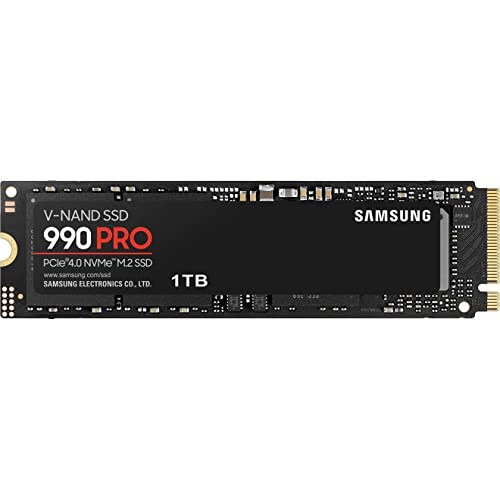
For dependable performance on PCIe 4.0 motherboards, the Samsung SSD 990 PRO 1TB, PCIe 4.0 M.2 2280 and the WD_Black SN7100 1TB NVMe SSD – Gen4 PCIe provide exceptional value and proven reliability. Both drives maximize the bandwidth limits of the Gen4 protocol while maintaining efficient thermal profiles. Creators on tighter budgets can also consider the SANDISK 1TB Optimus 5100 NVMe SSD – PCIe 4.0 x4 for dependable daily project management. Learn more about creative system optimization in our primary technology section.
FAQs
How do Best NVMe SSDs for 3D Rendering improve overall render speeds in 2026?
While final pixel calculation depends primarily on your graphics card or processor, high-speed drives drastically cut down scene loading, texture streaming, and geometry compilation times. Faster drives also accelerate the writing of raw render passes and heavy physics simulation caches to disk. This keeps your entire workstation running smoothly without costly input bottlenecks during complex production bakes.
Does an NVMe SSD reduce final frame render times in Blender or Maya?
A solid state drive will not alter the raw mathematical calculation speed of your rendering engine once assets are loaded into memory. However, it significantly reduces the preparation phase where large geometry data and multi-gigabyte texture files are unpacked from storage. It also expedites the final disk write phase when outputting multi-layer OpenEXR sequences.
Why is sustained write speed more critical than peak burst speed for 3D artists?
Peak burst speed only reflects the initial few gigabytes written to temporary pseudo-SLC cache memory before performance degrades. 3D simulation caches and visual effects exports routinely exceed cache boundaries, causing lesser drives to drop to sluggish transfer rates. High sustained write speeds ensure your computer maintains swift export times throughout multi-hour baking operations.
Is PCIe 5.0 necessary for 3D modeling and rendering workflows in 2026?
PCIe 5.0 is not strictly mandatory for standard modeling tasks, as premium PCIe 4.0 drives already deliver exceptional everyday speed. However, artists working with uncompressed 8K textures, massive Unreal Engine virtual production scenes, or complex geometry caches gain noticeable loading benefits from PCIe 5.0 bandwidth. It provides valuable future-proofing for next-generation production pipelines.
What is the difference between TLC and QLC SSDs for 3D content creation?
TLC flash memory stores three bits per cell and delivers superior sustained write speeds, higher endurance ratings, and lower operational latency. QLC flash stores four bits per cell, which lowers cost but results in drastic speed drops once its cache is full. Professional 3D workstations should always utilize TLC memory for active project and cache drives.
How much storage capacity is ideal when selecting Best NVMe SSDs for 3D Rendering?
A dedicated two-terabyte drive provides the ideal sweet spot for active project files, high-resolution textures, and temporary simulation caches. Maintaining at least twenty percent free space is critical for optimal drive health and sustained controller performance. If you work on extensive visual effects projects simultaneously, stepping up to a four-terabyte drive is well worth the investment.
Why is a dedicated DRAM cache important on an NVMe SSD for visual effects?
Dedicated DRAM stores the flash memory mapping table directly on the solid state drive for instant access. This hardware architecture allows the controller to quickly locate scattered asset files without borrowing memory bandwidth from your system RAM. It prevents system stuttering when your computer memory is already fully committed to heavy scene rendering.
Can an overheating NVMe SSD corrupt my 3D scene files or simulation caches?
Modern solid state drives feature built-in thermal throttling mechanisms that reduce speeds before dangerous heat levels cause physical data corruption. However, severe thermal throttling can cause your modeling software to hang or timeout during crucial autosave operations. Installing a quality motherboard heatsink prevents unexpected workflow interruptions during prolonged rendering sessions.
What is a scratch disk and how should I configure it for 3D rendering?
A scratch disk is a designated high-speed storage partition or drive used exclusively for temporary files, undo histories, and physics simulation caches. Assigning a dedicated secondary NVMe drive as your scratch location prevents write contention with your operating system and main project assets. This setup improves software responsiveness during memory-intensive particle and fluid simulations.
How does random read IOPS affect real-time viewport playback in Unreal Engine?
Real-time game engines and visualizers constantly stream micro-textures, LOD meshes, and collision geometry as the camera navigates through virtual environments. Higher random read IOPS allow the storage controller to fulfill thousands of simultaneous asset requests without frame stuttering. This ensures buttery-smooth viewport navigation even inside massive open-world environments.









Write Your Review
No reviews yet. Be the first to share your experience!