Quick Answer: The Best Compostable Bags fit the collection bin and carry a certification accepted by the destination composting program. UNNI 2.6 Gallon Compostable Bags are the most versatile countertop choice because the listing specifies BPI, CMA, and OK compost HOME certifications, 100 liners, and a 0.71-mil film. Choose SUPERBIO 1.6-gallon handle-tie bags for a smaller pail, BioBag 3-gallon liners for an open-top format, Cleanomic or SUPERBIO drawstring bags for tall kitchen cans, Bag to Earth for natural-fiber construction, or BioBag 33-gallon liners for a large organics container.





Top Picks at a Glance
- Best Overall: UNNI 2.6 Gallon Compostable Bags – 100 countertop-bin liners with listed BPI, CMA, and OK compost HOME certifications.
- Best Small Handle Tie: SUPERBIO 1.6 Gallon Compostable Food Scrap Bags – 50 six-liter liners with handles and a reinforced star-sealed bottom.
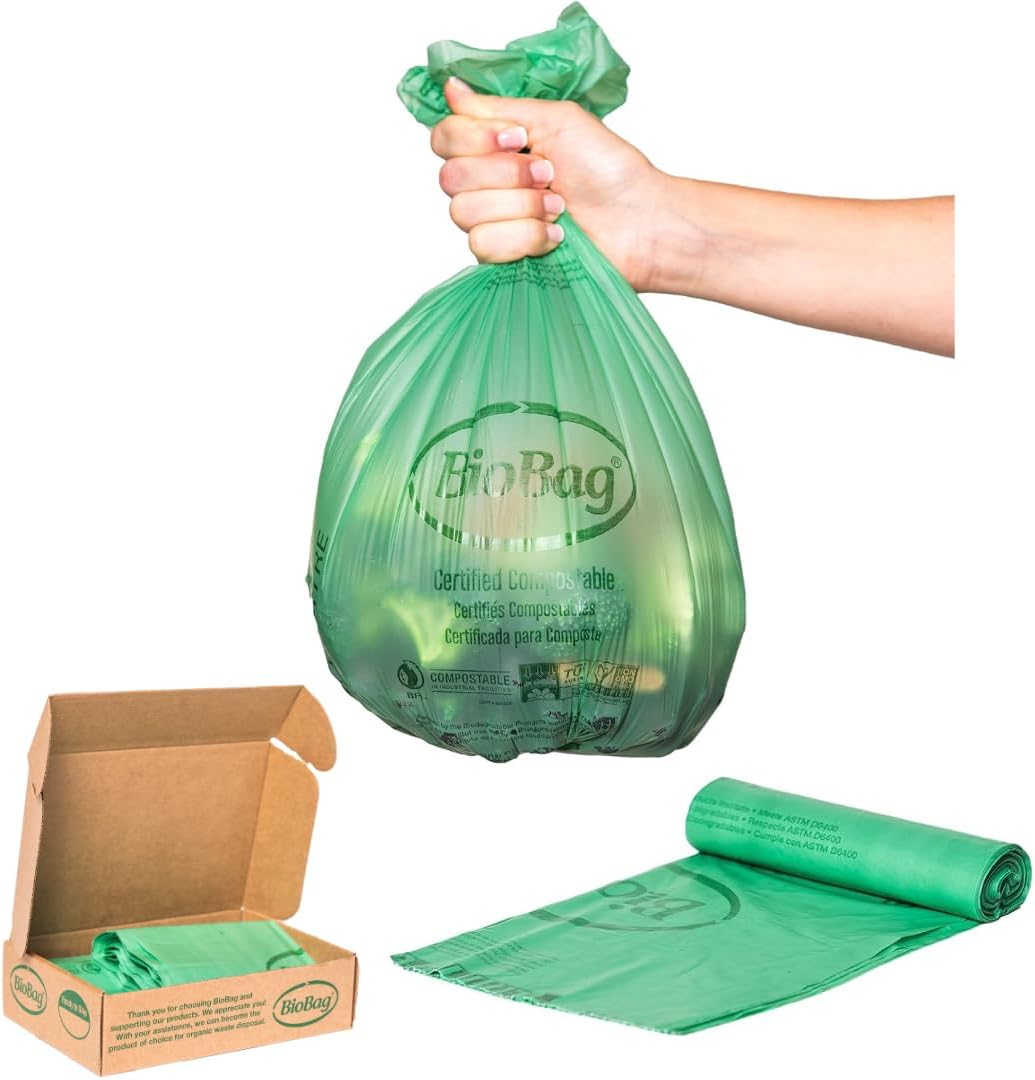
- Best Open-Top Countertop Liner: BioBag 3 Gallon Compostable Food Scrap Bags – 100 liners packaged as four rolls of 25.
- Best Tall Kitchen Drawstring: Cleanomic 13 Gallon Compostable Waste Bags – 25 tall liners with a drawstring and BPI certification.
- Best Thick 13-Gallon Option: SUPERBIO 13 Gallon Compostable Drawstring Bags – 30 one-mil liners listed for industrial composting.
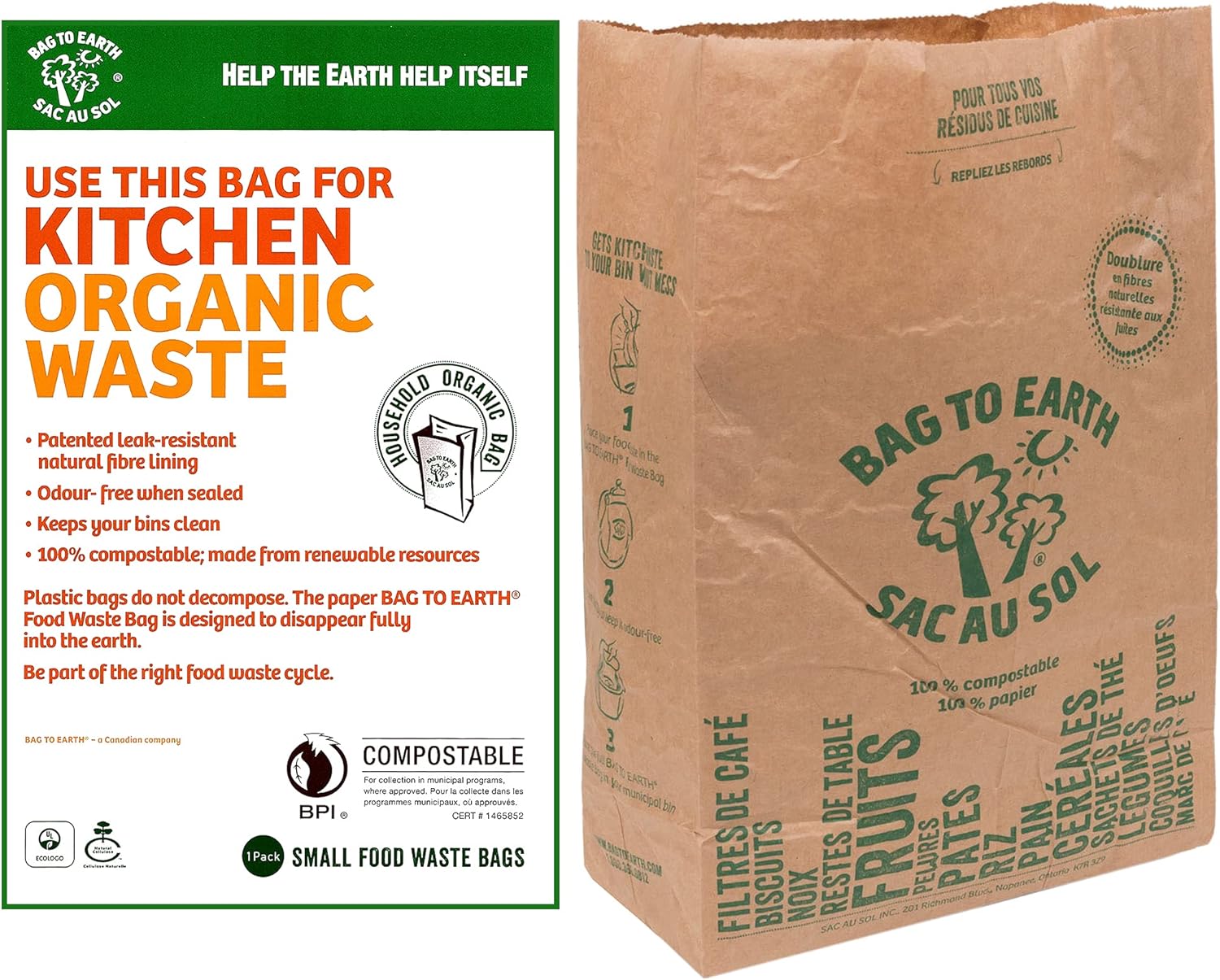
- Best Paper-Based Format: Bag to Earth Kitchen Food Waste Bags – two packs totaling 60 three-gallon natural-fiber liners.
- Best for Large Organics Bins: BioBag 33 Gallon Compostable Liners – 120 large star-sealed bags certified to meet ASTM D6400.
The Best Compostable Bags are not chosen by green color or the word “eco” on a box. The decisive questions are whether the receiving program accepts the certification, whether the bag fits the bin, and whether the liner can hold the actual scraps until collection day.
Compostable Is Not the Same as Biodegradable
“Biodegradable” is a broad claim that does not, by itself, tell a buyer where a product breaks down, how long it takes, or what conditions are required. “Compostable” should be tied to a recognized standard and a defined environment. A bag designed for an industrial facility may not break down properly in a cool backyard pile.
Certification also does not guarantee local acceptance. Municipal programs control what enters their collection stream, and rules differ because processing equipment, contamination limits, and end markets differ. Some programs require certified liners, some permit paper bags only, some accept no bags, and others ask residents to place scraps loose in a cart.
The Best Compostable Bags therefore begin with a call, website check, or printed guide from the actual hauler or compost facility. Product certification supports that decision but does not replace local instructions.
Understanding Common Certifications
BPI and ASTM D6400
The Biodegradable Products Institute certifies eligible products for commercial composting in North America using applicable standards such as ASTM D6400. This generally points to controlled facility conditions, not automatic suitability for a home compost pile. Confirm the product and current certification listing rather than relying on a similar-looking package.
CMA
The Compost Manufacturing Alliance evaluates products for compatibility with participating composting systems. A CMA mark can be useful where the local processor recognizes it, but acceptance remains facility-specific.
OK Compost HOME and OK Compost INDUSTRIAL
TÜV Austria’s OK compost HOME mark addresses lower-temperature home-composting conditions, while OK compost INDUSTRIAL applies to industrial facilities. The distinction matters: a bag carrying only an industrial mark should not be represented as backyard compostable.
EN 13432
EN 13432 is a European standard associated with packaging recoverable through composting and biodegradation. It can add useful evidence, but a North American municipal program may still specify BPI or its own accepted-product list.
The Best Compostable Bags display claims clearly enough for the buyer to compare them with the receiving program. If the certification scope is unclear, verify before ordering a large case.
How to Choose the Best Compostable Bags
Confirm the Destination First
Decide whether scraps go to curbside organics, a drop-off site, a commercial kitchen collection service, or a home pile. Then check accepted bag types, certification logos, colors, maximum sizes, and whether tied liners are allowed. Do not place compostable film into conventional plastic-film recycling unless the recycler explicitly accepts it.
Waste sorting works best as a system. A guide to recycling sorters can help separate landfill, recycling, and organics streams, but labels and bin colors should match local rules to prevent cross-contamination.
Match Gallons and Physical Dimensions
Gallon ratings are approximate. Measure the bin’s opening width, depth, height, rim thickness, and the extra material needed to fold over or tie. A liner that matches nominal volume can still be too narrow for a rectangular pail or too short to secure around the rim.
For countertop collectors, 1.6 to 3 gallons covers many common pails. Tall kitchen cans usually need a 13-gallon liner with enough opening width for the rim and enough length for closure. A 33-gallon bag is intended for much larger containers and should not be filled to an unsafe lifting weight.
The Best Compostable Bags fit without excessive stretching. Stretching weakens film at the rim, while too much extra material wastes capacity and can interfere with a vented-bin design.
Compare Thickness and Load, Not Thickness Alone
UNNI lists 0.71 mil, SUPERBIO’s small handle-tie bag lists 0.63 mil, and its 13-gallon drawstring lists 1 mil. Thickness provides a useful comparison within similar materials, but seal design, dimensions, age, storage temperature, sharp scraps, and liquid load also influence failure.
Food scraps are dense. Coffee grounds, melon rinds, bones, and wet peels can make a small liner surprisingly heavy. Empty the bag before it is packed tightly, support the bottom during transport, and avoid sharp skewers, shells, or broken items that the compost program does not accept.
Select a Closure Style
Open-top liners maximize opening width and are simple inside a lidded countertop bin. Handle ties are easy to close and carry, but the handles can snag or reduce usable opening area. Drawstrings help secure a tall-can liner yet add material and may not be accepted by every program.
Paper-based food-waste bags hold their shape and can allow more airflow than flexible film. Bag to Earth lists a leak-resistant natural-fiber lining, but paper still requires reasonable wet-waste management and should not sit in pooled liquid.
The Best Compostable Bags use the simplest closure accepted by the facility and convenient for the collection route.
Pay Attention to Shelf Life
Compostable materials are designed to break down under specified conditions, so heat, moisture, sunlight, and long storage can reduce performance before use. UNNI recommends use within nine months for best performance. BioBag states that its three-gallon bags should be used within one year, while SUPERBIO lists an approximate one-year shelf life.
Do not buy several years of inventory simply because a bulk case lowers the price per bag. Store rolls in their original box in a cool, dry cupboard away from a dishwasher, oven, water heater, sunny window, or damp sink cabinet.
Plan for Wet Scraps and Collection Timing
Drain excess liquids before adding food waste. Let hot coffee grounds and cooked scraps cool, and place extremely wet material in a vented collection method approved by the program. SUPERBIO instructs users to dispose of filled organic-waste bags within three days, especially with strongly acidic or alkaline contents.
The Best Compostable Bags fit the pickup rhythm. A smaller bag emptied frequently can be more reliable and less odorous than a large liner held for a full week.
Choosing by Bin and Household
Small Countertop Pails
The SUPERBIO 1.6-gallon liner suits compact six-liter pails and adds handles for closure. It is practical for a household that empties scraps frequently. Check that the handles do not prevent the lid from sealing.
Standard Countertop Compost Bins
UNNI’s 2.6-gallon size is a flexible starting point, particularly when both commercial and home-compost certification claims matter. BioBag’s three-gallon format offers a slightly larger open-top alternative. Compare exact dimensions with the bin rather than choosing by gallons alone.
Tall Kitchen Cans
Cleanomic and SUPERBIO both provide 13-gallon drawstring formats. The Cleanomic listing specifies 25 bags and BPI certification. The SUPERBIO listing specifies 30 one-mil bags and industrial-compost certifications. Local acceptance should decide between them before thickness or count.
Readers who also need ordinary landfill liners can compare trash bags. Keeping conventional and compostable rolls visually separated helps prevent the wrong liner from entering an organics cart.
Large Shared or Commercial Bins
BioBag’s 33-gallon case contains 120 liners with a star-sealed bottom. It suits a high-volume collection point only when the facility accepts the product and workers can keep loads manageable. Use smaller transfers rather than lifting an overfilled bag of dense food waste.
Paper-Liner Preference
Bag to Earth provides a three-gallon natural-fiber alternative. Paper bags can be easier for programs that reject compostable plastic-like film, but acceptance is still local. A vented pail can help moisture evaporate, while a sealed bin may increase condensation.
The Best Compostable Bags are integrated with the bin, ventilation, collection schedule, and hauler rules rather than chosen in isolation.
Trade-Offs to Consider
- Compostability versus storage life: heat and age can weaken compostable material before the roll is used.
- Thin film versus heavy scraps: lighter liners use less material but need frequent emptying and bottom support.
- Large capacity versus lifting weight: a bigger bag can become unsafe when filled with dense wet food waste.
- Drawstring convenience versus acceptance: some facilities restrict closure components or liner types.
- Sealed pail versus airflow: a tight lid contains odor but can increase condensation; vented systems may dry scraps but require compatible liners.
- Home-compost claim versus real conditions: a certification does not guarantee breakdown in every backyard climate or poorly managed pile.
The Best Compostable Bags balance durability during collection with the requirements of the composting environment at the end of use.
Common Mistakes to Avoid
Do not assume every green bag is compostable. Look for the exact certification and product, then compare it with the local accepted-material list.
Do not place compostable bags in a plastic-bag recycling bin. Compostable polymers can contaminate conventional recycling streams because they are designed for a different end-of-life process.
Avoid storing rolls for years, in direct sunlight, or beside heat and moisture. Brittle seams and tearing may reflect storage conditions rather than only nominal thickness.
Do not pour soup, cooking oil, or hot scraps into a liner. Drain and cool accepted organics first. Follow the program’s rules for meat, bones, dairy, pet waste, soiled paper, and certified serviceware.
Finally, do not send organics through a trash compactor unless the equipment and collection workflow are explicitly designed for it. The Best Compostable Bags need gentle handling rather than compression with mixed waste.
Setup Checklist
Use this checklist before ordering or filling the Best Compostable Bags:
- Confirm the final destination: home pile, curbside cart, drop-off, or commercial service.
- Check accepted certifications, bag types, colors, and maximum sizes.
- Measure the bin opening, depth, height, rim, and tie allowance.
- Choose open top, handles, drawstring, or paper based on the workflow.
- Buy an amount that can be used within the stated shelf life.
- Store unused rolls cool, dry, shaded, and in original packaging.
- Cool scraps and drain excess liquid before filling.
- Avoid prohibited items and sharp objects.
- Empty frequently and support the bag bottom during transport.
Storage and Disposal Workflow
Write the purchase or opening date on the box and rotate older rolls forward. Keep the carton off damp floors and away from cleaning chemicals. If a bag feels brittle, stretches unevenly, or has damaged seams, use a fresh liner rather than risking a spill.
Line the bin without excessive tension, fold only enough material over the rim to secure it, and close the lid. When removing the liner, loosen it around the rim first, support the bottom, and use the intended handles or drawstring without swinging the load.
The Best Compostable Bags go only to the destination that accepts them. If local composting is unavailable, follow municipal disposal guidance rather than assuming the bag will compost in a landfill.
How We Tested and Evaluated
We evaluated the Best Compostable Bags through research-based comparison, not by claiming hands-on tear, leak, composting, load, shelf-life, or facility-acceptance testing. Every selected ASIN and exact product name was verified on its individual Amazon page.
We compared listed certifications, home or industrial scope, gallon capacity, physical dimensions when available, thickness, closure, bottom seal, count, stated shelf life, storage directions, wet-waste guidance, and construction. The shortlist includes countertop, tall-kitchen, paper-based, and large-bin formats so readers can select by collection system.
Frequently Asked Questions
Can compostable bags go in a backyard compost pile?
Only if the exact bag is certified or specified for home composting and the pile provides suitable conditions. Industrial-only certification does not establish home-compost suitability.
Can I put a compostable bag in curbside organics?
Check the hauler’s current rules. Some programs require certified liners, while others reject all bag-like material or accept paper only.
Why do compostable liners tear more easily after storage?
Heat, moisture, sunlight, and age can reduce material strength. Follow the listed shelf life and store rolls in a cool, dry place.
What size bag fits a countertop compost bin?
Many pails use 1.6- to 3-gallon liners, but measure the opening and depth. The Best Compostable Bags fit without stretching and leave enough length for removal or closure.
Are compostable bags plastic-free?
Not necessarily. Many flexible liners use plant-based and compostable polymers that look and feel like plastic. Review the material description and certification rather than assuming composition from appearance.
Can pet waste go in a compostable bag?
A compostable liner does not make its contents acceptable. Many municipal and home systems prohibit pet waste because of pathogens or processing limits. Follow local rules.
Final Decision
The Best Compostable Bags are accepted by the receiving program and correctly sized for the bin. UNNI 2.6-gallon liners are the strongest general countertop choice. Choose SUPERBIO handles for a smaller pail, BioBag three-gallon liners for an open top, Cleanomic or SUPERBIO for a tall kitchen can, Bag to Earth for paper construction, or BioBag 33-gallon liners for large-volume collection.
Verify certification, measure the bin, buy within the shelf-life window, drain wet scraps, and empty frequently. The right liner supports a clean organics workflow without becoming contamination at the compost facility.