

Quick Answer: The Best Laundry Detergents for Baby Clothes match the baby’s garments and skin needs, use an accurately measured HE-compatible dose, remove common soil without excess residue, and remain locked in the original container. ATTITUDE Unscented Baby Laundry Detergent is the most balanced option in this group because its verified listing combines an unscented concentrated liquid, HE and standard-machine compatibility, EWG Verified positioning, and directions for whites, colors, blankets, delicates, and cloth diapers. Choose Dreft for a large bottle, all for a lightly scented option, Babyganics for fragrance-free 3X liquid, or Seventh Generation for fresh scent and certified biobased positioning.



Top Picks at a Glance
These Best Laundry Detergents for Baby Clothes cover unscented, fragrance-free, baby-powder-scented, and fresh-scent liquid formulas with different certifications and load counts. Skin, stain, cloth-diaper, ingredient, septic, cold-water, machine, and certification statements are manufacturer listing claims rather than independent medical or laundry tests.
- Best Overall: ATTITUDE Baby Laundry Detergent, Unscented, 80 Loads – a 67.6-ounce concentrated liquid listed as EWG Verified, dermatologist tested, vegan, and compatible with HE machines.
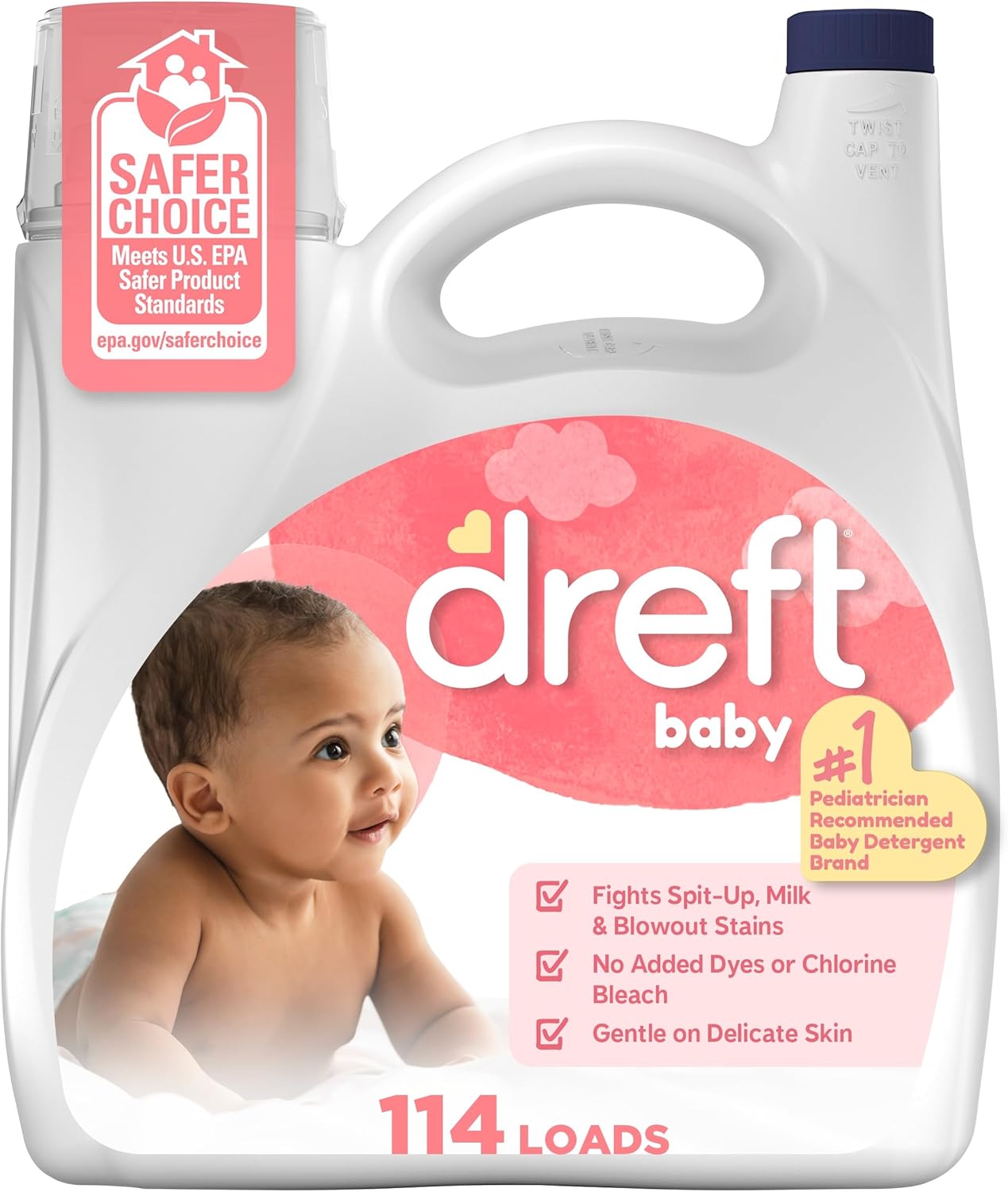
- Best Large Bottle: Dreft Baby Liquid Laundry Detergent, 150 fl oz, 114 Loads – a scented baby liquid listing with dermatologist-tested sensitive-skin and common baby-stain claims.
- Best Lightly Scented: all Liquid Laundry Detergent, Baby Powder Scent, 75 fl oz – a dye-free, lightly scented listing with pediatrician-tested, hypoallergenic, Safer Choice, HE, septic, and cold-water statements.
- Best Fragrance-Free 3X: Babyganics 3X Baby Laundry Detergent, Fragrance Free, 60 fl oz – a concentrated listing made without stated optical brighteners, chlorine, phthalates, sulfates, fragrance, or dyes.
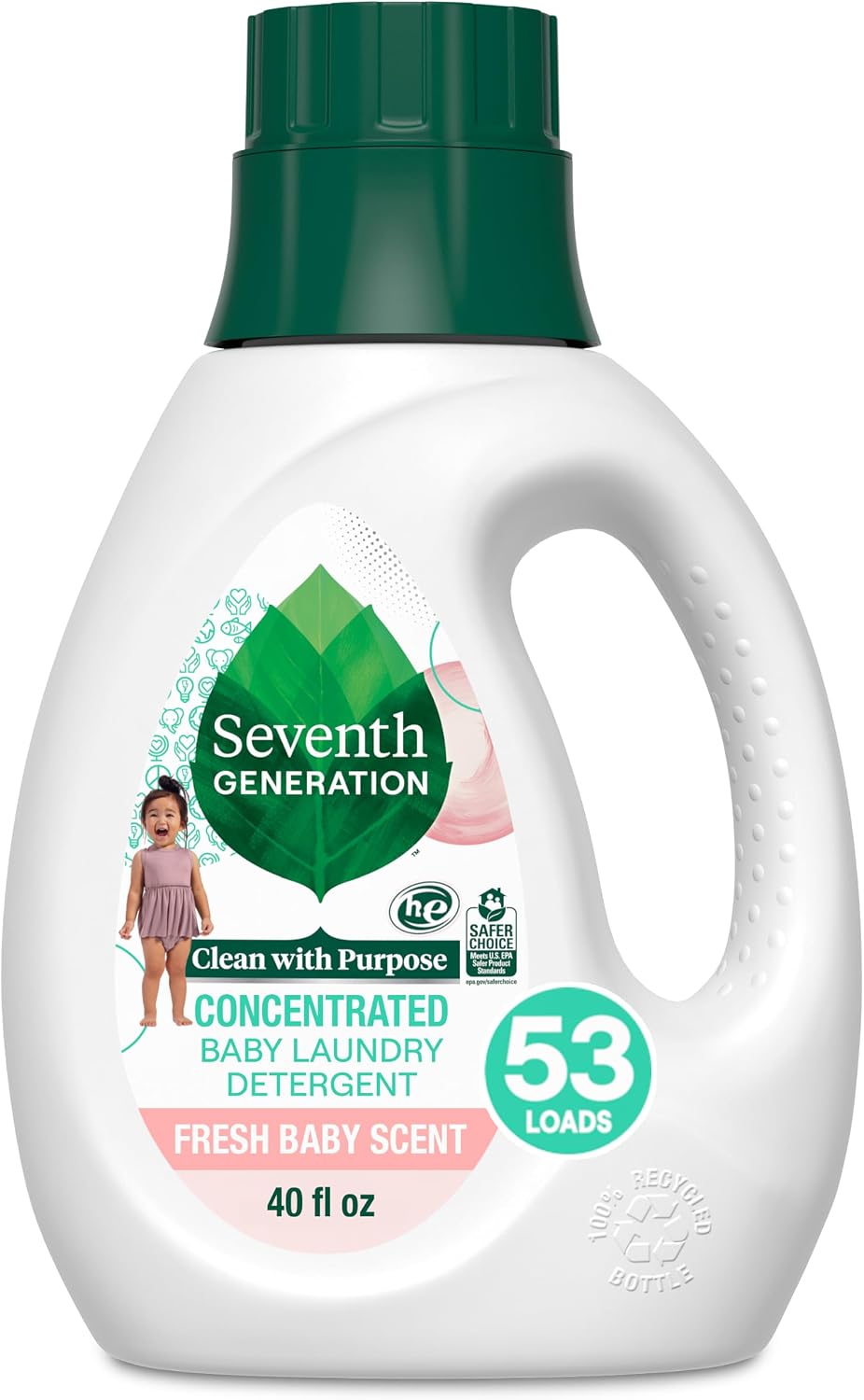
- Best Fresh-Scent Biobased: Seventh Generation Concentrated Baby Laundry Detergent, Fresh Scent, 40 oz – a 53-load listing with USDA Certified Biobased positioning and cloth-diaper use.
Is a Dedicated Baby Detergent Necessary?
Not every household needs a product labeled for babies. A compatible household detergent can work when it meets the garment labels, washer requirements, fragrance preferences, rinse needs, and healthcare guidance for the child.
Baby-branded formulas often emphasize dyes, fragrance, skin testing, certifications, or common infant stains. Those attributes help comparison, but they do not make one detergent medically necessary or universally gentler.
The Best Laundry Detergents for Baby Clothes are selected by actual needs rather than package imagery. Compare broader options in the best laundry detergents for sensitive skin when the entire household shares one formula.
How to Choose the Best Laundry Detergents for Baby Clothes
Start with fragrance and ingredient preferences, then verify concentration, machine placement, water temperature, garment restrictions, dose, and storage. A product that looks gentle can still leave residue when overmeasured.
Understand Unscented and Fragrance-Free
Fragrance-free usually indicates no added fragrance, while unscented can have product-specific meaning and may include ingredients intended to reduce base odor. Read the complete ingredient and label information rather than treating the terms as identical.
Light baby powder and fresh scents remain on the comparison list because some households prefer them. Fragrance can also be unsuitable for a child or caregiver with asthma, dermatitis, migraine, or scent sensitivity.
The Best Laundry Detergents for Baby Clothes fit household tolerance. Fragrance-free does not prove zero odor, zero allergens, or zero reaction, and a pleasant scent does not prove that clothing rinsed clean.
Interpret Skin and Testing Claims Carefully
Hypoallergenic, dermatologist tested, pediatrician tested, gentle, extra gentle, sensitive-skin, and baby-safe wording should remain attributed to a listing. Testing methods and populations vary, and no claim guarantees that an individual child will avoid irritation.
A rash can have many causes, including heat, moisture, food, illness, friction, fabric, skin-care products, detergent, or infection. Stop using a suspected product and consult the child’s healthcare professional rather than diagnosing from laundry alone.
A suitable baby detergent supports a conservative routine but does not treat eczema, allergy, or other medical conditions.
Compare Dyes, Brighteners, and Certifications
Dye-free and optical-brightener-free statements help narrow preferences. Optical brighteners change how fabric reflects light; their absence does not automatically make a detergent cleaner or medically safer.
EWG Verified, Safer Choice, USDA Certified Biobased, vegan, cruelty-free, and plant-origin percentages refer to different standards or attributes. They are not interchangeable certificates and do not measure stain removal in the same way.
The Best Laundry Detergents for Baby Clothes present each certification accurately. Verify current certification and scope through the certifying organization when it affects the purchase decision.
Measure Concentrated Liquid Accurately
Concentrated detergent uses a smaller volume per load. Find the correct cap line for load size, soil, machine, and water conditions. Do not fill the cap to the top unless that is the stated dose.
Overdosing can create excess suds, slow rinsing, and leave residue in cuffs, waistbands, bedding seams, plush fabric, and absorbent diapers. Underdosing a heavily soiled load can redeposit soil.
The Best Laundry Detergents for Baby Clothes use the label dose, not an estimated splash. Listed load counts assume specific measured conditions and may change for large or heavily soiled loads.
Match HE Washer and Water Conditions
Use HE-compatible detergent in high-efficiency machines and place it in the exact dispenser compartment or drum location stated by both manuals. Clean a detergent cap before returning it to the bottle and wipe spills promptly.
Cold water can protect many colors and stains from heat setting, but the garment and formula must permit it. Hard water may require a different label dose; extra detergent is not the only or automatic answer.
Compare the best liquid laundry detergents for broader machine and concentration choices. The Best Laundry Detergents for Baby Clothes rinse within the washer’s normal operating limits.
Wash New Baby Items Before Use
Follow the product label for new clothing, bedding, towels, washable covers, and soft toys. Washing can remove dust and handling residue, but not every product is machine-washable. Remove packaging, tags, batteries, sound modules, and non-washable inserts.
Separate by color, fabric, soil, and care temperature. Close hook-and-loop fasteners so they do not abrade knitwear. Place small socks and delicate accessories in a closed mesh bag when allowed.
The Best Laundry Detergents for Baby Clothes cannot make foam-filled sleep products, car-seat harnesses, electronic toys, or items with safety-specific cleaning rules safe for machine washing.
Handle Common Baby Stains
Remove solid soil safely, then rinse or pretreat according to the garment and detergent directions. Milk, formula, spit-up, stool, urine, fruit, vegetables, medicine, ointment, and sunscreen have different components.
Avoid high heat until a heat-settable stain is gone. Test a hidden area for colorfastness and do not scrub delicate elastic, waterproof backing, printed graphics, or flame-resistant finishes aggressively.
Compare the best stain removers for separate pretreatment options. The Best Laundry Detergents for Baby Clothes are not automatically compatible with every enzyme, oxygen product, chlorine bleach, or solvent.
Never Mix Laundry Chemicals
Do not mix chlorine bleach with ammonia, vinegar, acids, toilet cleaner, rust remover, or unknown stain products. Dangerous gases and reactions can occur. Add only compatible products separately to their specified washer locations.
Keep an active pretreatment area away from children and pets. Never store mixed solution in a beverage bottle or unlabeled container. Follow label first aid and local disposal directions.
The Best Laundry Detergents for Baby Clothes work at the measured label dose without improvised chemical combinations.
Cloth Diapers Need Their Own Routine
Babyganics, ATTITUDE, and Seventh Generation include cloth-diaper claims in their listings, but diaper makers and washing-machine instructions still control the actual process. Inserts, covers, elastics, hook-and-loop tabs, and diaper creams can have different restrictions.
Use the correct prewash, main wash, water level, detergent dose, and rinse procedure for the diaper system and local water. Too little cleaning can leave soil; too much product can leave residue. Fabric softener may reduce absorbency when prohibited.
The best laundry detergents for cloth diapers address that routine in more detail. The Best Laundry Detergents for Baby Clothes do not guarantee that one dose fits both ordinary outfits and heavily soiled diapers.
Protect Sleepwear and Safety Finishes
Read children’s sleepwear labels carefully. Flame-resistant or snug-fit construction can have specific washing restrictions. Do not add softener, soap, starch, or bleach when the care instructions prohibit them or when they may affect a safety finish.
Dry only by the garment label and inspect for damage, poor fit, delamination, loose trim, or reduced elasticity. Laundry cannot restore a worn safety feature.
The selected detergent must clean within the product’s safety design. Fragrance, softness, or bright appearance must never take priority over a sleepwear label.
Rinse and Dry Completely
Load the washer loosely enough for movement and rinsing. An extra rinse may help in a specific routine, but it is not a substitute for accurate dosing, proper load size, and a functioning machine. Follow appliance guidance before adding cycles.
Dry items by their labels. High heat can shrink cotton, damage elastic and waterproof layers, set stains, or deform soft-toy parts. Air-dried items need ventilation and must be completely dry before storage or use.
The Best Laundry Detergents for Baby Clothes leave no visible suds or concentrated marks. Persistent residue can indicate overdosing, overloading, hard water, dispenser issues, or a washer that needs maintenance.
Cleaning Is Not Sanitizing
Detergent removes soil and reduces many contaminants through washing, but it is not automatically a registered laundry sanitizer or disinfectant. No-odor and stain-free results do not prove microbial control.
Illness, healthcare exposure, stool contamination, or public-health instructions may require a separate registered product, temperature, or procedure that also remains safe for the fabric. Consult medical and public-health guidance when needed.
The Best Laundry Detergents for Baby Clothes make only the hygiene claims printed on their labels and used exactly as directed.
Store Detergent Securely
Liquid detergent can cause poisoning and eye or skin injury. Close the cap, keep the original label, and store the bottle upright in a locked high location away from children, pets, food, and medication.
Do not transfer detergent into clear drink bottles or decorative dispensers. Clean spills promptly by the label and prevent a child from touching a sticky cap or dosing cup.
If exposure occurs, follow the package first-aid directions and contact poison control or emergency care as appropriate. The Best Laundry Detergents for Baby Clothes are only gentle in the intended diluted wash process, not as concentrates.
Common Mistakes and Limitations
- Choosing only by baby branding: Garment, washer, fragrance, and skin needs matter more.
- Assuming hypoallergenic means reaction-free: Individual sensitivity remains possible.
- Overdosing concentrate: Excess liquid can create suds and residue.
- Using one routine for diapers and clothes: Soil and absorbency requirements differ.
- Ignoring sleepwear labels: Additives can conflict with safety finishes.
- Mixing chemicals: Bleach, ammonia, and acids can react dangerously.
- Diagnosing a rash from laundry alone: Healthcare evaluation may be needed.
- Assuming clean means sanitized: Detergent is not automatically a disinfectant.
- Leaving detergent accessible: Concentrate requires locked original-container storage.
The Best Laundry Detergents for Baby Clothes can support routine cleaning but cannot guarantee stain removal, skin tolerance, medical safety, sanitation, cloth-diaper performance, or the advertised number of loads in every home.
How We Tested and Evaluated
We did not conduct hands-on stain, rinse, residue, skin, allergy, medical, cloth-diaper, sleepwear, hard-water, septic, certification, or sanitation tests. We evaluated Crawlbase-captured Amazon pages for exact identity, bottle size, listed loads, scent, concentration, HE use, ingredient exclusions, certifications, cloth-diaper statements, skin claims, and baby-stain positioning.
Our assessment of the Best Laundry Detergents for Baby Clothes prioritizes accurate dose, fabric compatibility, clear fragrance choice, cautious interpretation of skin claims, full rinsing, separate diaper and sleepwear rules, chemical separation, realistic sanitation limits, and locked original-container storage.
Buying Checklist
Use this checklist to compare the Best Laundry Detergents for Baby Clothes.
- Choose unscented, fragrance-free, or scented formula for household needs.
- Review dyes, brighteners, enzymes, surfactants, and ingredient exclusions.
- Verify certifications by their exact names and current scope.
- Confirm HE use, water temperature, dose lines, and dispenser placement.
- Treat hypoallergenic and skin-testing claims as product specific.
- Match pretreatment to milk, formula, stool, urine, food, or ointment.
- Follow separate cloth-diaper and sleepwear instructions.
- Avoid overload, overdosing, incompatible softener, and chemical mixing.
- Dry every layer completely before use or storage.
- Keep concentrated detergent locked in its labeled original bottle.
Frequently Asked Questions
Can regular detergent be used for baby clothes?
Yes when it matches garment, washer, fragrance, rinse, and healthcare needs. A dedicated baby label is not universally required.
Should new baby clothes be washed first?
Follow the item’s label. Most washable clothing and bedding can be cleaned before use, but safety gear, electronic toys, and removable components may have special instructions.
Does baby laundry need an extra rinse?
Sometimes a household or healthcare plan uses one, but accurate dosing and normal rinsing come first. Extra cycles cannot correct severe overdosing or an overloaded washer.
Can baby detergent wash cloth diapers?
Only when the diaper and detergent instructions agree. Use the diaper system’s dose, prewash, main wash, water, rinse, and additive guidance.
What if a baby develops a rash?
Stop suspected products, preserve labels, and contact the child’s healthcare professional. Heat, illness, food, friction, fabric, and skin products can also contribute.
Does baby detergent sanitize clothes?
Not automatically. Use a registered sanitizer or evidence-based healthcare protocol only when required and compatible with the textile and washer.
Final Decision
ATTITUDE provides the most balanced unscented and certification-focused listing in this selection. Dreft offers a large baby-branded bottle, all supplies a light scent, Babyganics covers fragrance-free 3X liquid, and Seventh Generation combines fresh scent with biobased positioning.
The Best Laundry Detergents for Baby Clothes support a careful routine rather than a medical promise. Read every fabric label, measure concentrate precisely, handle stains early, rinse without overload, follow separate diaper and sleepwear rules, avoid chemical mixing, dry completely, monitor skin concerns with healthcare help, and lock the detergent away.


