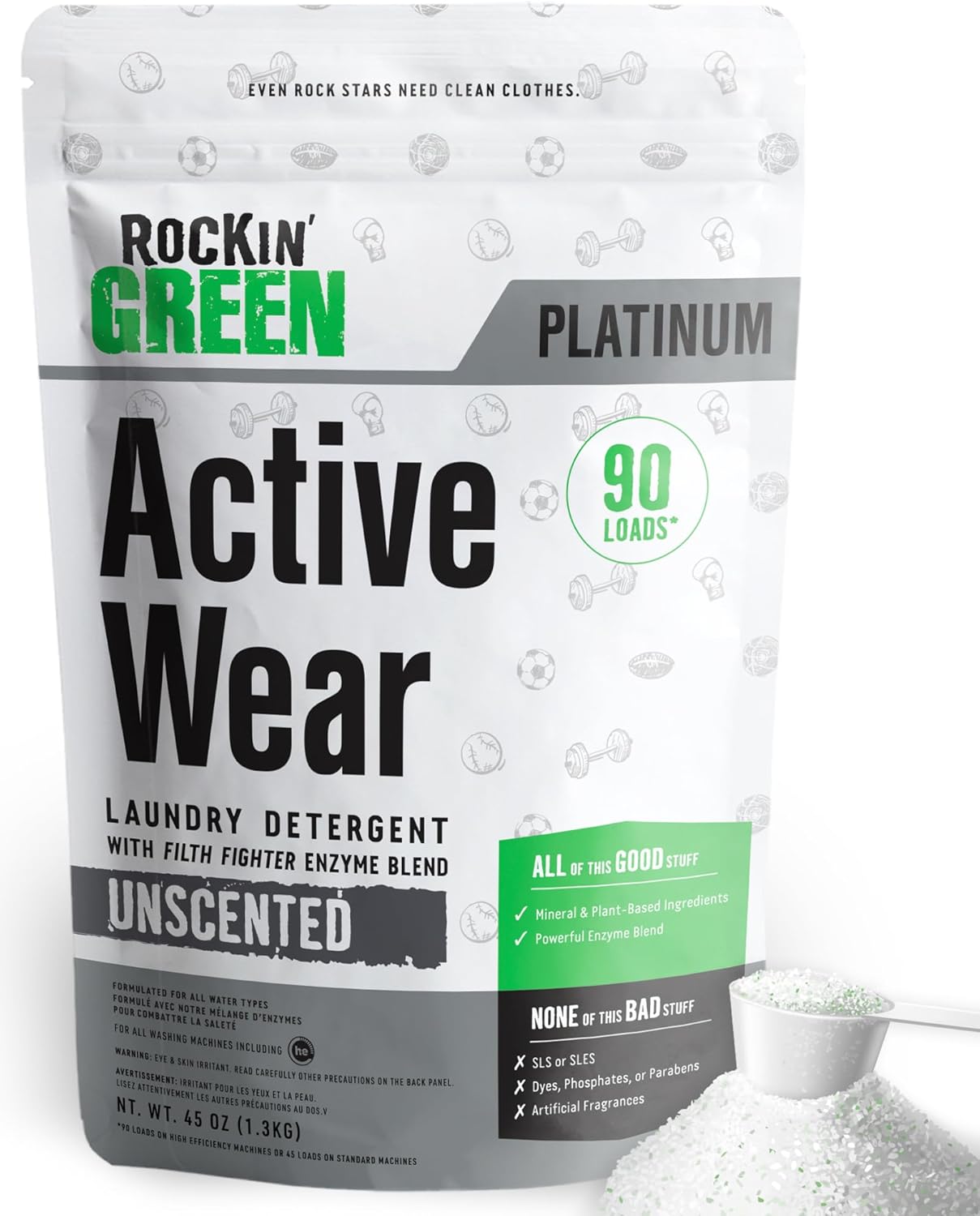
Quick Answer: The Best Laundry Detergents for Front Load Washers carry an explicit HE or high-efficiency statement, create controlled suds in low water, match the machine’s dispenser or drum instructions, and provide a dose you can measure accurately. Tide Free & Gentle is the most balanced starting point in this group because its verified listing states that it works in high-efficiency and standard machines while offering a fragrance-free position. Dirty Labs and Molly’s Suds provide concentrated alternatives, while Amazon Basics offers both liquid and pac formats.



Top Picks: Best Laundry Detergents for Front Load Washers
These Best Laundry Detergents for Front Load Washers cover Free & Gentle liquid, hyper-concentrated bio-enzyme liquid, sensitive-skin-positioned liquid, a value concentrated liquid, and premeasured HE pacs. Product identity and claims were checked through Amazon pages captured with Crawlbase; stain, odor, load-count, ingredient, and skin-related statements remain listing claims rather than independent machine or laboratory results.
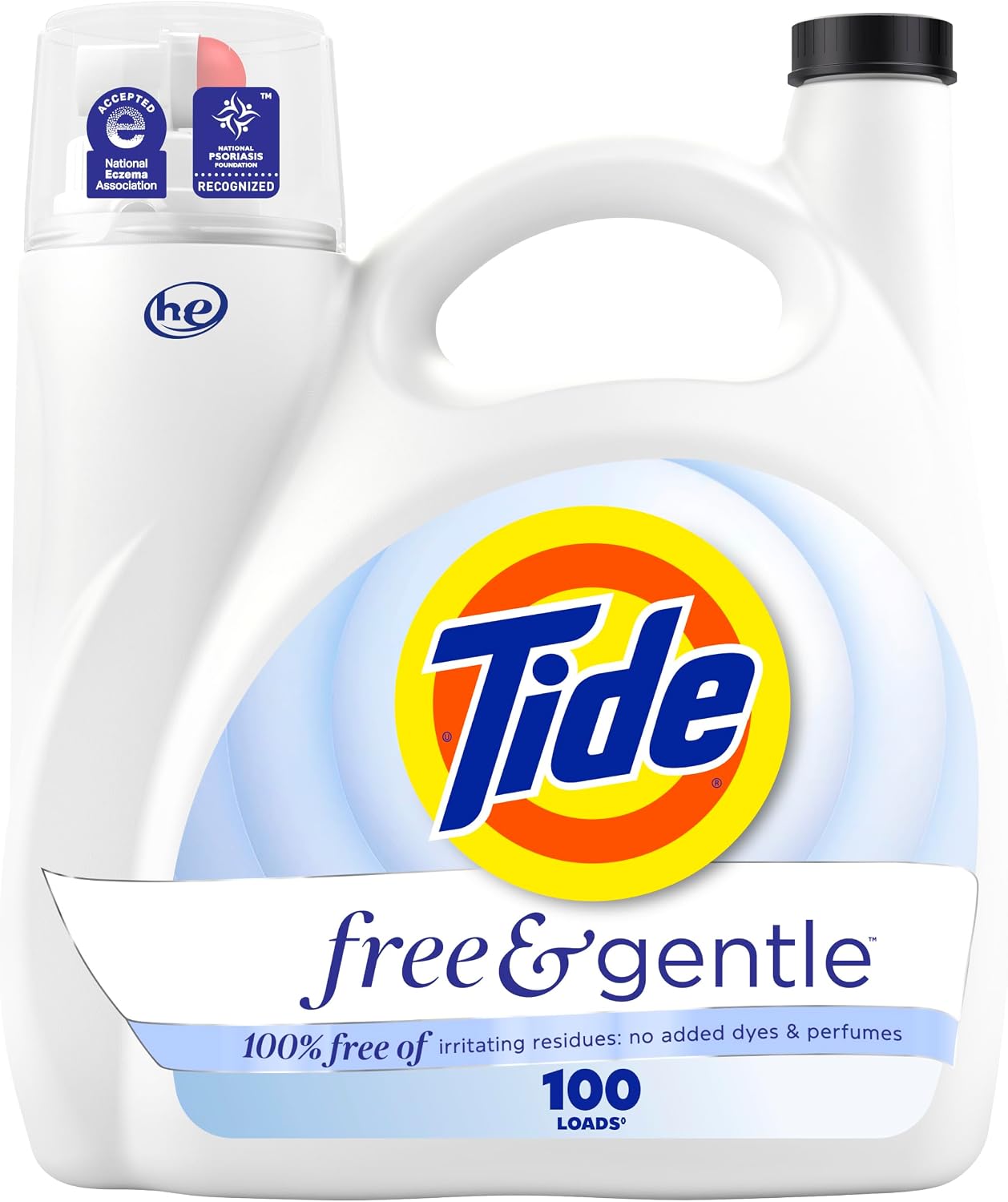
- Best Overall Free & Gentle Liquid: Tide Free & Gentle Liquid Laundry Detergent, 100 Loads, 132 fl oz – listed for high-efficiency and standard machines, including front-load use and cold water.
- Best Hyper-Concentrated Option: Dirty Labs Signature Bio Laundry Detergent, 80 Loads – a 21.6-fluid-ounce bio-enzyme concentrate listed for HE and standard machines.
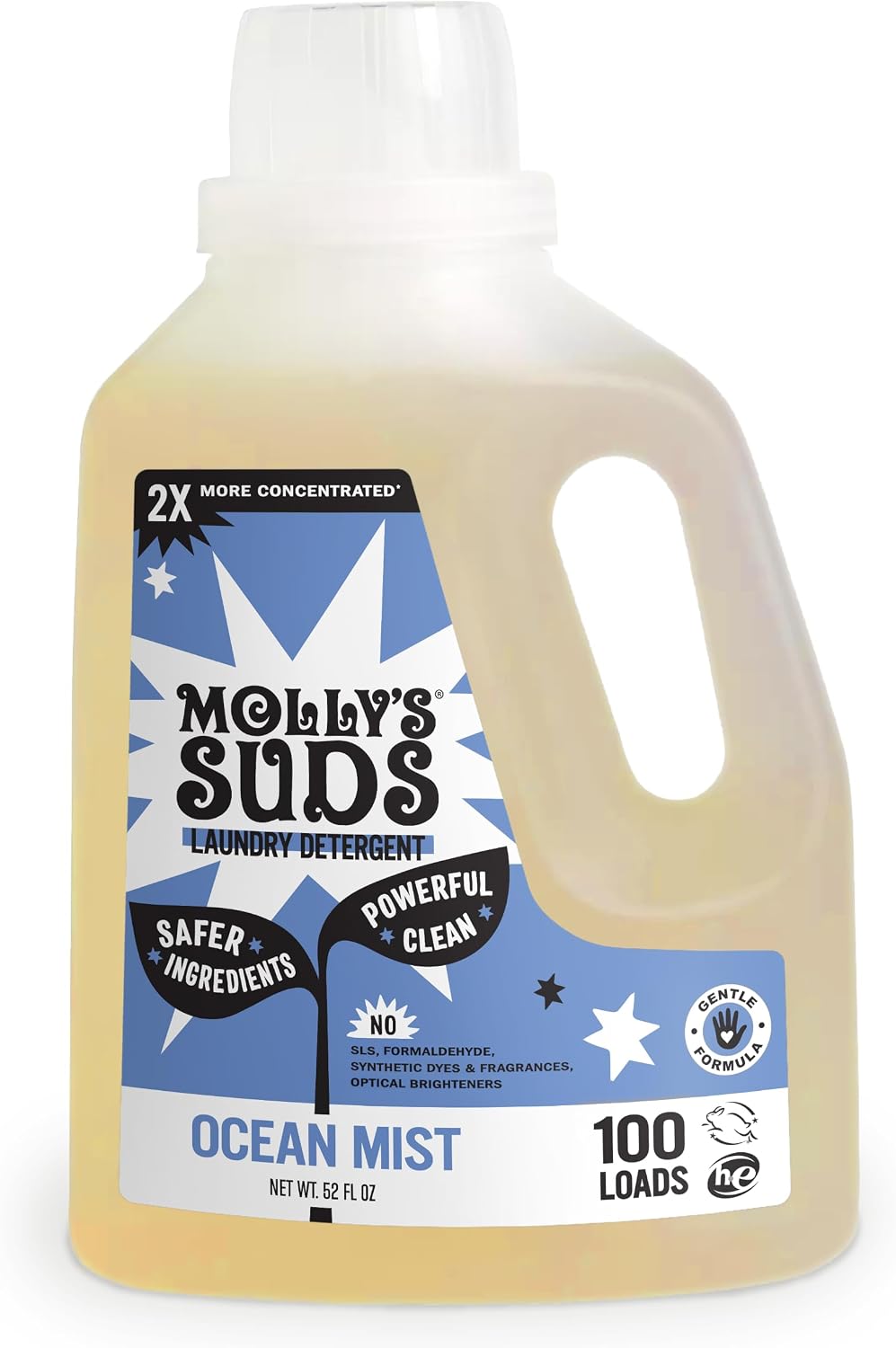
- Best Sensitive-Skin-Positioned Scented Liquid: Molly’s Suds Liquid Laundry Detergent, Ocean Mist, 100 Loads – a 2X concentrated liquid whose title explicitly states high-efficiency compatibility.
- Best Value Concentrated Liquid: Amazon Basics Concentrated Laundry Detergent Liquid, 110 Loads – an Original Fresh Scent liquid listed for standard and HE machines.
- Best Premeasured Format: Amazon Basics Laundry Detergent Pacs, Fresh Scent, 120 Count – HE-compatible pacs listed to dissolve in cold water.
Why Front Load Washers Need HE Detergent
A front loader cleans by lifting and dropping clothing through a shallow pool of wash liquor. It uses much less water than a traditional deep-fill machine, and its tumbling action can generate substantial foam from an ordinary high-sudsing formula. Excess foam cushions the load, reduces mechanical action, complicates rinsing, and may trigger a suds-control routine or error.
The Best Laundry Detergents for Front Load Washers are formulated or explicitly labeled for HE use. The HE symbol is more meaningful than package shape, bottle size, fragrance, or a general statement such as “powerful clean.” If the label does not authorize high-efficiency machines, do not assume that using a smaller amount makes it equivalent.
HE detergent is not a maintenance chemical. It can wash clothing when used correctly, but it cannot clear a blocked drain, repair a dispenser siphon, remove an object from the pump, correct weak water pressure, or replace the washer’s prescribed cleaning cycle.
How to Choose the Best Laundry Detergents for Front Load Washers
Choose by format, concentration, dose control, household soil, fragrance needs, water conditions, and the washer manual. The Best Laundry Detergents for Front Load Washers fit both the laundry and the low-water process.
Confirm HE Compatibility First
Look for “HE,” “high efficiency,” or an equivalent machine-compatibility statement on the current product and physical package. Some products support both HE and standard washers but use different dose lines. Imported or reformulated products may display directions differently, so read the version you actually receive.
If the washer has an automatic detergent reservoir, confirm that the formula’s viscosity and concentration suit that system. Some auto-dose machines require a concentration setting or prohibit gels, pacs, powders, or products that separate. A standard HE liquid is not automatically compatible with every bulk reservoir.
Liquid Detergent Trade-Offs
Liquid supports flexible dosing for small, medium, and large loads. It can disperse readily and may be used for pretreatment when its label permits. It is a practical choice when load size varies or when one person consistently measures the dose.
The drawback is accumulation. Pouring beyond the cap line, filling the drawer to the maximum mark regardless of load, or using concentrate at a conventional-liquid dose can create sticky residue in the compartment, siphon, hose, gasket, and outer tub. Colored liquid left on fabric can also produce a temporary spot when the drawer does not flush correctly.
The Best Laundry Detergents for Front Load Washers make the dose understandable, but the user still has to identify concentration and load conditions. A compact bottle may contain as many listed loads as a much larger bottle.
Pac and Pod Trade-Offs
Pacs simplify measuring and reduce bottle drips. Most front-loader pacs go into the empty drum before clothing, not into the liquid detergent compartment. The surrounding film needs direct contact with enough water and movement to dissolve. A pac placed on top of an overfilled load may become trapped in a fold or door area.
A unit dose cannot be divided. One pac may exceed the product direction for a tiny load, while a large heavily soiled load may require a different quantity. Follow the listed dose rather than assuming that every load takes one. For a broader format comparison, review the guide to laundry pods.
Keep pacs dry and intact. Never cut, squeeze, puncture, or handle a leaking unit. Store the closed original package in a locked location away from children and pets.
Powder and Sheet Considerations
Powder can offer economical dosing and stable storage, but it requires the washer and product to support powder placement. Very cold water, an overloaded drawer, damp powder, or a short cycle can leave granules. Detergent sheets reduce packaging bulk, yet dissolution, dose definition, and HE compatibility must be confirmed from the listing and package.
No format automatically wins. The Best Laundry Detergents for Front Load Washers are the products you can place, dose, dissolve, and store correctly in your specific machine.
Measure the Dose for Low Water
Start with the detergent directions for load size, soil, washer type, and concentration. Then compare the washer’s rated capacity with the actual dry load. A half-full drum of bulky towels is not equivalent to a half-full drum of lightweight shirts, and visual drum fullness does not directly state fabric weight.
More detergent is not a substitute for sorting, pretreating, selecting enough cycle time, or leaving tumbling room. Excess detergent can hold soil and lint against fabric, create a stiff or greasy feel, increase fragrance, and feed recurring deposits in hidden wet areas.
The Best Laundry Detergents for Front Load Washers deliver repeatable results when dose changes are deliberate. If laundry rinses poorly, do not automatically add an extra rinse forever; first review dose, load size, product placement, water supply, and machine condition.
Hard Water and Soft Water Change the Result
Hard-water calcium and magnesium can reduce cleaning efficiency and contribute to dull deposits. Very soft water can generate more persistent suds with a dose that seemed normal elsewhere. Obtain a reliable hardness result instead of estimating from visible scale alone.
The Best Laundry Detergents for Front Load Washers should be adjusted only within their directions. A detergent may contain builders or chelating ingredients, but severe hardness can still require a compatible strategy. The guide to hard-water laundry detergents covers mineral-related trade-offs.
Cold Water, Dissolution, and Cycle Selection
Cold washing can reduce water-heating energy and suit many everyday loads, but incoming cold is not one fixed temperature. Winter supply water can be much colder than a washer’s controlled-cold setting. Liquid may thicken, pac film may dissolve slowly, and short cycles provide less time for dispersion.
Follow garment care and the detergent’s supported temperature range. Place pacs correctly, avoid crowding, and check that cold water enters at normal pressure. Do not manually add hot water to a front loader. If problems repeat, select a label-approved washer setting or obtain service.
The Best Laundry Detergents for Front Load Washers cannot make near-freezing water behave like a validated warm process. Compare temperature and winter-inlet issues in the guide to cold-water laundry detergents.
Fragrance, Enzymes, and Sensitive Skin
Fragrance may leave laundry smelling finished, but it does not prove that odor-causing soil or washer deposits are gone. A fragrance-free product can be useful for sensitive households, although “free,” “gentle,” “nontoxic,” plant-based, or dermatologist-related listing language does not guarantee individual tolerance.
Enzymes help target certain proteins, fats, and starches under compatible conditions. They are useful for many everyday stains but may not suit every specialty fiber. Preservatives, surfactants, fragrance, dyes, and incomplete rinsing can all matter to a sensitive user.
The Best Laundry Detergents for Front Load Washers separate machine fit from skin preference. Someone needing a fragrance-free option should check current ingredients and follow a careful dose and rinse routine; the guide to sensitive-skin laundry detergents provides a more focused comparison.
Correct Dispenser and Drum Placement
Use the compartment named in the washer manual. Main-wash liquid may require an insert or flap; powder may require that insert to be removed or repositioned. Fabric softener and bleach have separate compartments with separate limits. Filling the wrong cup can release chemistry at the wrong time.
Do not exceed a drawer’s maximum line. That mark often controls siphoning, not the correct detergent dose. A small load may need much less. Rinse the removable drawer and clean its housing as directed so jets and siphon parts remain open.
Unless both product and washer instructions say otherwise, put pacs in the rear of the empty drum before adding dry clothing. Do not place them in the liquid drawer, door gasket, or on top of a tightly packed load.
Diagnosing Suds, Residue, and Musty Odor
Oversudsing
Signs can include foam at the glass, a cycle that extends, repeated rinsing, drainage trouble, or an error. Stop adding detergent, follow the washer’s recovery instructions, and do not mix in household chemicals to collapse foam. Review whether the product is HE compatible and whether a concentrate was overdosed.
Detergent Left in the Drawer
Possible causes include a clogged inlet screen, low pressure, a blocked drawer jet, a misplaced liquid insert, thick cold detergent, an overfilled compartment, or a drawer that is not seated. Clean accessible parts according to the manual and request service for continuing fill or leak problems.
White or Translucent Marks on Clothing
Residue can result from excess product, crowding, undissolved pac film, hard-water deposits, lint, or insufficient rinsing. Rewash according to the garment label without automatically adding more detergent. Bleach damage, abrasion, and melted synthetic material require a different diagnosis.
Musty Gasket or Laundry Odor
Odor can develop when moisture, lint, body soil, detergent, and softener remain around the gasket, dispenser, filter, drain path, or outer tub. Strong fragrance may cover the smell briefly but does not correct the source. Follow the washer’s cleaning cycle, filter, gasket, ventilation, and service instructions.
The Best Laundry Detergents for Front Load Washers reduce avoidable buildup through correct dose and rinsing, but they do not disinfect an appliance or repair drainage. Never combine chlorine bleach, ammonia, acids, or other cleaners.
A Reliable Front-Load Laundry Routine
- Sort by color, fiber, soil, lint, and garment care instructions.
- Check pockets, close suitable fasteners, and pretreat identified stains.
- Place a pac in the empty drum or prepare the correct dispenser for liquid.
- Measure detergent for concentration, load, soil, machine, and water hardness.
- Load loosely enough for items to lift and tumble.
- Select a garment-safe cycle and supported water temperature.
- Remove laundry promptly and inspect items before high-heat drying.
- Wipe accessible moisture and ventilate the machine as the manual recommends.
How We Tested & Evaluated These Options
We evaluated the Best Laundry Detergents for Front Load Washers using Amazon product pages retrieved through Crawlbase. We verified exact product identity, format, listed load count or volume, concentration, HE or high-efficiency language, cold-water statements, scent, stain and odor positioning, and machine compatibility.
We did not conduct hands-on laundry cycles, suds-height measurements, dispenser-flow trials, stain testing, residue analysis, skin testing, washer-cleaning tests, or long-term gasket inspections. This is a research-based buying guide, so it does not invent physical performance rankings.
Formulas, bundles, packaging, directions, and machine claims can change. Confirm the current listing, physical label, washer manual, and garment instructions before use.
Common Buying and Use Mistakes
Avoid these mistakes when narrowing down the Best Laundry Detergents for Front Load Washers:
- Ignoring the HE statement: A low-water machine needs a compatible low-sudsing formula.
- Using the maximum drawer line as the dose: It may be a siphon limit rather than a load recommendation.
- Putting a pac in the liquid compartment: Most units need direct placement in the empty drum.
- Overpouring concentrate: A small cap can represent many loads, and excess product worsens rinsing.
- Packing the drum tightly: Clothing needs room for tumbling and rinse-water access.
- Masking washer odor with fragrance: Deposits, drainage, and wet maintenance areas require correction.
- Assuming detergent cleans the machine: Use the washer’s specified cleaning procedure.
- Mixing maintenance chemicals: Dangerous gases or reactions can result.
Buying Checklist
Before choosing the Best Laundry Detergents for Front Load Washers, verify:
- The product explicitly supports HE or high-efficiency machines.
- The format belongs in your dispenser, auto-dose tank, or empty drum.
- The concentration and dose scale fit your usual load sizes.
- The formula addresses your typical stain, odor, and fragrance needs.
- The supported temperature fits your garments and winter water supply.
- Your measured water hardness is considered without exceeding directions.
- The ingredient and fragrance profile suits household sensitivities.
- The package can be closed and locked away from children and pets.
- The washer is draining, filling, tumbling, and rinsing normally.
- Current product and machine instructions agree on placement and dose.
Frequently Asked Questions
Do front load washers require special detergent?
They require detergent explicitly approved for HE machines. An ordinary high-sudsing formula can interfere with tumbling and rinsing even if a small amount is used.
How much detergent should I use in a front loader?
Use the product’s HE dose for concentration, dry load, soil, and water conditions. Do not fill to the drawer maximum automatically, and do not copy a dose from a different formula.
Where do detergent pods go in a front load washer?
Most go in the empty drum before clothing, but both product and washer directions control. Keep units dry and intact, and never place them in a liquid drawer unless explicitly authorized.
Is liquid or powder better for a front loader?
Liquid offers flexible dosing and easy dispersion; powder stores well and may be economical. The better choice is HE compatible, correctly placed, fully dissolved, and accurately measured for the machine.
Can too much detergent make a front loader smell?
Yes. Excess product can contribute to residue that traps soil and moisture. Odor can also involve the gasket, filter, drain, standing water, or another appliance issue.
Why is water left in the detergent drawer?
A small amount may be normal for some designs. Excess water can involve a blocked siphon, dirty drawer, poor leveling, inlet problem, or incorrect insert. Follow the appliance manual.
Does HE detergent sanitize laundry or the washer?
No. Ordinary washing and sanitizing are separate claims and processes. Use only registered products or validated procedures required by garment, appliance, medical, or public-health instructions.
Final Decision
Tide Free & Gentle is the most broadly approachable option here for a fragrance-free liquid with explicit HE and front-load positioning. Dirty Labs offers a compact bio-enzyme concentrate, Molly’s Suds provides a scented 2X HE liquid, Amazon Basics liquid emphasizes value and flexible dosing, and Amazon Basics pacs suit buyers who prefer premeasured units.
The Best Laundry Detergents for Front Load Washers succeed through fit and process: verify HE compatibility, measure concentration, put liquid and pacs in the correct location, leave tumbling room, account for hardness and temperature, maintain the washer, and treat recurring suds, residue, odor, fill, or drain problems as issues to diagnose rather than reasons to pour more detergent.