

Modern home offices rely entirely on stable electrical current to maintain productivity and preserve valuable data. A single second of power disruption drops active video calls and can corrupt open operating system files immediately. Investing in the right power protection keeps your network alive through sudden electrical outages.
Choosing the right unit requires balancing total electrical capacity against the actual power draw of your hardware. Many buyers accidentally purchase underpowered units that shut down instantly when their computer draws peak wattage under load. Our detailed evaluation of 10 top units helps you identify reliable hardware for any home configuration.
In this guide updated for September 2026, we analyze leading systems from reputable brands like APC, CyberPower, GOLDENMATE and more. You can also explore our practical electronics guides to improve your daily hardware efficiency. This breakdown ensures you secure the proper runtime without overspending on unnecessary industrial capacity.


Volt-Ampere Rating and Real Wattage Capacity
Volt-Ampere ratings indicate apparent power, while wattage measures the true active work delivered to your connected devices. Manufacturers frequently highlight the larger Volt-Ampere figure on retail packaging because it appears significantly more impressive. You must always confirm the continuous wattage rating before calculating if your desktop can operate safely.
A mid-range computer system with dual monitors typically consumes between three hundred and five hundred watts during active tasks. If your backup unit only delivers two hundred and fifty watts, it will immediately overload and trip offline. Always select a unit with active wattage headroom that exceeds your measured load by at least twenty percent.
Routers and broadband modems demand minimal power, usually consuming between ten and twenty-five watts continuously. A smaller reserve capacity is sufficient for standalone networking gear, but combined computer setups require substantial overhead. Checking your hardware power supplies ensures you never underpower essential work equipment during an unexpected blackout.
Output Waveform Compatibility for Modern Hardware
Uninterruptible power supplies produce either simulated sine wave output or pure sine wave current when discharging battery power. Simulated sine wave units approximate alternating current through stepped square waves that work well with simple electronics. Modern desktop computers equipped with active power factor correction power supplies often require clean pure sine wave input.
Connecting sensitive power supplies to simulated sine waves can cause unexpected shutdowns, buzzing noises, or component stress. Gaming rigs, high-end creative workstations, and network attached storage appliances perform best with true pure sine wave architecture. Basic Wi-Fi routers and low-draw modems handle stepped approximations easily without showing operational issues or hardware instability.
Check your desktop power supply specifications before deciding between economical stepped units and premium sine wave backups. If your personal computer features high-efficiency power ratings like Gold or Platinum, prioritize pure sine wave models. This targeted investment preserves sensitive electrical components and guarantees seamless transfer when utility power drops out completely.
Topology and Automatic Voltage Regulation
Standby power backups remain idle until power fails completely, then switch over to internal battery reserves. Line-interactive units constantly monitor input current and utilize automatic voltage regulation to correct irregular voltages without battery discharge. This distinction is critical for homes that frequently experience mild brownouts or recurring electrical sag.
Automatic voltage regulation boosts low voltage and trims dangerous high voltage while keeping your hardware running smoothly. Because the system stabilizes power without engaging the battery pack, it prevents unnecessary battery wear and preserves runtime. Standby units lack this continuous conditioning and must cycle the battery for every minor voltage dip.
Choosing line-interactive topology provides substantial longevity advantages for households located in areas with unstable municipal electrical grids. You will enjoy stable power across your workstation monitors without hearing constant alarm clicks or suffering battery degradation. For simple router setups in stable power zones, compact standby designs remain perfectly adequate and cost-effective.
| Topology Type | Voltage Regulation | Switching Speed | Primary Best Use |
|---|---|---|---|
| Standby UPS | No regulation (Battery only) | 6 to 10 Milliseconds | Modems, basic routers, low-draw accessories |
| Line-Interactive UPS | Active AVR Boost and Buck | 2 to 4 Milliseconds | Workstations, gaming PCs, home servers |
| Lithium Pure Sine UPS | Comprehensive BMS and AVR | 2 to 4 Milliseconds | Critical office gear, long-lifespan setups |
Battery Chemistry and Cycle Lifespan
Traditional power backup units rely on sealed lead-acid batteries that offer reliable energy delivery at economical entry prices. These standard lead-acid packs provide three to five years of operational service before requiring routine internal cell replacement. Newer units incorporating lithium iron phosphate cells provide over a decade of continuous performance without battery degradation.
Lithium iron phosphate chemistry supports thousands of full discharge cycles while maintaining high thermal stability and compact physical dimensions. While initial acquisition costs are higher, the extended lifespan dramatically reduces your long-term ownership expenses and maintenance effort. Standard lead-acid units remain great budget options if you do not mind swapping internal batteries periodically.
Consider how long you plan to maintain your current workstation before committing to a specific battery chemistry. If you prefer a completely maintenance-free setup for ten years, modern lithium architecture provides unmatched dependability and peace of mind. For secondary offices or guest bedroom setups, standard sealed lead-acid models provide dependable emergency protection at accessible price points.
Outlet Distribution and Physical Socket Spacing
Most uninterruptible power supplies split their rear outlets between battery-supported surge protection and surge-only passive sockets. Plugging non-essential equipment into battery-backed outlets quickly drains reserve power when a blackout occurs. You should reserve battery outlets strictly for your computer tower, primary monitor, external storage drive, and internet gateway.
Large power adapter bricks from Wi-Fi routers and monitors can easily block adjacent electrical sockets if spacing is cramped. High quality backup units provide widely spaced transformer outlets that accommodate bulky power adapters without covering neighboring plugs. Make sure to count your required plugs before purchasing to ensure every essential peripheral receives dedicated battery coverage.
For broader workspace configuration advice, check out our guide on home and living essentials to optimize your desktop layout. Placing low-priority accessories like desk lamps and printers on surge-only outlets preserves critical runtimes during emergencies. Proper socket organization guarantees your core communications stay active when unexpected grid failures strike your neighborhood.
Battery Runtime Expectations Under Varied Loads
Battery runtime decreases exponentially as the electrical load drawn by your connected electronics approaches the maximum rated capacity. A six-hundred-volt-ampere unit can power a low-draw wireless router for well over two hours during an outage. That identical backup unit will only keep a demanding desktop computer operational for approximately five to ten minutes.
Your primary operational goal for a personal computer should be orderly file saving and safe system shutdown. Five to ten minutes of emergency runtime provides sufficient opportunity to finish tasks and power down securely. Routers require longer runtimes so your mobile devices and laptops can maintain internet access throughout prolonged regional outages.
If you need your desktop to continue working through extended power cuts, you must size your capacity substantially higher. Calculating total wattage draw allows you to accurately forecast whether a given unit delivers minutes or hours of support. Matching runtime specifications to your actual work habits eliminates stressful rushed shutdowns during critical project deadlines.
Status Displays and Automated Management Software
Built-in liquid crystal display panels offer real-time visibility into power conditions, estimated runtime minutes, and current battery charge. Having immediate diagnostic data helps you identify utility power abnormalities and load levels without installing external monitoring tools. Compact models without digital screens use basic status lights and sound patterns to communicate system health.
Advanced battery units include dedicated communication ports that link directly to your personal computer or network storage enclosure. Management software can trigger automatic, unattended system shutdowns when battery levels drop below a designated threshold during power failures. This automated safety protocol prevents data corruption even if a blackout strikes while you are away from your desk.
Review the compatibility of manufacturer management utilities with your specific desktop operating system or local network storage device. Most leading software packages let you customize alarm schedules, monitor historical power events, and conduct self-tests easily. These intelligent control features transform basic battery packs into comprehensive desktop power management solutions.
Surge Energy Ratings and Data Line Defense
Power outages are frequently accompanied by severe voltage spikes that can permanently destroy delicate silicon computer chips and networking modems. Surge protection is measured in joules, which defines how much transient electrical energy the internal components can safely absorb. Higher joule ratings ensure long-term durability and continuous hardware shielding against repetitive power grid anomalies.
Destructive electrical spikes can also travel into your hardware through connected Ethernet lines and coaxial cable broadband connections. Premium uninterruptible power systems feature shielded data ports that isolate these networking paths from dangerous external voltage spikes. Connecting your main broadband feed through these protected data jacks ensures comprehensive multi-vector defense for your modem.
If you live in an area prone to severe thunderstorms or aging utility lines, data port protection is essential. A single lightning strike nearby can send surges traveling through cable lines directly into your motherboard or router. Integrated data line filters offer cheap insurance against catastrophic component failure during severe storm seasons.
Form Factor, Noise Levels, and Audible Alarm Controls
Battery backup systems range from compact, flat power-strip styles to substantial floor-standing mini-towers with integrated cooling fans. Slim flat units fit cleanly behind credenzas or mount directly onto walls near your main internet connection point. Tower configurations require floor space under your desk but generally pack significantly higher battery capacities and comprehensive front displays.
Internal cooling fans activate during heavy loads or battery discharging phases to keep sensitive electronics and power transformers cool. Units with high-output cooling fans can produce noticeable operating noise when operating in quiet home office environments. Make sure to check the rated decibel output if your workspace requires complete acoustic silence during work hours.
Look for backup models that include dedicated physical mute buttons or software toggles to silence loud warning buzzers. Constant audible beeping during a late-night power outage can be frustrating if your network is functioning normally on battery. Muting unnecessary alarms keeps your workspace peaceful while your equipment continues running smoothly on clean backup power.
Why You Should Trust Us
Our technology evaluation process focuses on rigorous analysis of technical specifications, real-world discharge profiles, and verified component durability. We assess power backup solutions across diverse operating scenarios, evaluating everything from low-wattage modem setups to power-intensive computing workstations. By examining manufacturer circuit designs and surge suppression ratings, we provide objective recommendations tailored to your electrical demands.
We analyze real-time market data, technical firmware releases, and electrical safety certifications from recognized testing laboratories. Our evaluations remain completely independent, allowing us to highlight both functional advantages and practical limitations across every featured product. Explore our setup resources to see how we categorize practical tech solutions for modern living spaces.
Power equipment requirements evolve as modern desktop computer power supplies and residential internet equipment become more sophisticated. We continually update our hardware evaluations to ensure our recommendations reflect current electrical standards and contemporary component requirements. Our clear, data-driven approach helps you make confident purchasing decisions that safeguard your essential electronics.
Final Thoughts
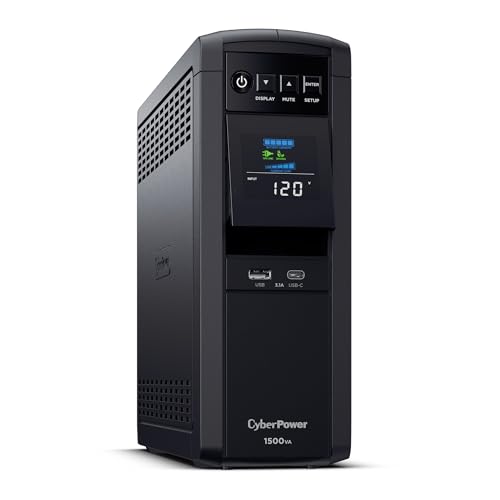
Selecting the right power protection ensures your productivity remains uninterrupted when local power grids experience unexpected failures. For demanding workstation setups and active gaming computers, the CyberPower CP1500PFCLCD PFC Sinewave UPS Battery delivers exceptional pure sine wave output and clear diagnostic tracking. Its high capacity and automatic voltage regulation protect complex active power factor correction power supplies against unexpected electrical strain.
If you require modern battery chemistry that lasts for a decade of daily operation, look into advanced lithium solutions. The GOLDENMATE 1000VA/800W Lithium UPS Battery Backup offers over five thousand charge cycles and low maintenance requirements. Its pure sine wave output and quiet cooling make it an outstanding long-term investment for reliable power.
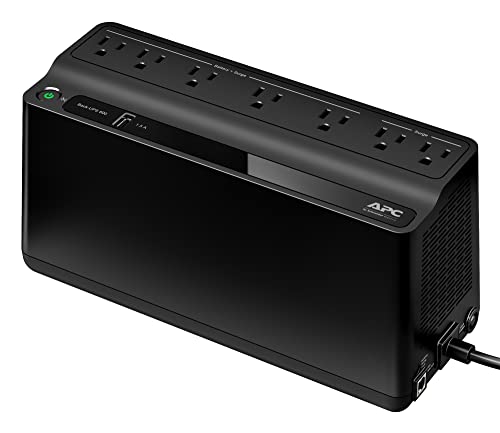
For budget-conscious users who simply need basic surge defense and sufficient shutdown runtime for simple setups, affordable options abound. The Staples TECH 650VA UPS Battery Backup, 8 Outlets supplies dependable power reserves in a compact desktop form factor. Similarly, the APC UPS 425VA/225W UPS Battery Backup for Router provides the perfect space-saving design for dedicated internet modem protection.
Balancing your required runtime, connected hardware wattage, and available physical space guarantees you choose the ideal system. You can also review our advice on office furniture and comfort setups to organize your work environment efficiently. Investing in dependable power backup now will save you from lost work and damaged equipment down the road.
Frequently Asked Questions About Best Battery Backup for Routers and Computers
How long will a Best Battery Backup for Routers and Computers keep my Wi-Fi router running during a blackout?
A low-wattage Wi-Fi router consuming around ten to fifteen watts can operate for two to four hours on a typical backup unit. Higher capacity units can extend router connectivity for six hours or more depending on total network traffic and radio power.
Can I plug a laser printer into a battery backup outlet?
You should never connect a laser printer to the battery-supported outlets of an uninterruptible power supply. Laser printers draw massive bursts of electrical current when heating their internal fusers, which will instantly overload and damage the backup battery inverter.
What is the main advantage of pure sine wave power for modern computers?
Pure sine wave power closely matches the smooth alternating current supplied by standard residential electrical utility lines. High-efficiency personal computer power supplies with active power factor correction require pure sine waves to prevent sudden shutdowns and internal component overheating.
How often do internal lead-acid backup batteries need replacement?
Sealed lead-acid batteries typically deliver reliable operating performance for three to five years under normal ambient room temperatures. Frequent deep discharges or operating in hot environments will reduce total battery lifespan and require earlier replacement.
What happens if the connected load exceeds the wattage rating of the backup unit?
When the electrical load exceeds rated continuous capacity, the backup unit sounds an overload alarm and shuts down to protect its internal circuitry. This sudden shutdown cuts power to your connected computer immediately, completely defeating the purpose of having emergency battery protection.
How does automatic voltage regulation save battery life in 2026?
Automatic voltage regulation boosts low voltage brownouts and trims high voltage spikes using internal transformer taps without switching to battery power. By keeping your hardware running on conditioned utility current, the unit preserves battery charge for genuine blackouts and extends overall battery life.
Should I keep my battery backup plugged into the wall outlet continuously?
Yes, uninterruptible power supplies are designed to remain permanently connected to energized wall outlets. Continuous connection keeps internal battery cells fully charged and ensures instantaneous transfer to emergency power when an electrical disruption occurs.
How much wattage does a standard home computer and monitor setup require?
A standard desktop computer paired with a single monitor generally consumes between one hundred and fifty and three hundred watts during general productivity tasks. Demanding gaming systems or multi-monitor workstations can easily pull four hundred to six hundred watts under heavy computational loads.
Can a battery backup unit protect against nearby lightning strikes?
Quality power backup systems contain metal oxide varistors designed to absorb transient voltage spikes caused by nearby lightning activity. For complete equipment protection, you should also route your incoming Ethernet cables through the unit data surge suppression ports.
Why does my power backup unit beep periodically during normal operation?
Periodic beeping usually indicates that the unit has switched to battery power due to utility voltage fluctuations or has detected a wiring fault. It can also signal that the internal battery has reached the end of its functional life and requires replacement.









Write Your Review
No reviews yet. Be the first to share your experience!