

Online multiplayer matches on modern consoles require far more network stability than basic web browsing or streaming video. Competitive titles like Call of Duty, Fortnite, and Rocket League suffer immediately when background downloads spike your latency. Choosing the right networking gear prevents sudden ping spikes and packet loss during crucial gaming moments.
Standard internet service provider gateways rarely prioritize real-time interactive traffic over secondary home downloads. Investing in the Best Console Gaming Routers gives you deep control over bandwidth allocation, intelligent quality of service rules, and modern wireless frequency bands. Our team analyzed 7 leading hardware options across top manufacturers in September 2026 to identify routers that deliver real gaming benefits. Explore our helpful curated tech guides to learn more about optimizing home gear.
Whether you play wirelessly on a PlayStation 5 or require multi-gigabit Ethernet connections for an entire console lineup, matching the right specs is crucial. Modern networking standards like Wi-Fi 6E and Wi-Fi 7 offer clear frequency spectrums that bypass crowded neighborhood signals. This guide breaks down the essential hardware specifications so you can make an informed investment.
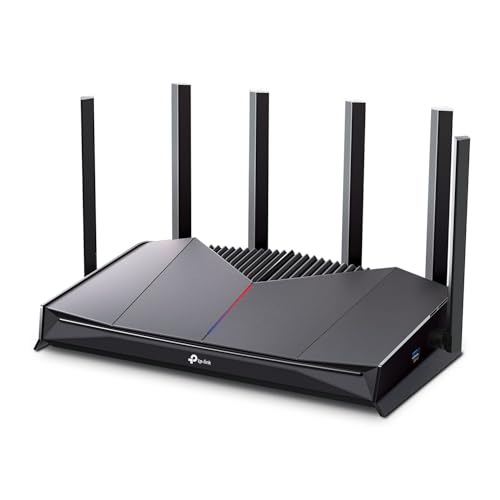


Wired Multi-Gigabit Ethernet Ports
Ethernet connections remain the gold standard for competitive console gaming because physical cables eliminate interference entirely. Standard gigabit ports cap your local throughput at one gigabit per second, which may bottleneck modern fiber internet connections. Choosing a router equipped with 2.5 Gbps or 10 Gbps Ethernet ports ensures that high-speed broadband reaches your console without friction.
Dedicated gaming LAN ports often carry automatic hardware prioritization over standard LAN jacks. When you plug your console into an accelerated port, the router processes outbound gaming packets before handling smart television streams or file backups. This direct path keeps your latency low even during heavy household internet usage.
Check the rear panel specifications to confirm both WAN and LAN multi-gigabit capabilities. Having a 2.5 Gbps WAN port paired only with 1 Gbps LAN ports limits individual wired devices to gigabit speeds. A balanced configuration provides multi-gig speeds across both incoming internet and outgoing local gaming ports.
Rule of thumb: connect your primary gaming console directly to a dedicated 2.5G gaming port via Cat6 or Cat6a cabling. This ensures you maintain sub-millisecond local latency and take full advantage of gigabit-plus internet download speeds.
Quality of Service (QoS) and Traffic Prioritization
Quality of Service is the software engine that dictates which network packets take precedence when your connection faces congestion. Without QoS, a large operating system update or high-bitrate video stream can overwhelm your router buffers, creating bufferbloat. Bufferbloat causes unpredictable ping spikes and severe in-game rubberbanding.
Advanced gaming routers feature dynamic packet prioritization or specialized software suites like WTFast or GearUP acceleration. These engines identify real-time gaming protocol data and instantly push it to the front of the transmission queue. This ensures that every button press reaches game servers without waiting behind large background file transfers.
Evaluate whether a router offers device-level priority, application-based tagging, or modern anti-bufferbloat algorithms like Smart Queue Management (SQM). Simple percentage-based bandwidth limiters are far less effective than intelligent packet scheduling engines that actively manage queuing latency.
Practical tip: configure your router QoS settings by entering your actual upload and download speeds after running several baseline tests. Set your console MAC address as the highest priority device on the local network map.
Wi-Fi Standards: Wi-Fi 6, 6E, and Wi-Fi 7
Understanding wireless generations is vital when you must connect your gaming console over the air. Wi-Fi 6 introduced OFDMA and MU-MIMO to manage dozens of connected household devices cleanly. Wi-Fi 6E expanded into the uncrowded 6 GHz spectrum, providing dedicated channels free from legacy microwave and neighbor interference.
Wi-Fi 7 represents the newest standard, introducing groundbreaking features like Multi-Link Operation (MLO) and 4K-QAM modulation. MLO allows compatible hardware to send and receive data across multiple frequency bands simultaneously. This multi-lane approach drastically reduces wireless jitter and stabilizes latency in high-density smart homes.
While current generation consoles utilize Wi-Fi 6, pairing them with a Wi-Fi 6E or Wi-Fi 7 router future-proofs your entire home network. More importantly, offloading your phones and laptops to the 6 GHz band frees up the 5 GHz band for your console.
When reviewing wireless capabilities across modern home living technology, look for routers with high spatial stream counts. A 6-stream or 8-stream architecture handles concurrent transfers with far less packet queuing.
Processor, Memory, and Hardware Specs
A gaming router is a dedicated microcomputer that inspects, encrypts, and routes millions of data packets every hour. Routers equipped with quad-core processors running at 1.5 GHz or higher process heavy traffic without overheating or dropping frames. Insufficient processing power results in dropped packets during frantic multiplayer action.
System memory is equally critical for maintaining smooth network routing and running background software tools. Look for routers with at least 512 MB to 1 GB of DDR4 RAM. Ample RAM allows the router to maintain massive connection tables, execute built-in ad blockers, and manage encrypted VPN tunnels effortlessly.
Flash storage capacity dictates how many third-party plugins, custom firmware packages, or specialized scripts you can store locally. Routers with eMMC storage give power users the flexibility to install open-source networking tools without risking system instability.
Rule of thumb: prioritize models featuring at least a quad-core CPU and 1 GB of RAM if you plan on running VPN protocols or advanced firewall filters simultaneously.
Built-in VPN Client Performance
Console operating systems do not allow native VPN applications to run in the background like desktop computers. If you want to route console traffic through a secure server or access geo-restricted lobbies, your router must handle the encryption. A router with built-in VPN client capabilities encrypts traffic at the hardware gateway level.
Modern protocols like WireGuard offer significant performance improvements over older OpenVPN standards. WireGuard provides lightweight code execution that achieves throughput speeds upwards of 600 Mbps to 900 Mbps on high-end hardware. Older OpenVPN tunnels frequently cap out at under 100 Mbps due to heavy encryption overhead.
Look for firmware that supports policy-based routing or split tunneling. Policy routing lets you direct only your console or gaming PC through the VPN tunnel while keeping smart home devices on your regular ISP connection.
Check the processor specifications before purchasing a router specifically for VPN gaming. A weak dual-core chip will throttle your download speeds drastically the moment a secure tunnel is engaged.
Antenna Configuration and Signal Coverage
Antenna design directly influences how well wireless signals penetrate walls, floors, and household obstacles between your router and console. Routers with high-gain external antennas allow for directional adjustments to target specific rooms. Internal antenna arrays rely on beamforming technology to focus radio energy toward active receiver devices.
Square footage ratings help gauge whether a standalone unit can cover your entire living space. A router rated for 2,500 to 3,600 square feet provides sufficient signal strength for multi-story homes. Weaker coverage leads to packet retransmissions, which manifest as sudden ping spikes during matches.
Check if the router supports universal mesh expansion standards such as EasyMesh. EasyMesh compatibility lets you link additional access points later without locking yourself into proprietary, expensive hardware ecosystems.
Practical tip: elevate your router at least four feet off the floor and away from dense metal entertainment centers. Positioning the router in an open area significantly reduces signal reflection and packet dropouts.
Security Suites and Parental Controls
Gaming routers connect to dozens of unsecured internet of things appliances that can become vectors for network attacks. Built-in security suites scan real-time traffic for malicious domains, infected endpoints, and distributed denial-of-service threats. Having hardware-level protection safeguards your personal accounts and connected gaming hardware.
Many manufacturers partner with cybersecurity initiatives or incorporate Secure-by-Design principles into their firmware architecture. Features such as AdGuard Home or integrated DNS filtering block tracking domains before they ever reach your local devices. This keeps your household network clean and minimizes background data clutter.
Parental control tools allow household administrators to schedule gaming device access, enforce bedtimes, and filter adult content. Integrated monitoring platforms like Bark help families maintain safe digital environments without needing complex software configurations on individual consoles.
Ensure the security suite does not require expensive ongoing monthly subscriptions for basic firewall protection. Free lifetime basic security updates should be a primary consideration when evaluating long-term value.
Gaming Dashboard and Management Software
Managing advanced networking features should not require a computer science degree or complex command-line inputs. Dedicated gaming routers provide intuitive mobile applications and web dashboards tailored for quick adjustments. These interfaces present ping health, connected devices, and bandwidth consumption in clear visual charts.
A well-designed dashboard allows you to toggle gaming acceleration, alter RGB lighting accents, and test real-time bufferbloat with single clicks. Mobile management through Android and iOS apps lets you troubleshoot connectivity without interrupting your active game session on the main television screen.
For enthusiast users, open-source firmware compatibility like OpenWrt provides complete control over network routing tables, firewall rules, and custom plugins. Having access to both friendly consumer dashboards and deep administrative panels satisfies both casual gamers and advanced power users.
Look for platforms that offer automatic firmware updates. Keeping router software updated ensures that new security patches and latency optimizations apply without manual intervention.
Console Router Feature Comparison
Comparing core specifications side by side helps clarify which class of router fits your home infrastructure. Below is a breakdown of essential networking attributes across common gaming router tiers.
| Feature Category | Entry Accelerator | Mid-Range Wi-Fi 6/6E | Flagship Wi-Fi 7 |
|---|---|---|---|
| Ethernet Ports | 1 Gbps LAN Ports | 2.5 Gbps WAN/LAN | Dual 10G or Multi 2.5G |
| Wireless Speeds | Up to 2.4 Gbps | Up to 6.0 Gbps | Up to 18 Gbps |
| Frequency Bands | Dual-Band (2.4/5 GHz) | Tri-Band with 6 GHz | Tri-Band with MLO |
| Hardware RAM | 256 MB to 512 MB | 1 GB DDR4 | 1 GB to 2 GB High-Speed |
| Target Environment | Secondary Booster / Compact | Medium to Large Homes | Multi-Gig Fiber / Enthusiast |
Carefully weigh your current internet subscription speed against these hardware categories. If your internet service provides 500 Mbps, a mid-range Wi-Fi 6 or 6E unit offers exceptional performance without overspending on unused multi-gigabit throughput.
Why You Should Trust Us
Our editorial approach focuses on rigorous hardware analysis, specification auditing, and objective technical comparisons. We cross-reference manufacturer technical whitepapers, processor architectures, and verified networking benchmarks to assess real-world viability. We examine packet processing capabilities, thermal designs, and firmware stability across diverse home setups.
Rather than relying on marketing jargon or theoretical peak wireless throughput figures, we analyze practical gaming metrics. We evaluate anti-bufferbloat implementations, VPN tunnel throughput under load, and port layout utility. Our hardware rankings update continually as new firmware revisions and wireless networking standards roll out to consumers.
We remain completely objective and independent in our assessments. Products are shortlisted based on their demonstrable hardware strengths, interface usability, and overall value proposition for console players. You can explore our general resource category overview to see how we evaluate consumer gear.
Final Thoughts
Choosing the ideal networking centerpiece transforms your daily gaming sessions from frustrating lag spikes into smooth, responsive experiences. For players wanting the absolute best balance of speed, open software flexibility, and high-performance routing, we recommend the GL.iNet GL-MT6000 Flint 2 Wi-Fi 6 Gaming Router. Its dual 2.5G ports, massive memory capacity, and outstanding WireGuard VPN speeds make it a formidable centerpiece for any gaming battlestation.
If you want cutting-edge wireless technology ready for next-generation devices, the TP-Link Dual-Band BE6500 WiFi 7 Gaming Router 6.5 delivers exceptional Wi-Fi 7 throughput and dedicated gaming port prioritization. It ensures minimal wireless latency across crowded smart homes while providing seamless multi-gigabit wired passthrough.
Gamers seeking an affordable instant booster or traveling companion will appreciate the HYPEREV AX3000 Gaming Router WiFi Booster for PS5. It plugs directly into existing modem setups to deliver targeted server acceleration without requiring an entire network overhaul. For whole-home luxury with massive coverage, the TP-Link Tri-Band BE18000 WiFi 7 Router offers unmatched 10G wired capabilities and immense wireless capacity. Check out our entertainment and kids setup reviews for more room optimization ideas.
Frequently Asked Questions
Do Best Console Gaming Routers actually lower ping in online games?
A dedicated gaming router cannot change the physical distance between your home and a game server, but it eliminates internal network delays. By managing bufferbloat and prioritizing gaming packets over streaming downloads, it keeps your latency rock steady at its absolute physical minimum.
Is Wi-Fi 7 necessary for console gaming in 2026?
While current consoles primarily use Wi-Fi 6 hardware, a Wi-Fi 7 router provides massive advantages for the rest of your household. Offloading other devices to wide Wi-Fi 7 channels clears bandwidth on standard bands so your console enjoys an interference-free wireless connection.
What is bufferbloat and why does it ruin console multiplayer?
Bufferbloat occurs when high bandwidth activities like file downloads fill up your router memory buffers, causing real-time packets to wait in line. This creates sudden latency spikes and rubberbanding in games, which gaming routers solve using advanced Smart Queue Management.
Should I use 2.5 Gbps Ethernet ports for my PlayStation 5 or Xbox Series X?
Current generation consoles feature standard 1 Gbps Ethernet ports, but connecting them to a 2.5G router port ensures zero local switch bottlenecking. It also leaves extra multi-gig bandwidth available for other connected PCs and networked storage drives.
Can I use a gaming router with my existing ISP modem or gateway?
Yes, you can easily connect a gaming router to an existing ISP gateway by setting the ISP unit into bridge mode or IP passthrough. This disables the inferior ISP routing software and allows your dedicated gaming router to handle all network traffic prioritization.
How does a gaming accelerator subscription benefit console players?
Gaming accelerator services route your console game traffic through private, optimized global server routes rather than congested public ISP pathways. This optimized routing reduces packet hops, stabilizes jitter, and can lower ping times to distant regional game servers.
What makes WireGuard VPN support important on a console router?
Consoles cannot run native VPN software, so the router must encrypt and route traffic on their behalf. WireGuard protocol operates efficiently on modern router CPUs, delivering near-native download speeds while protecting console traffic or accessing regional servers.
What is the top-rated option among Best Console Gaming Routers in 2026?
The top-rated routers combine multi-gigabit Ethernet ports, robust quad-core processing, and advanced QoS software. Models featuring dual 2.5G ports and open firmware support provide the best balance of speed, low latency, and customization for serious console gamers.
Is a tri-band router better than a dual-band router for gaming?
Tri-band routers provide an additional 5 GHz or 6 GHz wireless frequency band dedicated to high-performance devices. This extra band prevents smart home appliances and streaming boxes from congesting the wireless channel used by your gaming console.
Do I need EasyMesh support on my console gaming router?
EasyMesh support is valuable if you live in a large or multi-story home with wireless dead spots. It allows you to add compatible range extenders seamlessly while preserving a single network name and automatic roaming for portable gaming devices.







Write Your Review
No reviews yet. Be the first to share your experience!