

Glass and ceramic smooth top stoves provide modern elegance and quick cleanup, yet they require specialized cookware to perform properly. Using warped or rough cookware can permanently scratch your delicate glass cooktop and cause frustrating hot spots. Exploring the Best Cookware for Ceramic Smooth Top Ranges in September 2026 ensures your kitchen functions seamlessly without risking surface damage.
Many home cooks discover too late that standard cookware bases can rock back and forth on flat glass elements. We analyzed 10 different sets from brands like Caraway, CAROTE, SENSARTE and more to determine which options offer the flatter contact profiles required for radiant and induction cooking. If you are upgrading your cooking space, consult our kitchen renovation appliance lineup guide for comprehensive appliance planning.
Our guide breaks down the essential design factors that safeguard your delicate cooktop while delivering exceptional nonstick release. You will discover practical ways to evaluate thermal distribution, base finishes, and safe lid styles before spending your money. Selecting the right flat-bottom set will transform your daily culinary routine and preserve your stove for decades.


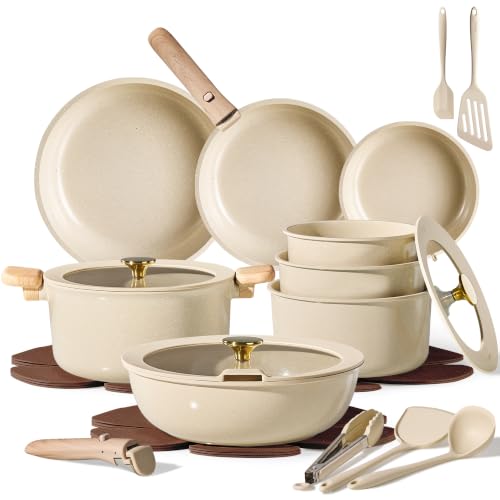


Finding reliable pots and pans for a smooth glass electric stove requires evaluating specific mechanical and thermal properties. We compiled the primary performance criteria that separate dependable cookware from vessels that compromise cooking efficiency. Review these crucial considerations to make an informed investment that enhances your daily cooking experience.
Base Flatness and Direct Surface Contact
Ceramic smooth top ranges transfer heat primarily through direct conductive contact between the radiant glass burner and the pan base. Any warp or curvature creates an insulating air gap that severely hinders heat absorption across the pan. This lack of contact forces your stove burner to cycle continuously without heating your ingredients evenly.
To inspect base flatness, place a steel ruler across the bottom of the pan while it sits upside down on a flat counter. If light passes underneath the edge or the ruler rocks noticeably, the pan lacks sufficient flat contact area for smooth top cooking. Flat bottoms ensure consistent simmer rates and prevent liquid from pooling along the outer perimeter.
A reliable rule of thumb is to look for bases with less than one millimeter of intentional concave tolerance. Slight concavity accommodates thermal expansion when metal gets hot, settling into a completely flat surface under cooking heat. Pans built with reinforced bases will retain their flat profile through years of rapid temperature shifts.
Exterior Base Finish and Scratch Prevention
The sleek glass surface of a ceramic cooktop is vulnerable to abrasions caused by rough or burred metal exteriors. Unfinished cast iron or stamped bases with rough ridged patterns can grind into the glass whenever you slide a pan. Choosing cookware with smooth, coated, or finely machined contact plates eliminates this costly hazard.
Examine the bottom plate of each piece to verify that all edges are chamfered and free of sharp casting seams. Fully coated ceramic bases or smooth induction discs distribute physical pressure evenly across the tempered glass surface. For further guidance on home upkeep, browse our Home & Living section for practical care recommendations.
Never slide cookware across a glass stovetop even if the manufacturer claims the bottom surface is scratch-resistant. Always lift your pots when shifting between heating zones to prevent accidental surface scuffing from trapped grit. Regular inspection of your cookware bases will keep your glass stove looking pristine and scratch-free.
Core Material Construction and Heat Distribution
The primary material inside your cookware determines how rapidly and evenly heat travels from the burner to your food. Radiant electric glass elements generate intense local heat, making thermal conductivity essential to prevent scorching. Die-cast aluminum and hard-anodized aluminum serve as outstanding core materials because they conduct heat much faster than stainless steel.
Look for cookware constructed with heavy-gauge aluminum bodies that measure between three and five millimeters in thickness. Thicker sidewalls and dense bases absorb radiant thermal spikes and spread energy uniformly across the entire cooking plane. This construction eliminates scorching rings and ensures delicate sauces simmer steadily without burning in the center.
Avoid thin stamped aluminum pans because they deform quickly under the cyclical heat patterns of glass top elements. Warped pans vibrate or spin on smooth cooktops, creating safety hazards and uneven culinary results. Investing in die-cast metal bodies ensures structural rigidity and long-lasting thermal stability.
Pan Weight and Impact Management
Ceramic smooth cooktops are made of specialized glass-ceramic material that can crack under excessive concentrated impact force. Ultra-heavy cookware like enameled cast iron presents a continuous breakage risk when loaded with heavy stews. Lightweight to medium-weight cookware reduces handling fatigue and lowers the likelihood of accidental drops.
The ideal weight for a ten-inch frying pan used on smooth glass tops falls between two and three pounds empty. This weight class provides enough mass for thermal retention while remaining easy to maneuver with one hand. Lighter pans allow you to tilt, pour, and clean your cookware without straining your wrists or risking your stove.
When preparing large family meals, ensure your filled stockpots do not exceed the manufacturer weight rating for your stove. Most smooth top cooktops support around fifty pounds spread across individual heating zones. Selecting lightweight die-cast pans keeps total cooking weight comfortably below maximum structural limits.
Non-Toxic Ceramic Nonstick Surface Integrity
Modern ceramic nonstick coatings rely on a silica-based sol-gel formula that provides natural food release without synthetic chemicals. These surfaces are manufactured without PTFE, PFOA, PFAS, lead, or cadmium, making them safer for everyday home cooking. Clean ingredients slide effortlessly off the pan with minimal butter or cooking oil.
Verify whether the nonstick formula contains titanium or mineral reinforcement to extend surface lifespan under everyday use. High-grade ceramic surfaces resist abrasion better and tolerate wooden or silicone cooking spatulas without peeling. To understand more about healthy household materials, explore our kitchen guides for detailed culinary advice.
Always cook over low to medium heat settings to preserve the natural nonstick qualities of ceramic coatings. High temperatures break down the microscopic silica structure, causing oil buildup and gradual loss of release performance. Proper thermal management keeps ceramic pans performing at their peak for several seasons.
Stovetop Compatibility and Induction Readiness
Smooth top ranges fall into two major categories: standard radiant electric models and magnetic induction cooktops. While all flat pans work on radiant electric glass, induction ranges require magnetic ferrous metal in the base. Many modern ceramic sets incorporate a bonded magnetic stainless steel disc to ensure universal kitchen compatibility.
You can easily test any pan for induction compatibility by holding a refrigerator magnet against the center of the base. If the magnet snaps firmly into place, the vessel will function properly on induction elements. A multi-layer base also improves heat dispersion on conventional radiant electric burners by evening out thermal transfer.
Check that the bonded base disc covers at least eighty percent of the pan bottom for maximum induction efficiency. Smaller magnetic plates can cause the cooktop sensor to reject the pan or cycle power erratically. Full-coverage bases maximize magnetic coupling and speed up boiling times considerably.
Handle Ergonomics and Stovetop Balance
A well-balanced handle is critical when cooking on a frictionless glass surface where uneven pans can easily tip. Heavy steel handles attached to lightweight shallow pans create top-heavy leverage that lifts the base away from the burner. Balanced cookware remains firmly grounded on the smooth glass, maintaining optimal conductive contact throughout cooking.
Ergonomic handles made from stay-cool Bakelite or silicone-wrapped stainless steel protect hands from burns without requiring bulky oven mitts. Dual-riveted connections or securely fastened screw mounts ensure the handle never wobbles during vigorous stirring. Smooth contours provide a confident grip when lifting hot liquids from the burner.
Some modern sets feature detachable handle systems that unclip with a single button press for streamlined storage. Removable handles make it simple to transfer pots into the oven or nest them compactly inside tight cabinets. Ensure the locking clamp engages tightly around the rim without chipping the ceramic glaze.
Lid Construction and Thermal Retention
Cookware lids contribute significantly to cooking efficiency by trapping steam, retaining flavors, and accelerating cooking speeds. Tempered glass lids allow you to monitor food progress without lifting the cover and releasing valuable ambient heat. Transparent lids prevent liquid boil-overs that can bake onto the hot ceramic cooktop surface.
Look for lids equipped with protective silicone rims that create an airtight seal while dampening metal-on-glass noise. The silicone gasket acts as a shock absorber that protects delicate glass cooktops from chipping if dropped accidentally. Built-in steam vents release excess pressure gradually, preventing dangerous spitting of hot cooking oils.
Verify that lid knobs offer adequate clearance so your knuckles do not touch the hot glass during inspection. Heat-resistant silicone or composite knobs stay cool to the touch during prolonged simmering cycles. Tightly fitted lids lock in moisture and produce juicier braised meats and perfectly cooked grains.
| Cookware Material | Base Flatness Profile | Weight Level | Glass Cooktop Safety | Induction Ready |
|---|---|---|---|---|
| Die-Cast Aluminum with Steel Base | Superior Flatness | Light to Medium | Excellent (Smooth and Safe) | Yes |
| Hard-Anodized Aluminum | High Stability | Medium | Very Good (Machined Base) | Model Dependent |
| Multi-Ply Stainless Steel | Moderate Stability | Medium to Heavy | Good (Requires Smooth Base) | Yes |
| Traditional Cast Iron | Variable Flatness | Very Heavy | Fair (High Scratch Risk) | Yes |
Cleaning Maintenance and Dishwasher Impact
Caring for your cookware correctly preserves both the pan interior and the pristine surface of your glass range. While many manufacturers label their ceramic sets as dishwasher safe, aggressive detergents can degrade nonstick finishes over time. Hand washing with mild dish soap and a soft microfiber sponge prevents dulling and eliminates microscopic mineral buildup.
Washing the pan exterior thoroughly stops cooking oils from polymerizing onto the base during subsequent cooking sessions. Burnt oil residue on the pan bottom creates sticky carbon patches that can transfer directly onto your glass cooktop. Keeping the base spotless ensures uniform heat transfer and prevents smoky kitchen conditions.
Never immerse a searing hot pan into cold sink water immediately after removing it from the stove. Sudden thermal shock can warp the flat metal base and permanently shatter the molecular bonds of the ceramic coating. Allow your cookware to cool to room temperature before beginning routine cleanup.
Why You Should Trust Us
Our home kitchen evaluation team has spent years analyzing kitchen hardware, cookware engineering, and modern range technologies. We closely monitor technical specifications, metallurgical compositions, and certified manufacturing standards across leading cookware brands. Our comparative analyses rely on objective design data to identify products that deliver genuine durability and exceptional everyday performance.
We evaluate cookware sets by scrutinizing base thickness, dimensional flatness, weight distribution, and non-toxic coating certifications. Rather than relying on marketing claims, we cross-reference verified owner feedback with engineering specifications to verify real-world reliability. This disciplined approach ensures our product recommendations reflect consistent performance rather than fleeting retail trends.
We maintain full editorial independence and never accept sponsored placements or complimentary product incentives that could skew our selections. Our review database updates dynamically to reflect changing consumer sentiments, manufacturer revisions, and new product releases throughout 2026. We aim to provide clear, actionable advice so you can make informed decisions for your home.
Final Thoughts
Choosing the proper cookware for a glass smooth top range protects your significant kitchen investment while improving every meal you cook. Selecting flat-bottomed pans constructed from responsive cast aluminum guarantees rapid heating and eliminates frustrating hot spots. Ceramic nonstick surfaces allow you to prepare healthier meals with less oil while reducing everyday cleanup to a quick wipe.
For home chefs seeking premium craftsmanship and outstanding aesthetics, we recommend the Caraway 12-Piece Non-Stick Ceramic Cookware Set. Its heavy-gauge construction, perfectly balanced flat base, and clever modular storage system make it a standout choice for glass cooktops. While it represents a higher investment, its remarkable heat retention and oven versatility justify the expenditure for dedicated cooks.
If you want complete kitchen capability at a budget-friendly price point, consider the CAROTE Ceramic Cookware Sets, Pots and Pans Set. This collection provides essential flat-bottom frying pans, saucepans, and tight-sealing silicone lids without sacrificing non-toxic cooking standards. For those living in smaller apartments or RVs, the CAROTE 25pcs Ceramic Cookware Set offers detachable handles that save cabinet space.
Cooks who prefer rugged durability will appreciate the hard-anodized exterior of the T-Fal Ultimate Hard Anodized 12-Piece Ceramic. Its built-in preheat indicator takes the guesswork out of temperature management while its thick base sits flat against radiant elements. Explore our Uncategorized archives for additional home gear evaluations as you assemble your dream kitchen collection.
Frequently Asked Questions
Can you use cast iron on ceramic smooth top ranges?
Raw cast iron is generally not recommended for ceramic smooth top ranges due to its heavy weight and rough exterior. Sliding rough cast iron across delicate glass can leave deep scratches, and dropping a heavy skillet can easily crack the cooktop. If you choose to use cast iron, ensure it features an enameled smooth base and lift it carefully without sliding.
What makes Best Cookware for Ceramic Smooth Top Ranges stand out in 2026?
The Best Cookware for Ceramic Smooth Top Ranges in 2026 features perfectly flat, machined bases that establish maximum surface contact with radiant burners. These modern sets utilize reinforced die-cast aluminum cores that heat quickly and evenly without warping under temperature changes. They also feature non-toxic ceramic coatings free of PFAS, PTFE, and lead for safe, chemical-free cooking.
How do I know if my cookware base is flat enough for a glass cooktop?
You can check base flatness by placing a rigid straight edge or steel ruler across the bottom of the pan. Inspect the junction to see if light shines beneath the ruler or if the straight edge rocks back and forth. Quality smooth top pans maintain uniform contact across the heating ring to ensure steady thermal conductivity.
Will ceramic nonstick pans work on induction smooth top stoves?
Ceramic pans work on induction smooth top ranges if they include a magnetic stainless steel disc bonded into the base. Always look for induction compatibility markings or test the exterior base with a household refrigerator magnet before purchasing. If the magnet adheres securely to the pan bottom, the cookware will operate on induction elements.
Why do pans spin or wobble on glass top stoves?
Pans spin or wobble on glass top stoves when their bases warp from rapid thermal shock or improper metal gauge thickness. Thin stamped metals expand unevenly when exposed to radiant heating coils, creating a crowned or rounded bottom profile. Choosing heavy-gauge die-cast aluminum or multi-ply bases prevents warping and keeps pans seated firmly.
How should I clean burnt residue from the bottom of my smooth top cookware?
To remove stubborn burnt grease from cookware bases, make a thick paste using baking soda and warm water. Spread the mixture across the bottom plate, let it sit for twenty minutes, and wipe it gently with a non-abrasive sponge. Keeping bases spotless prevents burnt residue from transferring onto your glass cooktop during subsequent cooking sessions.
Are detachable handle cookware sets safe for everyday use on glass stoves?
Detachable handle sets are safe for glass stoves when manufactured with robust multi-point locking clamps. They allow you to remove the handle during cooking to avoid accidental bumps that could send the pan sliding across smooth glass. These modular designs also simplify oven transitions and maximize storage efficiency in compact kitchen cabinets.
Can I put my ceramic cookware in the dishwasher?
Although many manufacturers state their cookware is dishwasher safe, routine hand washing is strongly advised. Harsh dishwasher detergents and abrasive rinse agents can wear down the delicate sol-gel nonstick matrix over time. Gentle hand washing with warm soapy water and a soft cloth keeps the nonstick surface slick and durable.
What utensils are safe to use with ceramic nonstick cookware?
You should always use silicone, nylon, or smooth wooden utensils when preparing food in ceramic nonstick vessels. Metal spatulas, forks, and whisks can scratch or gouge the ceramic finish, permanently degrading its food release performance. Quality silicone utensils also protect your pan rims from accidental chipping during daily cooking tasks.
How do silicone-rimmed lids benefit ceramic smooth top range owners?
Silicone-rimmed glass lids provide an airtight seal that locks in steam, moisture, and cooking aromas for tender results. The soft silicone border also functions as a bumper that prevents clattering against the pot and protects glass stovetops from accidental drops. For more guidance on home furnishings, check our Furniture & Comfort recommendations.







Write Your Review
No reviews yet. Be the first to share your experience!