Quick Answer: The Best Dryer Lint Brushes fit the dryer’s lint-screen opening, flex without being forced, loosen debris in accessible spaces, and remain easy to retrieve. BRUSHTECH Clothes Dryer Lint Screen Brush is the strongest overall option in this group because its verified listing combines a flexible deep-reach body, durable nylon bristles, comfortable grip, and clear mild-soap and air-dry care. Choose Unger for a rubber-coated shaft, KONEX for a thick-bristle two-pack, Holikme 27.5-inch for a 304 stainless wire core, or the Holikme vacuum kit for loosening and retrieving lint with two tools.




Top Picks at a Glance
These Best Dryer Lint Brushes include a screen-focused brush, protected flexible shaft, thick-bristle pair, stainless-core tool, and vacuum attachment kit. Airflow, efficiency, and fire-risk statements are manufacturer claims, not proof that a brush has cleaned or inspected the full exhaust system.
- Best Overall: BRUSHTECH Clothes Dryer Lint Screen Brush – Heavy-Duty, Flexible (Black) | Flexible Deep-Reach Design with Durable Nylon Bristles & Comfortable Grip – Ideal for Dryer Vents, Lint Traps & Tight Spaces – a reusable flexible nylon-bristle brush with explicit cleaning and drying guidance.
- Best Protected Flexible Shaft: Unger 30” Dryer and Vent Brush, Lint Catcher for Household Cleaning, Trapping Laundry Room Tool, Easy to Clean Bristles, Flexible Gadget with Scratch Free Protection – a 30-inch brush with rubber-coated wire, nylon bristles, non-slip grip, and hanging hole.
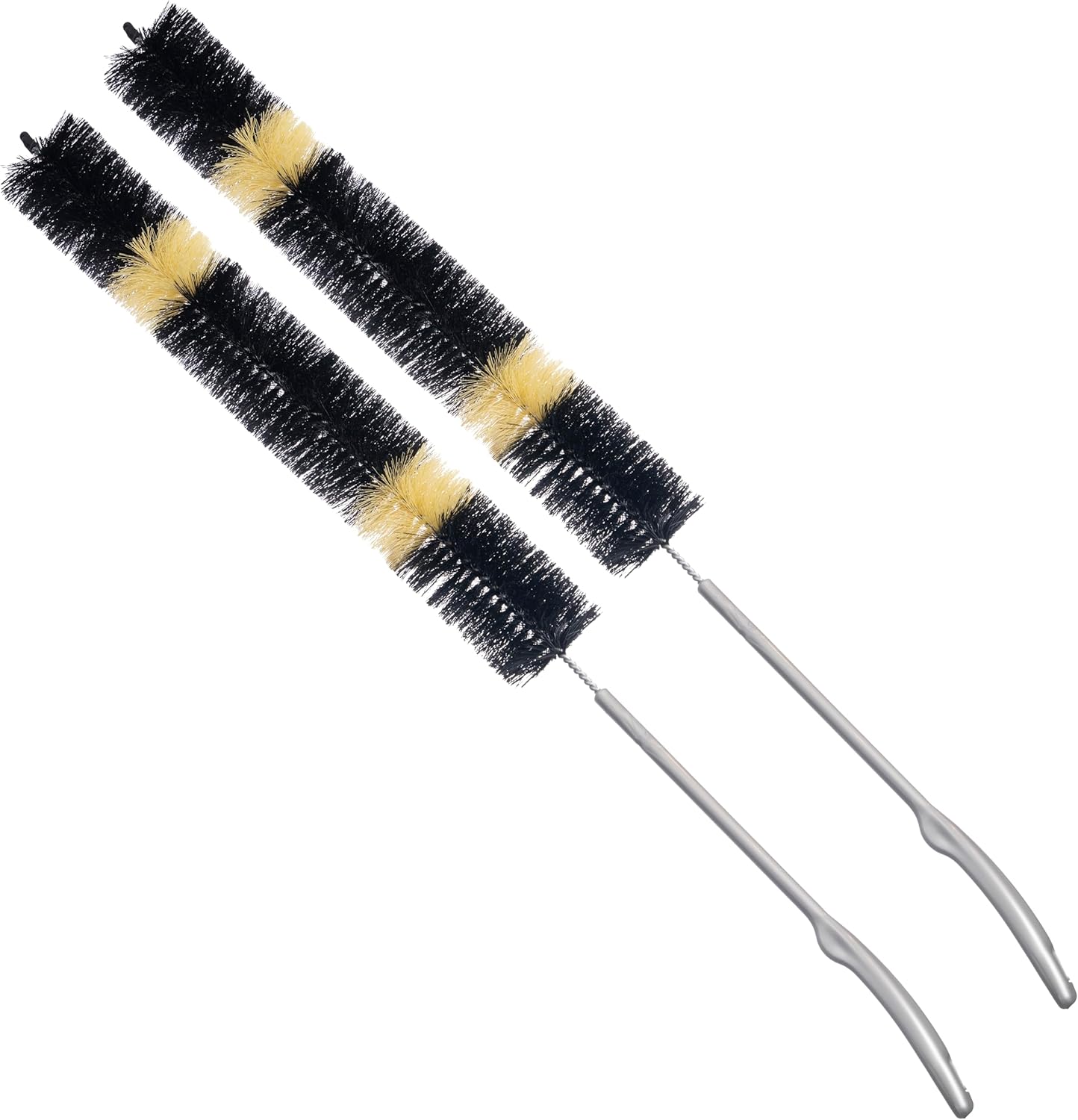
- Best Thick-Bristle Two-Pack: KONEX 30 Inch Long Dryer Lint Brush Vent Cleaner | Heavy-Duty Flexible Radiator Brush | Dryer Vent Trap | Bendable for Your Appliance Care Home Essentials (Pack of 2) – two flexible coil-shaft brushes with listed three-inch bristle diameter.
- Best Stainless-Core Brush: Holikme Dryer Vent Cleaner Kit – Flexible Lint Brush Remover Cleaning Tool | 27.5in flexible 304 steel shaft & nylon bristles, removes lint dust pet hair for vent, fridge coil & tight corners – a 27.5-inch tool with 13.5-inch nylon bristles and wood handle.
- Best Brush and Vacuum Pair: Holikme Dryer Vent Cleaner Kit, Vacuum Hose Attachment, 2-Piece, Blue | Adjustable Cable Tie for Easy Attachment, Flexible Lint Brush Removes Lint from Dryer Lint Screens and Tight Spaces – a flexible brush paired with a narrow vacuum hose and adjustable cable tie.
How to Choose the Best Dryer Lint Brushes
The Best Dryer Lint Brushes are selected for a specific accessible path. Measure or inspect the lint-screen slot and follow the appliance manual before buying by length alone. A broad three-inch bristle head may suit an open cavity but not a narrow curved housing.
Match Length and Diameter to the Dryer
BRUSHTECH emphasizes deep reach without publishing the selected title’s length. Unger and KONEX list 30 inches. Holikme lists a 27.5-inch shaft and notes that it may not fit some compact or specialty models. Brush length does not establish how far it can safely enter an unseen passage.
The Best Dryer Lint Brushes move with light controlled pressure. A shaft that must be sharply folded before entry can buckle or scrape. A brush that meets a hard stop should be withdrawn, not twisted or pushed around the obstruction.
Standalone Brush or Vacuum Combination?
A standalone brush loosens lint and can pull material outward through its bristles. A narrow vacuum attachment helps retrieve loosened debris, provided it fits the vacuum and dryer opening. The Holikme two-piece kit uses an adjustable cable tie to connect its hose to many vacuums.
Vacuum suction does not make deep or blind insertion safe. Keep hoses away from wiring, sensors, fan components, seals, and sharp sheet metal. Do not use a household vacuum on hot material, sparks, liquid, or anything prohibited by its instructions.
Compare Bristles and Shaft Protection
Nylon bristles appear across all selected brushes. Unger adds rubber coating around its wire to reduce scratching. Holikme lists a flexible 304 stainless-steel core, and KONEX describes heavy bristles with a three-inch diameter.
Stiffer or wider bristles can loosen dense lint but may catch screen mesh or flexible seals. The Best Dryer Lint Brushes have no exposed wire, shedding tufts, sharp handle edges, or cracked coating. Inspect the tool before every cleaning session.
Safe Lint-Screen and Trap Cleaning
Follow the dryer manual first. Turn the appliance off, disconnect power as directed, and let it cool completely. For a gas dryer, do not move the appliance or disturb its gas connection unless qualified and authorized to do so.
Remove the lint screen and clean it by the appliance maker’s method. Inspect the visible housing with a light from outside the opening. Insert the brush only into an approved accessible path, maintain hold of the handle, and use short strokes that bring debris toward the opening.
The Best Dryer Lint Brushes are never left inside the machine. Count and inspect brush parts before and after use. Vacuum loose lint at the opening if permitted, wipe the area, reinstall the fully dry screen correctly, and reconnect power only after tools and debris are removed.
- Power isolate: Follow the dryer manual before placing a tool near internal spaces.
- Work cool and dry: Do not brush a hot appliance or use wet tools inside it.
- Keep strokes controlled: Pull loosened lint outward instead of packing it deeper.
- Stop at resistance: Never force the shaft around an unseen obstruction.
- Reassemble fully: Operate only with the lint screen and required panels in place.
Lint Screen, Trap Housing, and Full Vent Route
The lint screen captures debris during each cycle and usually requires cleaning after every load according to the dryer instructions. The screen housing is the slot or cavity around that filter. The exhaust route continues through a transition connector, wall or ceiling duct, and exterior termination.
The Best Dryer Lint Brushes in this roundup are useful for accessible screen housings and narrow openings; they do not prove that a concealed duct is clear. A 30-inch brush cannot inspect a long route, confirm disconnected joints, identify crushed sections, or verify the exterior flap.
When replacing or evaluating the connector, compare purpose-built dryer vent hoses. Exterior airflow also depends on suitable dryer vent closures. Do not add screens or modify a termination against code or manufacturer guidance.
Avoid Pushing Lint Deeper
Begin near the opening and remove lint in stages. Clean the brush between passes so captured debris does not return to the housing. If a vacuum attachment is permitted, hold it near the accessible area while the brush loosens lint.
Do not rotate a hand brush with a drill, attach extensions, or release the handle into the opening. These products are not rotary duct rods. If the tool snags, stop and withdraw gently along the entry path. Forcing it can detach bristles, bend internal parts, or push a lint mass deeper.
The Best Dryer Lint Brushes make retrieved debris visible. If little material comes out despite poor dryer performance, the restriction may be elsewhere, or the problem may not be lint. Continue with appliance diagnostics rather than increasing force.
When a Brush Is Not Enough
Slow drying, repeated overheating, unusual odor, shutdowns, error codes, a hot laundry room, weak exterior airflow, damaged ducting, or visible lint around joints deserves investigation. Stop using the dryer when the manual or conditions indicate a safety problem.
A qualified dryer-vent or appliance professional can inspect concealed routing, measure airflow or pressure, disconnect approved sections, and identify crushed, excessive, or noncompliant ductwork. A booster fan, where allowed, must not be used to mask blockage; review dryer booster fans only within code and manufacturer requirements.
No handheld brush guarantees fire prevention. Removing accessible lint is one maintenance step alongside correct installation, screen cleaning, exterior inspection, proper loads, and professional service when needed.
Multipurpose Appliance Cleaning
Several listings mention refrigerator coils, radiators, furniture gaps, baseboards, heaters, or pet hair. Use the brush on another surface only when that appliance’s instructions permit it. Disconnect power and protect delicate fins, coatings, wiring, and moving parts.
Do not move a brush directly from greasy kitchen gaps or dusty refrigerator coils into a clean lint-screen housing. Wash compatible bristles and dry them fully, or keep separate tools for different areas. Store brushes away from detergent spills in an organized laundry area; the best laundry room organizers offer broader storage ideas.
Cleaning and Replacing the Brush
BRUSHTECH directs mild soap and warm water followed by complete air drying. Unger also describes water-cleanable bristles. Follow each product’s method, because wood handles, wire cores, rubber coatings, and vacuum hoses may have different moisture limits.
Remove trapped lint by hand only when the bristles are cool, clean, and safe to touch. The Best Dryer Lint Brushes are stored straight or loosely curved so the shaft does not develop a sharp kink. Keep bristles away from flames and dryer heat.
Replace a brush with loose bristles, exposed wire, cracked rubber, rust, a splitting handle, permanent bend, detached grip, or vacuum hose damage. Do not tape over a failing shaft and insert it into an appliance.
Common Mistakes and Limitations
Even the Best Dryer Lint Brushes can cause problems when the appliance is powered, the tool is forced, or the cleaning scope is misunderstood.
- Cleaning with power connected: Internal spaces can contain electrical and moving hazards.
- Working while hot: Heat can injure the user or damage a tool.
- Forcing the brush: Unknown obstructions can snag the shaft or hide sensitive components.
- Pushing lint inward: Deep packed debris can become harder to retrieve.
- Assuming the full duct is clean: A lint-trap brush reaches only a limited accessible section.
- Moving a gas dryer casually: Gas and exhaust connections require correct handling.
- Cross-contaminating tools: Grease and coil dust can transfer into the dryer.
- Using a damaged brush: Exposed wire and loose bristles can remain inside the appliance.
The Best Dryer Lint Brushes support routine accessible cleaning, but they cannot diagnose a dryer, certify airflow, repair a duct, clear every concealed blockage, or replace qualified service.
How We Tested and Evaluated
We did not conduct independent lint-removal, airflow, scratch, fire, electrical, gas, vacuum, duct, heat, or fatigue tests. We evaluated Crawlbase-captured Amazon pages for exact identity, length, shaft material, bristle design, handle, protective coating, vacuum accessories, care instructions, model-fit wording, and maintenance claims.
Our assessment of the Best Dryer Lint Brushes prioritizes accessible fit, controlled handling, debris retrieval, surface protection, power safety, scope clarity, cleanability, and visible wear. Listing efficiency and safety claims remain manufacturer information.
Buying Checklist
Use this checklist to select the Best Dryer Lint Brushes for the appliance and maintenance scope.
- Read the dryer manual and identify approved accessible cleaning areas.
- Measure lint-slot width, depth, curves, and compact-model restrictions.
- Choose standalone brush, two-pack, or brush-plus-vacuum format.
- Compare shaft flexibility, bristle diameter, protection, and handle retention.
- Plan how loosened lint will be pulled outward and collected.
- Disconnect power and let the dryer cool before tool insertion.
- Do not move or disconnect gas equipment without proper qualification.
- Distinguish screen housing from transition duct and concealed vent route.
- Clean and dry the brush according to its exact materials.
- Replace exposed wire, loose bristles, cracked coatings, and damaged hoses.
Frequently Asked Questions
How often should I use a dryer lint brush?
Follow the dryer manual and respond to visible buildup. Clean the removable lint screen as directed after loads, while deeper accessible housing cleaning typically occurs less often.
Can a lint brush clean the entire dryer vent?
No typical hand brush proves that a long concealed route is clean. It cannot inspect joints, turns, crushed duct, exterior termination, or hidden disconnections.
Should the dryer be unplugged?
Follow the appliance manual; power isolation and complete cooling are prudent before inserting a tool into accessible internal spaces. Gas equipment adds connection hazards.
Can I use a vacuum with the brush?
Yes when the vacuum, attachment, and dryer instructions permit it. Keep the hose in accessible areas and away from hot material, liquids, wiring, sensors, fans, and sharp edges.
Why is drying still slow after brushing?
The restriction may be deeper in the vent, the exterior flap may be blocked, ducting may be damaged, or the appliance may have another fault. Stop repeated forceful brushing and seek diagnosis.
When should I call a professional?
Seek qualified service for inaccessible ducts, gas connections, repeated overheating, burning odors, error codes, damaged venting, poor exterior airflow, or any condition the manual identifies as unsafe.
Final Decision
BRUSHTECH is the most balanced lint-screen brush here. Unger adds a protected shaft, KONEX supplies two thick-bristle tools, Holikme’s 27.5-inch brush emphasizes a stainless core, and the Holikme kit pairs loosening with vacuum retrieval.
The Best Dryer Lint Brushes work when the dryer is powered down and cool, the opening matches the brush, debris is drawn outward, and the user respects the boundary between accessible lint maintenance and complete vent service.