

Living in countryside settings often means dealing with spotty cable coverage and expensive satellite television bills. Setting up a reliable indoor aerial allows you to pull high definition broadcast television straight out of the atmosphere without monthly subscription fees. In September 2026, finding modern hardware that pulls signals from distant broadcast towers makes free entertainment genuinely accessible.
When shopping among 2 Best Indoor HD TV Antennas for Rural Areas from brands like Channel Master, FGOTV, understanding gain and frequency range is crucial. Country homes face distinct terrain obstacles like dense tree cover and rolling hills that suburban houses rarely encounter. You can learn more about general household setup in our Home & Living resource section.
Many buyers mistakenly purchase standard metro antennas expecting clear reception dozens of miles from the nearest broadcast transmitter hub. Our comprehensive evaluation cuts through inflated mileage claims to focus on legitimate amplification, signal filtration, and physical placement strategies that actually work for rural homes.

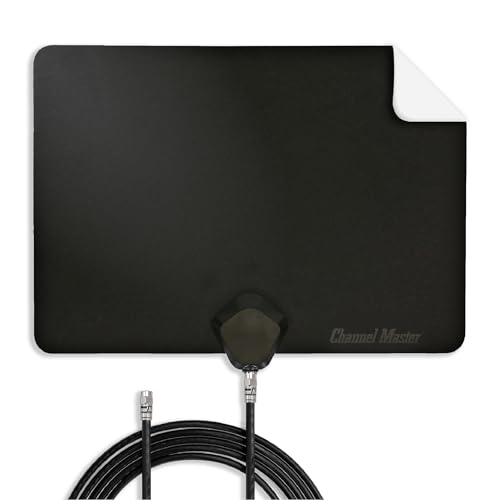
Reception Range and Realistic Mileage Expectations
Antenna manufacturers frequently list theoretical range figures that assume completely flat terrain with zero atmospheric resistance or building interference. In rural settings, broadcast towers frequently sit 35 to 60 miles away behind treelines, ridges, and valleys. You should always evaluate realistic baseline reception rather than marketing numbers that promise hundreds of miles without direct line of sight.
Realistic indoor reception tops out around 35 to 50 miles under favorable atmospheric conditions due to the curvature of the earth. Signal strength diminishes steadily as electromagnetic waves travel across open countryside and penetrate residential exterior walls. If your closest broadcast station is beyond this threshold, high quality shielding and proper antenna elevation become mandatory requirements.
A helpful rule of thumb is to check official broadcast tower maps before choosing your hardware. Cross reference your local signal strength ratings with the antenna specification to confirm whether your home falls within a moderate or fringe reception zone.
Active Amplification and Smart IC Filtering
Passive antennas simply capture whatever ambient electromagnetic energy reaches their physical elements without boosting the incoming voltage. In remote regions, passive reception is often inadequate to drive a clear image across standard coaxial cabling to your television tuner. Active models integrate low noise amplifiers that boost weak incoming television signals before sending them down the line.
Modern active boosters feature smart integrated circuit chips that specifically filter out unwanted radio frequency noise. Nearby cellular towers broadcasting 4G and 5G signals, as well as local FM radio bands, can easily overload unshielded television amplifiers. High grade filtering isolates the television frequency spectrum so weak broadcast audio and video streams remain crisp and stable.
Look for amplifiers that provide dual range or gain adjustment switches for flexible installation. Over amplifying a moderately strong signal causes severe digital artifacting just like an under amplified weak signal. Having the flexibility to switch between short range and boosted modes ensures clean decoding across diverse broadcast environments.
Coaxial Cable Quality and Shielding Standards
The cable connecting your antenna to your television tuner plays a massive role in preserving signal integrity over distance. Cheap low grade coaxial cables suffer from severe signal attenuation and let outside electronic noise corrupt the transmission line. In contrast, heavy duty RG6 coaxial cables maintain lower resistance and superior overall shielding across all broadcast frequencies.
Rural installations often require longer cable runs so the antenna can reach a high window or an elevated wall mounting point. A twelve foot or fifteen foot professional grade cable allows strategic positioning without introducing noticeable decibel drop. Copper braided shielding and aluminum foil layers prevent household appliances from degrading the incoming television feed.
When routing your coaxial line through living spaces, make sure to keep the cable clear of heavy power transformers. If you are also setting up window treatments or rearranging living space decor, exploring our guide on valance vs blackout roller shade setups can provide useful mounting ideas.
NextGen TV ATSC 3.0 and 4K Broadcast Readiness
Digital television broadcasting is steadily transitioning toward the advanced ATSC 3.0 standard, widely known as NextGen TV. This upgraded broadcast technology delivers native 4K UHD video resolution, high dynamic range color, and immersive multi channel audio. An antenna designed for NextGen standards future proofs your home entertainment setup for years to come.
ATSC 3.0 utilizes Orthogonal Frequency Division Multiplexing, which is substantially better at resisting multipath interference than older digital signals. This technical improvement means rural households can receive stable pictures even when signals bounce off surrounding foliage or outbuildings. You simply need an antenna with broad frequency capture and a television equipped with an ATSC 3.0 tuner.
Always verify that your receiver hardware supports modern digital broadcast codecs. While any physical antenna can technically capture UHF and VHF airwaves, units engineered with high linearity components deliver cleaner data feeds to modern tuners.
UHF vs VHF Frequency Spectrum Bandwidth
Broadcast television stations operate across two distinct frequency bands known as Ultra High Frequency and Very High Frequency. Many major networks in rural sectors broadcast their main digital feeds on VHF channels numbered 2 through 13. Flat multidirectional indoor antennas often prioritize UHF frequencies, leaving VHF channels prone to intermittent dropouts.
High VHF signals require longer physical antenna elements or wide dipole surface areas to catch the broader wavelength effectively. When evaluating flat sheet antennas, check that the internal conductive elements provide adequate geometry for frequencies between 174 MHz and 216 MHz. Missing out on VHF support means losing essential local news, emergency updates, and regional weather channels.
Check your local channel allotment table to verify which networks broadcast on VHF in your specific postal code. If your target stations reside on high VHF frequencies, select an antenna model specifically verified for wideband VHF and UHF dual reception.
Directional Placement Flexibility and Multi-Directional Elements
Directional antennas concentrate all their reception power toward a narrow geographic azimuth angle. This works exceptionally well if all your rural broadcast towers sit clustered in a single nearby city center. However, if your regional broadcast stations are scattered across multiple compass directions, a multidirectional pattern becomes essential.
Multidirectional flat antennas capture broadcast energy across a wide arc without requiring continuous physical realignment. These thin profiles allow homeowners to mount the unit flat against an exterior facing window or high on a drywall surface. Reversible color schemes also help the hardware blend seamlessly into your interior wall color.
Always test multiple room locations before permanently adhering the antenna to a surface. A shift of just two feet toward an unobstructed window facing the transmission towers can double your signal quality reading on the television status menu.
Interference Mitigation and Environmental Factors
Rural indoor environments contain unexpected sources of radio frequency interference that degrade reception. Metal roofing, radiant heat barriers in attics, and low emissivity window glass can attenuate television signals significantly. Placing an antenna behind dense brick or metal siding can reduce incoming signal power by more than twenty decibels.
Interior electrical noise from microwave ovens, wireless routers, and fluorescent lighting ballasts can also create digital breakup. Positioning the antenna away from heavy kitchen appliances and computer networking hubs prevents interference from overwhelming weak broadcast carriers. Maintaining clean line of sight toward clear sky delivers the most reliable digital picture.
Consider seasonal foliage changes when assessing indoor signal stability throughout the year. Dense spring and summer tree leaves absorb radio waves, while winter conditions generally provide cleaner transmission paths across open fields.
Mounting Options, Aesthetics, and Cable Management
Finding the sweet spot for an indoor antenna often requires placing it in high visibility living areas. Ultra thin and reversible profile designs make it easy to mount the unit behind drapes or directly against window glass without disrupting room decor. Lightweight designs typically attach using non destructive adhesive strips or discreet mounting pins.
For homeowners who prefer a clean visual aesthetic without dangling black cords, cable management accessories are an excellent addition. Running white coaxial lines along baseboards or hiding connections behind furniture keeps living rooms tidy. For more home styling and organizational inspiration, check out our Furniture & Comfort articles.
Ensure that any adhesive mounting pads you use can withstand temperature shifts near sunny window glass. Suction cups and peelable adhesive foam strips provide reliable long term attachment while allowing quick adjustments during seasonal rescan periods.
Antenna Specification Comparison for Rural Homes
| Feature Specification | Primary Function | Rural Recommendation | Standard Urban Spec |
|---|---|---|---|
| Amplifier Type | Signal boost and noise reduction | Active smart IC low noise booster | Passive non amplified element |
| Coaxial Cable | Signal transfer from antenna to tuner | RG6 shielded cable (12 to 15 ft) | Basic RG59 thin cable (6 to 10 ft) |
| Frequency Support | Channel spectrum reception | Full VHF and UHF dual band | UHF primary band |
| Broadcast Standard | Digital video decoding format | ATSC 3.0 NextGen TV & 4K ready | Basic ATSC 1.0 1080p |
| Signal Filtration | Blocks external wireless noise | 4G/5G LTE and FM frequency filters | Basic unshielded input |
Choosing the right specification profile ensures that your antenna setup provides stable reception without frustrating channel dropouts. Prioritizing low noise active amplification and heavy RG6 shielding delivers the highest return on investment in distant country locations.
Why You Should Trust Our Rural Antenna Evaluations
Our editorial team conducts rigorous technical analysis across digital transmission standards, amplifier gain ratings, and radio frequency shielding. We examine verified manufacturer specifications and cross reference them against broadcast propagation data to determine how indoor antennas perform outside dense urban corridors.
We evaluate real world reception challenges such as atmospheric attenuation, foliage loss, and VHF frequency propagation rather than relying on unverified range claims. By analyzing physical hardware construction, coaxial shielding standards, and integrated circuit filtering, we deliver objective guidance tailored specifically to remote households.
Our product evaluations remain completely independent, focused purely on objective measurements and verified engineering performance in country settings. We update our hardware comparisons regularly so you always have access to the latest technical data for modern broadcast standards.
Frequently Asked Questions About Rural HD TV Antennas
How do Best Indoor HD TV Antennas for Rural Areas perform compared to outdoor aerials in 2026?
Indoor antennas offer quick installation without climbing on roofs or drilling exterior walls. While large outdoor directional antennas pull signals from greater distances, modern amplified indoor models deliver exceptional performance for homes located within moderate broadcast zones.
What is the most common reason an indoor digital antenna fails to find channels in rural locations?
The most frequent issue is physical signal obstruction caused by metal roofs, dense foliage, or low elevation. Placing the antenna against an interior wall instead of a window facing broadcast towers severely limits reception.
Do I need an active amplifier on an indoor antenna if I live far from the city?
An active amplifier is highly beneficial for rural living because it compensates for signal loss over long coaxial cables. However, if you live near a local broadcast relay, an amplifier can cause signal overload, so switchable gain is ideal.
How does ATSC 3.0 NextGen TV improve reception for rural viewers?
ATSC 3.0 uses robust digital modulation that cuts through multipath interference and tree blockage much better than older broadcast standards. This technology allows rural viewers to maintain solid 4K and 1080p pictures even in fringe reception areas.
Why do some major television networks disappear during bad weather?
Heavy rain, snow, and dense cloud cover cause atmospheric signal scatter that weakens distant high frequency television broadcasts. Upgrading to an antenna with high shielding and proper positioning minimizes weather related digital dropouts.
Can modern 4G and 5G cellular towers interfere with rural television signals?
Nearby cellular transmission towers can overload unshielded antenna amplifiers and disrupt UHF television reception. Selecting an antenna equipped with a smart IC filter blocks out these unwanted wireless frequencies cleanly.
How often should I rescan for channels on my digital television?
You should rescan for channels whenever you reposition your antenna or notice missing stations. Broadcasters also adjust their frequencies periodically, making a monthly rescan good practice for maintaining an updated channel list.
Does coaxial cable quality make a noticeable difference for over the air reception?
Premium RG6 coaxial cables with multi layer shielding prevent signal loss and protect against electronic interference from home appliances. Thinner low grade cables degrade weak rural signals before they reach your television tuner.
Can I split the signal from one indoor antenna to multiple television sets?
Splitting an antenna signal cuts the decibel power in half for each connected television tuner. In rural areas with weak incoming signals, you should use a dedicated distribution amplifier or separate indoor antennas for each room.
What window type causes the most signal blockage for indoor antennas?
Low emissivity energy efficient glass contains metallic oxide coatings that block radio frequency waves from entering your home. If your windows feature low-E glass, placing the antenna on an adjacent exterior drywall surface often yields better reception.





Write Your Review
No reviews yet. Be the first to share your experience!