

Freshly baked bread presents a unique culinary challenge that standard chef knives cannot handle. Crushing a delicate crumb or tearing through a thick artisan crust ruins the texture you worked hard to create. Investing in the Best Kitchen Knives for Bread ensures clean, effortless slices through everything from soft brioche to tough sourdough boules.
Our updated September 2026 evaluation examines 10 standout models designed to balance sharpness, comfort, and control. Bakers often make the mistake of using short or dull blades that saw aggressively and generate excessive crumbs. You can read our broader kitchen guides to see how specialized cutlery fits into a complete culinary setup.
Whether you bake rustic sourdough weekly or simply want uniform sandwich slices, blade geometry and tooth design dictate your daily results. This comprehensive review breaks down the key engineering details that separate mediocre serrations from professional-grade slicing tools.




1. Blade Length and Cutting Stroke Efficiency
Blade length directly determines how smoothly you can slice through wide loaves without resorting to a destructive sawing motion. Standard bread blades range from eight to ten and a half inches in total cutting length. A longer blade allows you to make full, continuous draw cuts across large sourdough rounds in a single forward and back stroke.
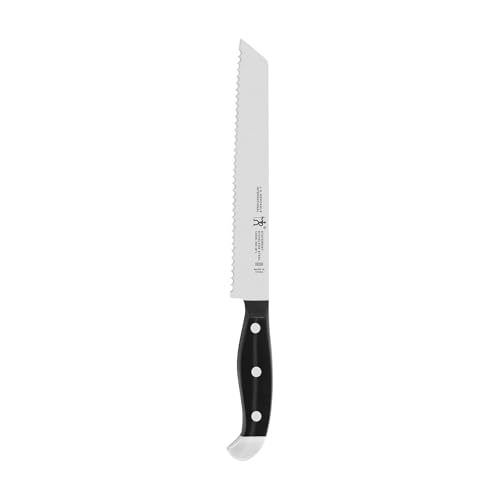
When evaluating blade length, match the knife to the dimensions of the loaves you prepare most frequently. An eight-inch knife works well for baguettes, bagels, and standard pullman loaves, offering nimble handling in compact kitchens. A ten-inch or longer blade provides the necessary clearance to glide through wide artisan boules without catching the crust on the bolster.
As a practical rule of thumb, select a blade that is at least two inches longer than your widest loaf. This extra length prevents the tip from slipping inside the crust during the return stroke, which prevents torn edges and ragged slices. Bakers handling large rustic loaves will consistently achieve cleaner presentation with a ten-inch profile.
2. Serration Profile and Tooth Spacing
The shape and spacing of individual teeth dictate how a knife pierces hard crusts and travels through soft interior crumbs. Pointed teeth concentrate downward pressure onto microscopic contact points to pierce glassy, thick crusts with minimal force. Scalloped or wavy edges feature rounded gullets that glide through soft crumb structures without tearing the gluten mesh.
Wide tooth spacing creates deep gullets between serrations, which helps channel crumbs away from the cutting path. Tightly packed, fine serrations can clog quickly when cutting warm or moist loaves, increasing drag and friction. Reviewing the tooth pitch helps you determine whether a blade excels at tough crusts or tender pastries.
If you regularly bake hearty country sourdough, prioritize wide, aggressive serrations that bite instantly without pressing down. For sandwich bread, brioche, and delicate layered cakes, rounded wavy serrations produce cleaner margins with virtually no crumb scatter.
3. Steel Composition and Hardness Rating
Blade steel composition governs both edge retention and resistance to staining in humid kitchen environments. High-carbon stainless steels, such as Japanese and German alloys, provide the ideal balance of toughness and corrosion resistance. Rockwell hardness ratings typically span from 53 HRC for ductile stamped blades to 60 HRC for premium layered Damascus steel.
Harder steels retain sharp serration points through hundreds of crusty loaves before requiring maintenance. However, extremely hard alloys can be brittle if twisted against a hard cutting board during heavy slicing. Softer stainless steels offer outstanding impact resistance and are less prone to chipping when encountering dense crust bottoms.
When selecting your tool, aim for a hardness rating between 56 and 58 HRC for general kitchen duty. This range ensures the teeth stay sharp across months of daily cutting while remaining resilient enough to resist micro-chipping on dense crusts.
4. Offset vs Straight Handle Geometry
Handle alignment relative to the cutting edge profoundly alters your wrist posture and board clearance. Traditional straight bread knives position the handle in direct line with the blade spine, requiring you to shift your grip near the board edge. Offset designs raise the handle above the cutting plane, providing ample clearance for your knuckles as you finish each stroke.
An offset handle allows the entire length of the serrated edge to contact the cutting board evenly. This geometry eliminates the frustrating uncut bottom crust hinge that often occurs when straight handles collide with the work surface. Straight knives offer superior linear balance and remain the classic choice for carving roasts and leveling tall cake tiers.
Choose an offset knife if you frequently cut large loaves on standard-height countertops to avoid dragging your knuckles against the board. If you intend to use the blade as a multi-purpose slicer for roasts and watermelons, a straight profile offers greater directional control.
5. Blade Flexibility and Spine Thickness
Spine thickness and structural stiffness govern how straight your cuts remain across tall, dense loaves. A thick, rigid spine measuring around 2.0 to 2.5 millimeters prevents the blade from wandering or bowing as it tracks downward. Thinner, flexible blades offer nimble action but can drift diagonally when cutting through heavy whole-grain loaves.
Examine the taper of the blade from spine to edge when comparing different kitchen cutlery options. A stiff blade ensures uniform slice thickness from the top crust straight down to the base board. Moderate flex can be beneficial when shaving delicate cake layers or skinning large melons, but rigidity remains paramount for bread slicing.
A helpful guideline is to choose a blade with negligible lateral bend under light thumb pressure for artisan sourdough. That rigidity guarantees consistent slice thickness without accidental wedges, even through tough bottom crusts.
| Feature Category | Straight 8-Inch Blade | Offset 10-Inch Blade | Damascus 8-Inch Blade |
|---|---|---|---|
| Primary Application | Bagels, rolls, standard sandwich bread | Wide artisan boules, sourdough loaves | Delicate pastries, artisanal cakes, soft bread |
| Knuckle Clearance | Standard clearance near board edge | Elevated clearance across full board | Standard clearance with refined bolster |
| Steel Type | German high-carbon stainless steel | High-carbon Japanese or German steel | 67-layer multi-fold Damascus steel |
| Edge Geometry | Narrow pointed serrations | Wide-pitch resharpenable scallops | Precision 12-degree micro-serrations |
6. Handle Ergonomics and Grip Security
A secure, ergonomic grip is essential for maintaining cutting safety when hands are coated in flour or moisture. Handle materials range from textured polypropylene and wenge wood to moisture-resistant pakkawood and seamless stainless steel. Contoured handles with finger index points prevent slips and reduce hand fatigue during extended prep sessions.
The weight distribution between handle and blade influences how effortlessly the knife pivots through each slicing stroke. Full tang constructions, where the blade steel extends completely through the handle scales, deliver superior structural stability and natural balance. Enclosed synthetic handles offer exceptional hygiene and easy cleaning for high-volume kitchen prep.
Prioritize textured or natural wood handles if you regularly handle freshly baked bread during active baking sessions. Proper handle ergonomics allow you to guide the blade with light finger pressure rather than clenching tightly, ensuring straight cuts.
7. Blade Surface Texture and Food Release
Moist bread interiors, warm crumb structures, and soft cakes often stick aggressively to wide stainless steel blades. Modern bread knives incorporate dimpled surfaces, hollow-ground oval indents, or laser-etched finishes along the blade face. These textured recesses introduce tiny air pockets between the steel and the food, reducing surface suction during slicing.
When cutting dense rye or warm sourdough, food release technology prevents the slice from clinging to the blade and collapsing. Clean separation ensures each slice drops away freely onto the board without tearing or deformities. You can coordinate your prep space by exploring our home and living resources to optimize your kitchen flow.
Look for double-sided hollow edges or dimpled blade faces if you frequently cut gluten-rich, high-hydration homemade loaves. This single feature dramatically reduces friction, keeping fragile slices intact.
8. Maintenance Requirements and Resharpening Potential
Maintaining a serrated edge requires different techniques than caring for smooth chef knives. Traditional serrations feature tight pointed recesses that can be challenging to touch up with standard home sharpening systems. Newer designs offer wider scalloped teeth that accommodate standard ceramic honing rods directly inside each individual gullet.
Hand washing with warm soapy water followed by immediate towel drying protects the fine points from chemical degradation. Dishwasher detergents contain abrasive minerals that can dull sharp serration tips and compromise wooden handle scales over time. Proper storage in a blade guard or wooden knife block shields the teeth from colliding with other metal utensils.
Invest in a model with wide tooth gullets if you want a lifetime tool you can resharpen yourself at home. With occasional honing along the scalloped edge, a quality bread knife will maintain effortless cutting performance for years.
Why You Should Trust Us
Our review process relies on rigorous technical analysis and direct comparisons of manufacturer specifications, steel grades, and ergonomic designs. We evaluate blade geometry, hardness metrics, serration pitch, and weight distribution across dozens of top market contenders. By focusing on verifiable design factors, we deliver objective buying advice tailored to home bakers and professional cooks alike.
We continuously track updates in cutlery manufacturing, heat treatment protocols, and handle material improvements across all leading brands. Our recommendations undergo ongoing reassessment to ensure that our guide reflects current product availability and manufacturing standards. This data-driven approach gives you the clear facts needed to choose dependable kitchen equipment without marketing exaggeration.
Final Thoughts
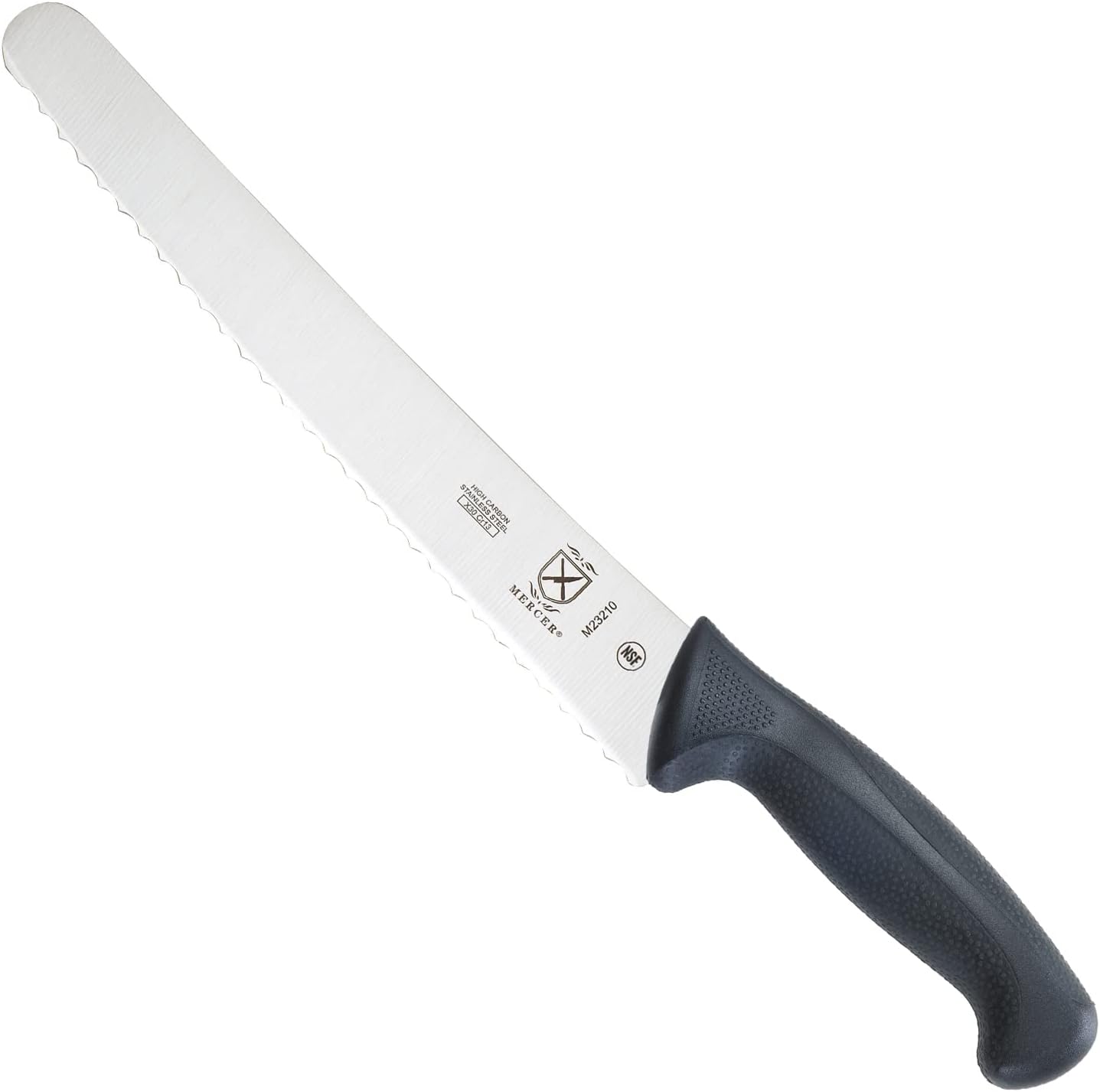
Selecting the right bread knife transforms the daily ritual of slicing loaves, baguettes, and delicate baked goods. For overall performance and commercial durability, the Mercer Culinary M23210 Millennia Black Handle stands out with its ten-inch Japanese steel blade and slip-resistant grip. Its generous length and wide wavy serrations glide effortlessly through crusty sourdough and soft sandwich bread alike.
If you are looking for outstanding value in a durable one-piece design, the Orblue Serrated Bread Knife with Upgraded delivers sharp performance at an accessible entry point. Its solid stainless steel construction eliminates moving parts and offers dependable cutting for daily sandwich prep. For cooks who prefer high-end materials and aesthetic craftsmanship, the HexClad 8″ Japanese Damascus Stainless Steel provides 67 layers of Damascus steel and a refined Pakkawood handle.
Bakers struggling with knuckle clearance will appreciate the innovative raised profile of the Piklohas Resharpenable Bread Knife for Homemade, which also allows for easy edge maintenance. Pairing the right blade with your baking routine ensures every loaf is served cleanly and evenly. You can also explore our guide on kitchen renovation appliance lineups to build out your complete culinary workspace.
Frequently Asked Questions
What makes the Best Kitchen Knives for Bread different from standard chef knives?
Bread knives utilize specialized serrated teeth that pierce hard crusts without requiring downward force. Standard chef knives rely on a smooth edge that can slip on glassy crusts and squash delicate internal crumb structures. The scalloped edge acts like a fine saw, producing clean slices without flattening the loaf.
What blade length is ideal for homemade artisan bread in 2026?
A ten-inch blade is generally ideal for slicing homemade artisan sourdough boules and wide rustic loaves. The extra length allows for long, fluid slicing motions without the blade tip getting trapped inside the bread. Eight-inch blades remain suitable for baguettes, rolls, and standard rectangular sandwich loaves.
Can you sharpen a serrated bread knife at home?
Yes, you can sharpen serrated knives at home using a tapered ceramic or diamond sharpening rod that fits individual tooth gullets. You stroke the rod along the beveled side of each individual serration until an even edge is restored. Models designed with wide scalloped teeth make this maintenance process significantly easier for home cooks.
Why are offset bread knives popular among bakers?
Offset bread knives position the handle above the cutting plane rather than directly in line with the blade spine. This elevated angle gives your knuckles full clearance above the cutting board, preventing bruised fingers during deep cuts. It also ensures the entire length of the blade contacts the board to finish cuts completely.
Are pointed or scalloped serrations better for crusty sourdough?
Pointed serrations are generally superior for piercing hard, blistered sourdough crusts with minimal initial effort. Scalloped serrations feature rounded tips that excel at slicing soft sandwich breads and delicate cakes without tearing. Many top knives combine a pointed profile with deep gullets to handle both styles efficiently.
Should you clean a bread knife in the dishwasher?
You should always clean quality bread knives by hand using warm water and mild liquid dish soap. Dishwasher heat and harsh detergents can corrode high-carbon steel and dull the delicate tips of serrations prematurely. Hand drying with a soft towel immediately after washing prevents water spots and keeps the edge sharp.
What other kitchen tasks can a bread knife perform?
Beyond slicing baked goods, bread knives excel at cutting through tough-skinned produce like watermelons, pineapples, squashes, and ripe tomatoes. They are also effective for slicing delicate pastry shells, leveling sponge cake layers, and portioning roasted meats with crispy skins. Check our general kitchen resources for more food preparation advice.
What is the benefit of a double-sided hollow edge on a bread knife?
Double-sided hollow indentations create small air pockets along the surface of the blade during slicing. These air gaps significantly reduce friction and prevent moist or warm bread from vacuum-sticking to the steel. As a result, each slice separates cleanly without crumbling or tearing.
How do you prevent excessive crumbs when slicing crusty bread?
Preventing excessive crumbs requires using a razor-sharp serrated knife and letting the weight of the blade do the cutting. Use long, smooth draw strokes across the entire length of the blade rather than pressing down with short, aggressive sawing motions. Allowing freshly baked bread to cool completely before cutting also stabilizes the internal crumb.
Is a stamped or forged bread knife better for daily use?
Both stamped and forged bread knives offer unique advantages depending on your personal handling preferences. Forged blades provide greater heft, balance, and bolster protection, which helps drive through dense loaves with minimal effort. Stamped knives are lighter and more nimble, making them comfortable for quick everyday sandwich prep.







Write Your Review
No reviews yet. Be the first to share your experience!