Best Laminate Floor Cleaners Quick Answer: Bona Multi-Surface Floor Cleaner Spray is the most balanced starting point for routine care because it is a ready-to-use, unscented, refillable formula listed for laminate and designed for residue-free cleaning. Among the best laminate floor cleaners, the safest choice is always the one allowed by your flooring manufacturer and applied with minimal moisture.




Top Picks: Best Laminate Floor Cleaners at a Glance
These best laminate floor cleaners include ready-to-use sprays, a no-rinse formula, a spray mop, concentrate, pods, and a multi-floor cleaner. Product titles and ASINs were checked on individual Amazon pages; confirm current directions, dilution, scent, and floor compatibility before use.
- Best Overall Spray: Bona Multi-Surface Floor Cleaner Spray – an unscented, refillable, residue-free solution listed for stone, tile, laminate, and vinyl.
- Best Dedicated Ready-to-Use: ZEP Ready-to-Use Hardwood and Laminate Floor Cleaner – a clear spray intended for hardwood and laminate floor care.
- Best No-Rinse: Wood & Laminate Floor Cleaner – a one-quart, no-rinse, streak-free cleaner for laminate, engineered wood, hardwood, and luxury vinyl plank.
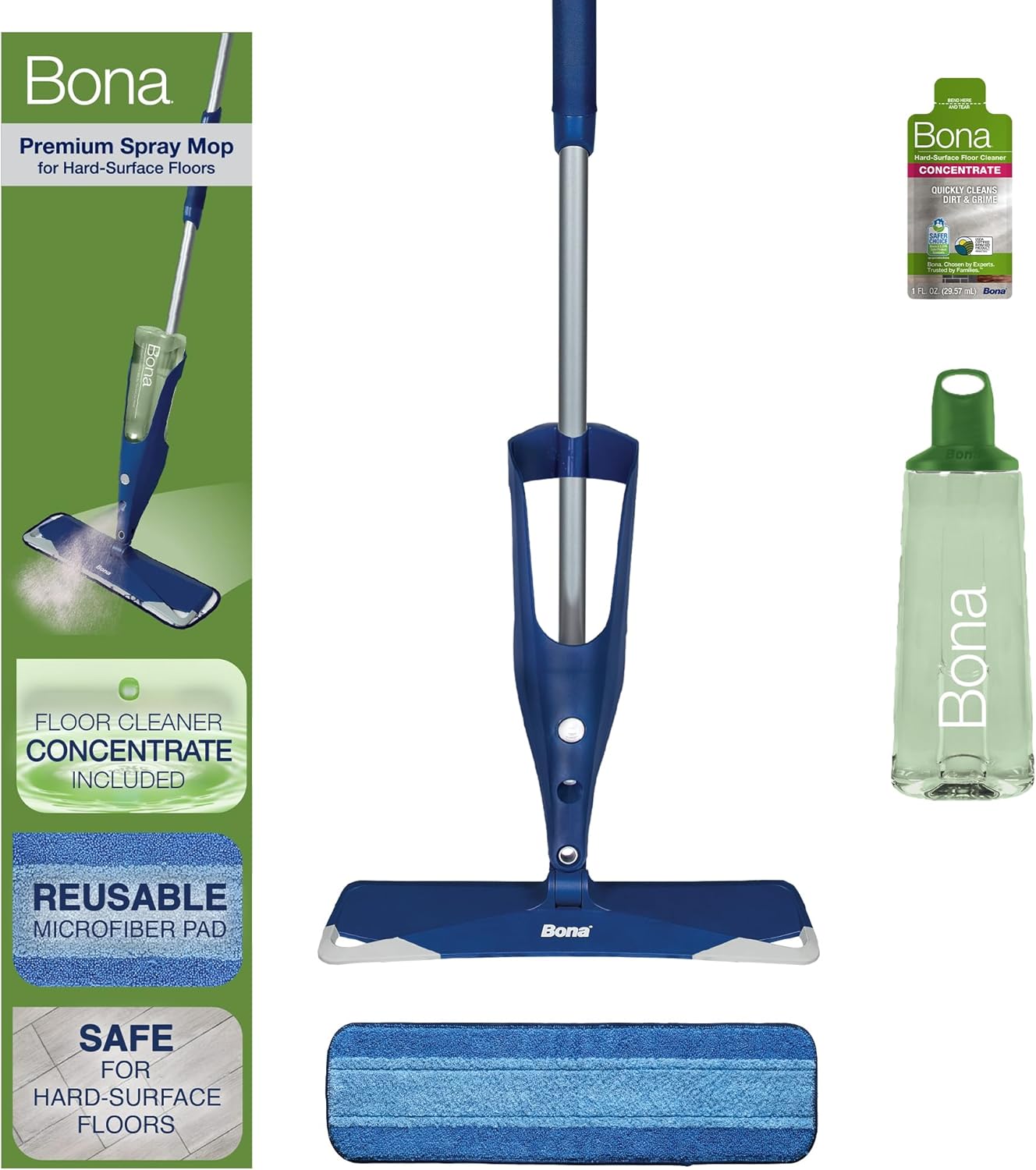
- Best Spray Mop Kit: Bona Multi-Surface Floor Premium Spray Mop – a spray system with concentrate and a washable microfiber pad.
- Best Concentrate: ProCare Floor Cleaner, One Gallon – a streak-free citrus-scented cleaner listed for tile, stone, laminate, vinyl, and natural wood.
- Best Pods: O-Cedar PACS Floor Cleaner – enzyme-powered pods with a crisp citrus scent for wood, tile, and laminate floors.
- Best All-Floor Option: Rejuvenate All Floors Cleaner – a 32-ounce cleaner for sealed hardwood, tile, vinyl, laminate, and other listed floors.
Confirm the Floor and Finish First
The best laminate floor cleaners are compatible with the specific wear layer and installation in your home. Read the flooring manufacturer’s care guide before selecting a solution. A product that is safe for one sealed laminate may not be approved for a damaged, unsealed, waxed, or specialty finish.
Do not confuse laminate with hardwood, engineered wood, vinyl plank, or waterproof flooring. They can look similar but respond differently to moisture, polish, and solvents. Keep the flooring model or installation paperwork available when possible.
Test a new cleaner in a hidden area. Use the exact dilution and application method, let it dry, and inspect for haze, color change, swelling, or extra slipperiness before cleaning a visible room.
Set a Cleaning Frequency That Protects the Finish
Daily dry removal is often more important than frequent wet mopping. Sweep or vacuum grit from entry paths, kitchen work zones, and under dining chairs. Wet-clean only when the floor has soil that dry tools cannot remove. This reduces liquid exposure and keeps the wear layer from receiving unnecessary friction.
High-traffic areas may need a small spot pass rather than a full-room application. Spray the pad or cloth, clean the mark, and let the section dry. A full bucket of solution can leave excess moisture in seams simply because the rest of the floor was not dirty.
Use separate microfiber pads for the kitchen, pet area, and entryway when possible. Sand and grit collected at the door can scratch a laminate surface if carried into a living room. Wash pads without fabric softener if the care label permits; softener can reduce absorbency.
The best laminate floor cleaners support a repeatable routine: dry soil first, damp application second, dry inspection last. If the floor remains dull or sticky, investigate product buildup or the pad rather than increasing the solution dose.
Understand Cleaners, Polishes, and Finishes
A cleaner removes soil. A polish or floor finish changes gloss and can leave a film. Some all-floor products are designed to clean and protect sealed surfaces, but they still need the correct amount and floor approval. Do not alternate several “shine” products without knowing how they interact.
Gloss is not proof of cleanliness. A shiny film can hide footprints, make the floor slippery, or attract more dust. The best laminate floor cleaners should leave a neutral, dry surface rather than a thick layer that needs stripping.
If an old finish has built up, stop adding products and follow the flooring manufacturer’s removal guidance. Abrasive scrubbing or solvent use can damage the pattern layer. A professional flooring service may be safer than experimenting in a visible room.
Keep a small note of the product, dilution, and date used. That record helps the best laminate floor cleaners remain consistent when more than one person maintains the home.
Control Moisture and Protect Seams
Laminate’s surface resists ordinary spills, but liquid can enter seams, edges, and damaged areas. Excess moisture may swell the core or lift planks. Spray the cleaning pad or a small floor section rather than pouring solution directly onto the floor.
Work in manageable zones and dry any visible puddle immediately. A microfiber pad should feel damp, not dripping. Change pads when they become saturated or begin spreading dirty water.
Pay special attention around refrigerators, dishwashers, exterior doors, pet bowls, and sinks. The best laminate floor cleaners cannot prevent damage caused by standing liquid or a leaking appliance.
Ready-to-Use Spray, Concentrate, or Pods?
Ready-to-use sprays reduce mixing errors and offer precise application. They suit spot cleaning and smaller homes. The trade-off is a higher cost per refill and more containers unless the bottle is refillable.
Concentrates are economical for larger areas but require accurate measurement. Too much concentrate can leave residue; too much water can over-wet seams. Use the specified water temperature and ratio rather than guessing by color or scent.
Pods simplify dosing for a full bucket or compatible system. They still depend on the correct water volume and complete dissolution. Store them dry and away from children and pets. The best laminate floor cleaners are the format you can measure and apply consistently.
Residue, Streaks, pH, and Scent
Streaks can come from too much product, dirty pads, hard water, grease, or old polish. Adding more cleaner often makes haze worse. Use the recommended amount and a clean microfiber pad, then allow the floor to dry without foot traffic.
A pH-neutral or floor-appropriate formula reduces the risk of attacking a finish, but pH alone does not prove compatibility. Avoid harsh alkalis, abrasive powders, steam, and unapproved waxes. Vinegar mixtures can also damage some finishes or leave an odor.
Scent is a preference, not a cleaning score. Unscented formulas suit sensitive households, while citrus scents can make a routine feel fresher. Ventilate as directed and never mix floor cleaners with bleach, ammonia, or another chemical.
Dry Soil Removal and Microfiber Technique
Remove sand, grit, and crumbs before wet cleaning. An electric broom can collect loose debris, but choose a floor-safe brush and avoid dragging stones across the laminate. Vacuum edges and under furniture where grit accumulates.
Use a clean microfiber pad and work with the plank direction when possible. Overlapping passes reduce missed strips. Rinse or replace the pad when it looks gray; a dirty pad redistributes soil and creates streaks.
Do not use a steam mop unless the flooring manufacturer explicitly permits it. Heat and vapor can force moisture into seams. The best laminate floor cleaners work with controlled damp cleaning, not saturation.
Spots, Grease, Pets, and High-Traffic Areas
Blot fresh spills instead of spreading them. For greasy footprints, apply a small amount of compatible cleaner to a microfiber cloth and work from the edge toward the center. Avoid scraping with a blade or abrasive pad.
Pet accidents need prompt removal. Absorb liquid, clean with a compatible product, and dry the seam. A separate pet odor eliminator should be used only if its label allows the exact laminate surface.
Tile grout and sealed tile may tolerate different cleaners, so consult a guide to tile cleaners rather than applying a strong tile product across laminate. Use mats at entries and felt pads under furniture to reduce the soil that reaches high-traffic zones.
How We Tested & Evaluated These Options
We evaluated the best laminate floor cleaners using current Amazon listing information retrieved through Crawlbase. Each selected ASIN was checked on its individual product page for title, laminate compatibility, ready-to-use or concentrate format, scent, residue language, and included mop or pad. This is research-based evaluation and does not claim hands-on streak, stain, gloss, pH, or long-term seam testing.
Our comparison considers application control, dilution, residue, microfiber use, drying, scent, and multi-surface compatibility. Confirm the current product directions and the flooring manufacturer’s recommendations before cleaning.
We also considered how the best laminate floor cleaners fit different routines, from a small daily spray pass to a larger refill or mop system. These are use-case judgments from the verified listing details, not a claim of measured cleaning performance.
Common Buying Mistakes
Avoid these mistakes when choosing the best laminate floor cleaners:
- Assuming every wood-look floor is laminate: Identify the floor before choosing chemistry.
- Using too much liquid: Standing solution can enter seams and swell the core.
- Adding extra concentrate: Stronger mixing often creates residue and haze.
- Skipping dry soil removal: Grit scratches and dirties microfiber quickly.
- Using polish as cleaner: Finish products can build up and change gloss.
- Mixing chemicals: Never combine cleaners, bleach, ammonia, or homemade solutions.
- Using a dirty pad: Saturated microfiber spreads soil and streaks.
Buying Checklist
Before selecting among the best laminate floor cleaners, confirm:
- Floor type, finish condition, manufacturer approval, and warranty guidance.
- Ready-to-use, concentrate, pod, or spray-mop format and exact dilution.
- Residue-free, no-rinse, pH, scent, ventilation, and storage instructions.
- Microfiber pad compatibility, washable parts, and refill availability.
- Drying speed, moisture control, seam condition, and high-traffic needs.
- Pet, child, and chemical-safety directions printed on the current label.
Frequently Asked Questions
Can I mop laminate with water?
Use only the minimal moisture allowed by the flooring manufacturer. A damp microfiber pad is generally safer than a wet mop, and puddles should be dried immediately.
Why does laminate look streaky after cleaning?
Common causes include excess product, a dirty pad, hard water, grease, or polish buildup. Use the correct dilution and a clean pad before adding more cleaner.
Can I use vinegar on laminate?
Only if the flooring manufacturer allows that solution and dilution. Acids can affect some finishes, and homemade mixtures are not automatically safer.
Is a steam mop safe for laminate?
Usually it should be avoided unless the floor manufacturer explicitly approves it. Heat and vapor can drive moisture into seams and damage the core.
Do I need to rinse a no-rinse cleaner?
Follow the label. A no-rinse formula is intended to dry without a separate water pass when used at the correct amount.
Final Decision
The best laminate floor cleaners remove soil with controlled moisture and minimal residue. Start with floor-manufacturer approval, then choose a ready-to-use spray, measured concentrate, pod, or spray mop that fits the size of the home and cleaning routine.
Vacuum grit first, use a damp microfiber pad, and dry spills quickly. Careful technique protects laminate more effectively than adding extra product or chasing shine with an unapproved polish.