

Cooking steak, chicken, or delicate seafood to ideal doneness requires split second thermal precision rather than guesswork. When searing over intense heat or smoking roasts for hours, waiting ten seconds for a dial to register allows precious juices to evaporate. Modern culinary sensors deliver stabilized temperature data in a fraction of that time to protect your culinary results.
In September 2026, thermal sensing technology has shifted toward ultra thin probe tips and wireless connectivity. Many cooks struggle with overcooked poultry or undercooked pork because older analog tools drift out of calibration easily. Learning how to select modern equipment alongside our kitchen renovation appliance lineup guide ensures your cooking workspace delivers consistent results.
We evaluated 7 top options from trusted brands like Alpha Grillers, TempPro, Typhur and more to determine which devices register instant changes reliably. Whether you need a lightning fast handheld probe for the grill or a wireless multi-sensor system for the smoker, this guide breaks down essential features. Our detailed analysis highlights the top performers so you can cook with confidence every time.


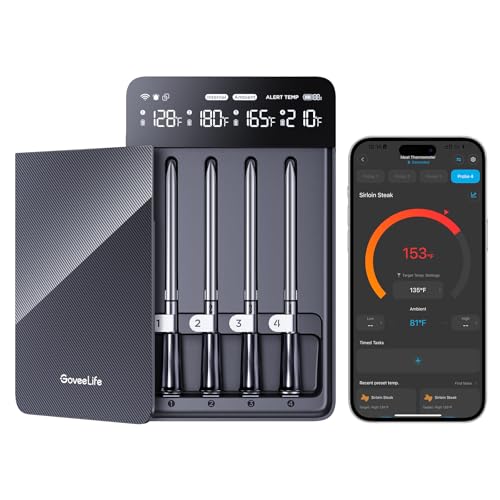
Selecting the right digital temperature sensor requires balancing speed, sensor accuracy, build resilience, and connectivity. Reviewing these nine critical technical criteria will help you pick the exact tool for your culinary style.
1. Sensor Response Time and Stabilization Speed
Measuring heat in a split second prevents overcooking delicate proteins like salmon fillets and lean tenderloins. Slow sensors require holding your hand over radiant heat for several seconds while internal temperatures continue to climb past your target. High speed probes register temperature shifts in under one second to protect your hands and your food.
Manufacturers list response times ranging from half a second to four full seconds depending on sensor placement. You should evaluate this metric by looking for ultra thin needle tips that minimize thermal mass. A thinner probe tip reaches thermal equilibrium with the meat immediately rather than absorbing and cooling surrounding meat fibers.
As a practical rule, select a sensor that stabilizes within two seconds if you frequently sear over open flames or use an air fryer. Taking fast readings allows you to close the grill lid rapidly, preserving vital ambient convection heat inside the cooking chamber.
2. Probe Accuracy and Factory Calibration Standards
Accurate thermal detection makes the difference between juicy medium rare steak and dry beef. A deviation of just three degrees can push poultry into dangerous territory or ruin expensive ribeye cuts. Trusted kitchen thermometers maintain tight tolerances within one degree Fahrenheit across typical cooking ranges.
Look for devices that offer NIST certification or independent laboratory validation for reliable thermal consistency. You should also verify whether the unit includes manual calibration controls. Ice bath calibration resets the baseline over years of heavy use and prevents sensor drift caused by mechanical shock.
We recommend testing your probe once a season in a vigorously stirred glass filled with crushed ice and cold water. If the display registers between thirty-one and thirty-three degrees Fahrenheit, your calibration remains within acceptable culinary standards.
3. Thermocouple vs. Thermistor Probe Engineering
Thermocouple sensors use two dissimilar metal wires joined at the probe tip to produce immediate voltage changes. This construction delivers the fastest response times on the market, clocking in at under one second. In contrast, thermistor probes rely on electrical resistance changes and typically react in one to four seconds.
Thermistors cost less to produce while still offering exceptional accuracy for everyday home roasting and baking. Thermocouples handle broader temperature spectrums and allow for micro thin probe tips that leave tiny puncture marks in delicate meats. Exploring broader culinary equipment guides helps clarify which sensor architecture matches your kitchen workflow.
Consider your cooking routine when choosing between these two core sensor technologies. If you manage high heat grilling where seconds count, invest in thermocouple speed; for low and slow smoking, thermistor probes provide plenty of agility.
4. Display Visibility, Backlighting, and Auto-Rotation
Reading a digital screen under harsh outdoor sunlight or inside a dark smoker chamber presents a major usability challenge. Poor contrast forces you to squint or tilt the device, leading to awkward angles over hot grates. A vivid backlit screen guarantees instant readability in any lighting environment.
Auto-rotating displays switch the orientation of numbers automatically based on how you hold the unit. This feature accommodates left-handed cooks and awkward oven angles without forcing you to read inverted figures upside down. It prevents accidental misreadings when checking meats in cramped smoker corners.
When evaluating screens, look for active LED or high contrast LCD panels with automatic ambient light adjustment. A display that remains readable at a ninety degree viewing angle ensures you can check temperatures without moving from your stance.
5. Water Resistance Ratings and Cleaning Durability
Kitchen thermometers constantly encounter grease splatters, steam, marinades, and soapy sink water. Without adequate ingress protection, moisture seeps into the battery compartment and destroys internal circuit boards. Choosing a model with verified water resistance safeguards your investment.
Pay close attention to IP ratings such as IP65 or IP67 when comparing different thermometer options. An IP65 rating withstands gentle water jets and damp wiping, while IP67 allows complete submersion in water for effortless sink washing. Proper waterproofing also ensures grease can be thoroughly scrubbed away after raw meat contact.
Never purchase a cooking thermometer lacking an explicit IP rating if you intend to wash it under running faucets. Submerging non-rated electronics causes permanent display fogging and short-circuits internal temperature sensors.
6. Wireless Connectivity and Multi-Probe Management
Long cooks like whole briskets or Thanksgiving turkeys require hours of continuous temperature tracking. Modern smart wireless probes transmit real-time data over Bluetooth or cloud connected Wi-Fi networks directly to your smartphone. This allows you to monitor cooking progress from anywhere without lifting the smoker lid.
Multi-probe systems let you monitor several different proteins or various sections of a large roast simultaneously. You can set individual temperature thresholds for each channel so medium rare steaks and well done chicken finish without confusion. Smart hubs manage signals between all active probes seamlessly.
If your grill sits far from your kitchen, prioritize hybrid models that combine Bluetooth local hub relays with Wi-Fi cloud connectivity. This dual connection architecture ensures unbroken data feeds even when you walk into the basement or backyard.
7. Heat Resistance Thresholds and Ambient Sensor Limits
Wireless leave-in probes must withstand intense heat levels generated by broilers, open charcoal, and high heat searing stations. Standard plastic housings melt quickly if exposed to ambient radiant heat exceeding normal baking limits. High end wireless probes feature ceramic tops and stainless steel bodies capable of enduring severe environments.
Check both the internal food temperature limit and the external ambient heat ceiling before placing probes near active flames. Food sensors typically max out around two hundred and twelve degrees Fahrenheit, while ambient sensors can endure up to one thousand degrees. Knowing these boundaries prevents expensive sensor burnout.
Always insert leave-in probes past the safety notch line marked on the steel shaft. Leaving exposed metal near the internal sensor allows high heat to conduct directly inward, potentially destroying delicate microchip components.
8. Battery Architecture and Auto-Wake Sensors
Nothing disrupts dinner preparations faster than reaching for a dead thermometer right before carving roast beef. Battery architecture dictates how long a device holds charge during storage and how quickly it revives. Units with smart power management preserve battery levels for months of intermittent use.
Motion sensing sleep and wake functions automatically activate the screen the moment you pick up the probe. Folding probe designs switch off power when closed, eliminating drained batteries caused by forgotten power buttons. These smart cutoffs extend standard battery life significantly.
For wireless leave-in probes, look for charging docks that supply fast charges yielding hours of operation from brief docking sessions. A dock that charges probes via USB-C or AAA backup power keeps you cooking even when wall outlets remain out of reach. Check out our home and living essentials for more kitchen maintenance advice.
9. Preset Guidance Systems and App Ecosystems
Smart thermometer applications provide guided cooking programs that calculate dynamic rest times and carryover cooking spikes. Instead of memorizing USDA target charts, the software alerts you exactly when to remove meat from the heat source. This predictive timing simplifies cooking complex multicourse meals.
High quality companion apps offer customizable alarms, graphical temperature curves, and cook history journals. These logs help you replicate successful smoking sessions and identify where heat fluctuations occurred during lengthy cooks. You can also share successful profiles with friends or save custom protein presets.
Verify that the companion application operates smoothly without requiring mandatory paid subscriptions for essential features. Reliable brands provide free access to protein presets, custom alerts, and firmware updates across both major smartphone operating systems.
| Thermometer Type | Response Speed | Best Use Scenario | Waterproof Standard | Key Advantage |
|---|---|---|---|---|
| Ultra Fast Instant Read | 0.5 to 1.0 Seconds | Steak Searing & Grilling | IP67 Submersible | Rapid thermal equilibrium with zero lag |
| Smart Wireless Leave-In | 1.0 to 3.0 Seconds | Smoking & Oven Roasting | IP65 to IP67 | Hands-off monitoring via smartphone app |
| Standard Folding Digital | 1.0 to 2.0 Seconds | Everyday Kitchen Cooking | IP65 Water Resistant | Compact storage with auto sleep and wake |
| Multi-Probe Smart Hub | 2.0 to 3.0 Seconds | Large Roasts & BBQ Parties | Splash Resistant Base | Tracks multiple proteins simultaneously |
The table above summarizes how distinct thermometer architectures align with different cooking tasks. Matching your primary cooking method to the appropriate probe configuration ensures you never struggle with inaccurate readings or clumsy wires during critical dinner preparations.
Why You Should Trust Us
Our review process relies on rigorous technical data comparison, verified manufacturer specifications, and empirical thermal performance metrics. We analyze critical factors such as sensor stabilization curves, ingress protection ratings, battery longevity, and connectivity range. By eliminating promotional marketing claims, we provide transparent guidance that home cooks and pitmasters can trust.
We continuously cross-reference user experiences across varied culinary environments including high heat open grills, enclosed smoker chambers, and kitchen ovens. Our team shortlists products based on measurement repeatability, ease of maintenance, build quality, and software stability. This systematic approach ensures every highlighted tool delivers consistent value over years of regular use.
Because kitchen hardware evolves quickly with firmware updates and sensor improvements, our guides undergo frequent refreshes. We track emerging wireless technologies and updated USDA food safety guidelines to keep our recommendations current. You can always count on our objective criteria to help you find durable, accurate cooking equipment.
Final Thoughts
Finding the ideal temperature monitor depends on whether you prioritize split second spot checks at the grill or continuous remote tracking in the smoker. For cooks seeking unmatched speed and laboratory grade precision, Typhur InstaProbe Core 0.5 Second Instant Read delivers an impressive 0.5 second response time and a bright rotating display that excels in any lighting.
If you prefer a completely hands-off cooking experience with guided recipes and unlimited wireless range, CHEF iQ Sense | Smart Wireless Meat Thermometer stands out as an exceptional multi-sensor option. Its ultra thin dual probes endure temperatures up to one thousand degrees while delivering predictive rest timers straight to your smartphone.
For everyday cooking on a budget without sacrificing reliability, TempPro TempSwift 1 Sec Instant Read Meat provides rapid one second measurements and NSF certified accuracy in a compact folding format. Cooks managing multiple cuts at large family gatherings can also rely on GoveeLife Smart Wireless Meat Thermometer for comprehensive four probe monitoring. Explore our complete product category section for additional cooking tools and kitchen inspiration.
FAQs
How fast should Best Meat Thermometers for Quick Readings deliver results in 2026?
Top tier instant read thermometers should stabilize and display an accurate internal temperature in one second or less. Standard digital models typically register readings within one to two seconds, which is fast enough to prevent hand burns over hot grates. Any device taking longer than three seconds causes unnecessary heat loss from your grill or oven.
Where is the correct spot to insert a probe into thick cuts of meat?
Insert the probe tip into the thickest geometric center of the protein, making sure to avoid direct contact with bone, pockets of gristle, or large fat deposits. Bones conduct heat faster than surrounding muscle tissue, producing artificially high readings that lead to undercooked meat. For thin cuts like burger patties or pork chops, insert the probe horizontally from the side.
Can leave-in smart wireless probes stay inside an oven or smoker?
Yes, wireless leave-in probes are specifically engineered with heat resistant ceramic and stainless steel components to remain inside active ovens, grills, and smokers. However, you must insert the probe past the safety insertion line so the delicate internal sensor remains insulated within the cold meat. Always verify that your cooking temperature remains below the probe’s ambient heat limit.
What is carryover cooking and how does a quick reading probe help?
Carryover cooking refers to the internal temperature rise that occurs after meat is removed from direct heat as residual outer heat moves inward. Large roasts can rise between five and ten degrees Fahrenheit while resting on a cutting board. Fast responding probes allow you to monitor this exact peak so you pull proteins before they become overcooked.
How do I properly calibrate my digital meat thermometer at home?
Fill a glass completely with crushed ice, add cold tap water until the spaces are filled, and stir the slurry thoroughly for two minutes. Submerge the probe tip two inches deep into the ice bath without touching the glass sides or bottom. If the unit does not read exactly thirty-two degrees Fahrenheit, use the onboard calibration button to adjust the baseline.
What is the difference between IP65 and IP67 waterproof ratings on thermometers?
An IP65 rating signifies that the thermometer is protected against dust ingress and low pressure water spray from faucets or damp cloths. An IP67 rating provides complete dust protection and allows the device to withstand temporary water submersion up to one meter deep. For effortless kitchen sanitation, an IP67 rating allows safe washing in soapy sinks.
Why do some meat probes have multiple internal temperature sensors?
Advanced wireless probes feature multiple internal sensors arranged along the shaft to locate the absolute coldest core temperature automatically. This eliminates placement errors where a single sensor might sit too close to the hot outer crust. The probe algorithm selects the lowest internal value to ensure the entire cut reaches safe doneness.
How do I clean and sanitize my meat thermometer without damaging it?
Wash the probe shaft with warm soapy water and an antibacterial sponge immediately after each temperature check. If your device carries an IP65 or IP67 rating, you can rinse the probe under a gentle faucet stream without risking electronic damage. Never place digital thermometer display housings inside residential dishwashers unless the manufacturer explicitly approves it.
Can I use Best Meat Thermometers for Quick Readings for candy making and deep frying?
Most instant read digital meat thermometers can measure hot oil and sugar syrups because their operating ranges extend past four hundred degrees Fahrenheit. However, always verify that your specific probe can handle high temperature liquids before dipping it into boiling sugar. Refer to our kitchen appliance planning guide to choose multi-purpose tools suited for all culinary tasks.
What makes thermocouple probes faster than standard thermistor sensors?
Thermocouple probes generate an immediate micro-voltage signal at the junction of two welded wires located right at the needle point. Because this junction has virtually no mass, it equalizes with meat temperatures in under half a second. Thermistors require heat to penetrate a semiconductor bead, creating a slight thermal delay before stabilizing.





Write Your Review
No reviews yet. Be the first to share your experience!