Quick Answer: The Best Photo Collage Frames match the number and orientation of your photos, show an acceptable crop through every opening, and fit the wall at their full outer dimensions. MELANNCO’s 12-photo frame is the most balanced conventional choice. DUENPY suits a much larger photo collection, Umbra Luna creates a circular wall feature, Americanflat can show five photos or one larger print, and Umbra Exhibit allows the arrangement to change later.





Top Picks at a Glance
- Best Overall: MELANNCO 12-Photo Collage Picture Frame holds a balanced mix of portrait and landscape 4×6 prints and can hang horizontally or vertically.
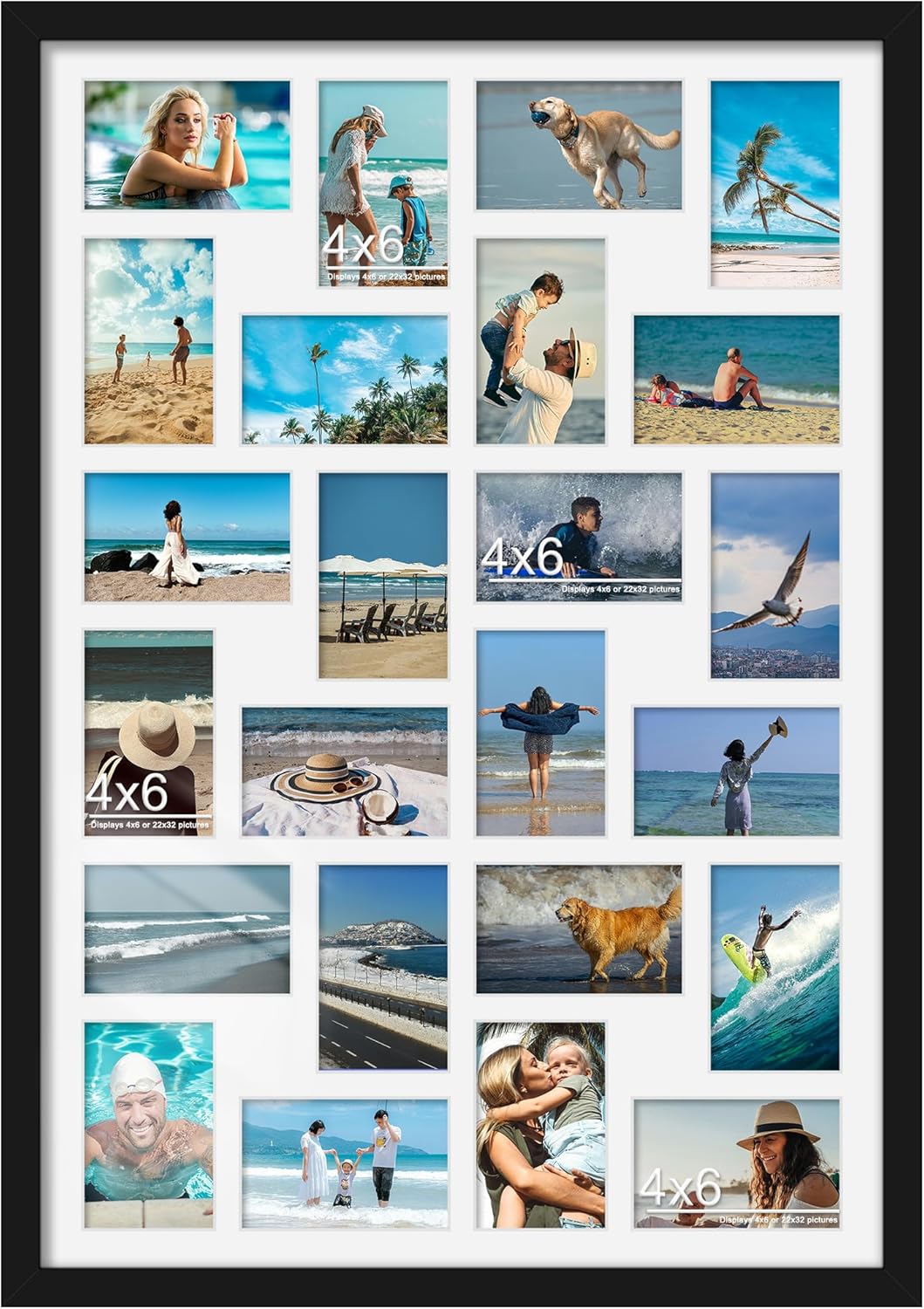
- Best for a Large Photo Collection: DUENPY 24-Photo Collage Frame uses a large multi-opening mat for twenty-four 4×6 prints in a 22-by-32-inch outer format.
- Best Circular Design: Umbra Luna Collage Picture Frame turns nine 4×6 photos into a circular 22-inch wall display with a sculptural black frame.
- Best Convertible Mat: Americanflat Five-Photo Collage Frame displays five 4×6 photos with the mat or one 11×14 image after the mat is removed.
- Best Wood and Glass: Golden State Art Nine-Opening Collage Frame combines solid wood, tempered glass, a white mat, and vertical or horizontal mounting.
- Best with a Message Board: MELANNCO Collage Frame with Letter Board mixes square and rectangular photo openings with changeable letters, numbers, and symbols.
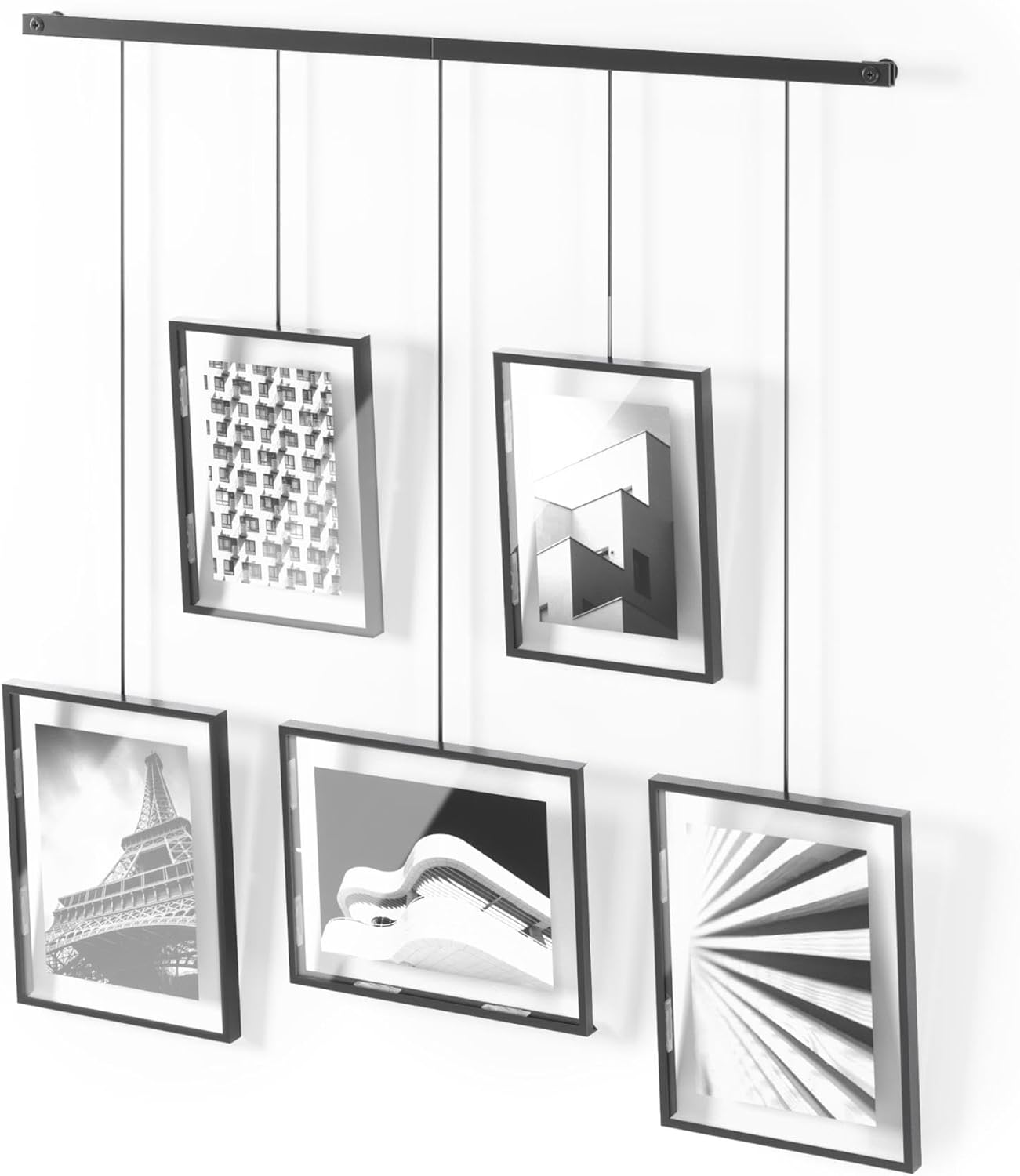
- Best Adjustable Display: Umbra Exhibit Picture Frame Set suspends movable 4×6 and 5×7 frames from a steel beam for a configurable arrangement.
How to Choose the Best Photo Collage Frames
The Best Photo Collage Frames begin with a photo plan, not a frame shape. Before comparing finishes, decide which images belong together, which ones need portrait or landscape openings, and which details must remain visible after cropping. A frame with many openings is not useful if half of the photos lose faces, landmarks, or handwritten text.
Next, compare the overall frame dimensions with the wall. A 4×6 photo sounds small, but several openings, mat borders, frame molding, and spacing can create a substantial object. A large collage can work as the main art above furniture, while a compact frame may fit a hallway or office wall.
Finally, decide how often the display will change. The Best Photo Collage Frames for a permanent wedding or family timeline can use a fixed mat and secure backing. A children’s art display or rotating travel collection benefits from easier rear access, individual frames, clips, or an adjustable beam system.
Understand the Main Collage Frame Types
Single Frame With a Multi-Opening Mat
This familiar design places several cutouts in one mat behind one sheet of glazing. It creates consistent spacing and keeps every image on the same visual plane. The outer frame can be wood, engineered wood, plastic, or metal, and the glazing may be glass or acrylic.
A multi-opening mat makes alignment look precise, but each opening fixes the crop. Photos may need tape or photo-safe corners on the back of the mat so they do not slide. Replacing one picture often means opening the entire backing, so label the photo positions before disassembly.
Sculptural or Molded Multi-Opening Frame
Circular, puzzle-like, or connected molded frames make the frame itself part of the wall art. Umbra Luna is an example of a circular format whose outer silhouette has more visual impact than a standard rectangle. This approach suits a feature wall where the shape complements the room.
The trade-off is competition. Decorative dividers and curves can attract as much attention as the photos. The Best Photo Collage Frames in sculptural formats work with simple, cohesive images that do not need large viewing areas.
Collage With a Letter Board
A built-in letter board lets the owner add a date, name, quote, milestone, or short caption. It works well for newborn photos, anniversaries, graduations, classroom memories, and family events. The message area becomes part of the composition, so keep text short enough to read from the normal viewing distance.
Store spare letters and symbols in a labeled bag attached to the back or kept with photo supplies. Check that the board color and distressed or decorative frame finish fit the room even when the message changes.
Adjustable Beam or Hanging-Frame System
An adjustable system hangs several individual frames from one beam. Frames can slide or change position without adding a new wall hook for each photo. Different print sizes can create hierarchy, and the arrangement can adapt as images change.
The beam and rods remain visible, giving the display a more architectural look. It also projects differently from the wall than a flat mat frame. For a more extensive coordinated arrangement using separate frames, compare gallery wall kits before deciding which system is easier to maintain.
Nominal Photo Size Versus Visible Opening
A frame described for 4×6 photos does not necessarily reveal the full four-by-six-inch print. The mat opening is normally smaller so the print cannot fall through. Verified listings in this guide demonstrate this clearly: some identify actual openings around 3.5 by 5.5 inches even though the intended print is 4×6.
This overlap is normal, but it can hide important content. Create a crop-safe area inside every print, leaving faces, text, and key objects away from the edge. The Best Photo Collage Frames provide enough listing detail to distinguish print size, visible mat opening, outer frame size, and optional un-matted display size.
If the opening dimensions are not stated, assume some edge coverage and prepare a test print. Place a paper mask over the photo to approximate the crop. A quarter-inch overlap on each side can make a close portrait feel noticeably tighter.
Portrait and Landscape Orientation
Count the vertical, horizontal, and square openings separately. Do not rely on the total photo count. Some frames can hang in either direction, which changes the orientation mix, while others use a fixed decorative shape. Make a numbered list that maps each image to a specific opening.
When the frame supports horizontal and vertical hanging, choose the orientation based on the photo collection and wall shape. A tall collage suits a narrow hallway or between windows. A wide collage relates more naturally to a sofa, console, desk, or headboard.
Create Visual Hierarchy
Not every image needs equal importance. If the format includes mixed opening sizes, place the strongest portrait, landscape, or event image in the largest position. Surround it with quieter details. In an equal-opening grid, use color, subject distance, or sequence to guide the eye.
Prepare Photos Before Loading the Frame
Select a Cohesive Group
A collage is easier to read when the images share an event, person, place, time period, or color treatment. Combining a dark indoor phone photo, a bright studio portrait, a faded print, and a highly saturated landscape can look accidental. Editing does not require making every image identical, but exposure and color should feel related.
The Best Photo Collage Frames can display a family timeline, travel story, wedding sequence, school year, pet collection, or set of artwork. Choose one organizing idea and remove images that repeat the same expression or scene without adding information.
Crop to the Opening Ratio
A 4×6 print uses a 2:3 ratio. Square openings and 5×7 frames use different proportions. Crop each image for its assigned opening rather than printing one version for every slot. Keep high-resolution originals so the crop can be revised later.
Check Print Resolution
For a typical viewing distance, a properly focused source with enough pixels for the intended print size will look better than an enlarged screenshot or compressed social-media copy. Review faces at print size, not only on a bright phone screen. Dark images may print darker than expected, so order a small test when color matters.
Lay Out the Sequence
Arrange prints on a clean surface in the same pattern as the mat. Move dark and bright images around until the visual weight feels balanced. Avoid clustering all close-up faces on one side and all landscapes on the other unless that contrast is intentional.
Frame Materials and Glazing
Wood and Engineered Wood
Solid wood offers natural grain and a substantial feel, while engineered wood can provide stable, consistent profiles. Broad dark molding creates a strong boundary around busy photos. Slim or lighter frames recede and let the images lead. Compare standalone construction choices in the guide to picture frames when material quality is a priority.
Plastic and Recycled Plastic
Plastic reduces weight and supports sculptural shapes that would be expensive or heavy in wood. Surface finish and corner quality matter because large molded frames can show seams in daylight. Lightweight construction can also simplify mounting on walls where heavy glazing is undesirable.
Glass and Tempered Glass
Glass generally provides good clarity and scratch resistance, but it adds weight and can break. Tempered or shatter-resistant descriptions should be checked carefully because different products use different glazing. A heavy multi-photo frame needs appropriate anchors based on loaded weight, not the empty package alone.
Plexiglass or Acrylic Glazing
Plexiglass is lighter and less likely to shatter, making it useful for large collages, children’s spaces, and busy hallways. It can scratch more easily, attract dust through static, and arrive with protective film that must be removed from both sides when specified. Use a microfiber cloth and acrylic-safe cleaning method.
The Best Photo Collage Frames match glazing to size and location. A large wall piece above a high-traffic area may benefit from lower weight, while a smaller formal frame may prioritize glass clarity.
Loading and Securing Multiple Photos
Work on a clean table covered with a soft cloth. Photograph the empty mat and number each opening on a paper diagram. Clean the inside of the glazing before adding photos, because dust becomes difficult to remove after the backing is closed.
Place the mat face-down and position each print behind its opening. Use photo-safe tape along one edge or corners if the maker recommends securing the prints. Avoid permanent household tape on irreplaceable originals; use high-quality copies for delicate or historical photos.
Close swivel tabs or backing clips without bending them farther than necessary. Confirm that wires, sawtooth hangers, or keyholes are secure. Lift the frame upright while supporting both sides, then inspect every crop before mounting. The Best Photo Collage Frames should keep the mat flat and prevent prints from slipping after the frame is vertical.
Plan the Wall Installation
Make a Full-Size Paper Template
Trace the outer dimensions onto paper and mark the hanger positions. Tape the template to the wall, check it from the main viewing locations, and compare its center with nearby furniture. This prevents a large collage from being hung too high or too close to trim.
Use Hardware for the Loaded Weight
Photos, mat, backing, and glass add weight. Match anchors to drywall, plaster, masonry, paneling, or studs. Two hangers can improve leveling and reduce rotation when the frame supports them. Do not rely on an adhesive strip unless its rating, wall compatibility, and frame design are appropriate.
Control Reflections
Glazing opposite a window or ceiling light can reflect more than it reveals. Test the paper template at different heights and angles before drilling. A small shift may reduce glare. If a large single poster or print will anchor nearby photos, compare poster frames for compatible scale and finish.
Style Collage Frames by Use Case
Family Timeline
Arrange images chronologically or group them by branch of the family. Use consistent print borders or color treatment to connect photographs taken decades apart. Label the rear of copies with names and dates before framing.
Travel Collection
Mix wide scenery, close details, portraits, tickets, and map fragments. Avoid using only distant landscapes, which can become visually repetitive at small sizes. A central quote or letter board can identify the place and year without adding text to every image.
Wedding or Anniversary
Create a sequence from preparation through ceremony and reception, or combine the original wedding with later anniversaries. Keep skin tones consistent and reserve the strongest opening for a portrait that reads clearly from across the room.
Children’s Art and School Memories
Use copies or scans of artwork when the original is thick, textured, or oversized. An adjustable display makes frequent updates easier than a fixed mat. If changes will be very frequent, floating picture ledges may offer faster rotation without reopening a frame.
Important Trade-Offs
- More openings versus more preparation: A large collage holds more memories but requires additional cropping, printing, alignment, and visual editing.
- Fixed mat versus flexible layout: A mat creates consistent spacing, while individual or suspended frames allow future rearrangement.
- Glass clarity versus wall weight: Glass resists scratching but adds load and breakage risk; acrylic is lighter but needs gentler care.
- Decorative shape versus photo emphasis: Circular and sculptural frames make stronger wall art but can compete with the images.
- One backing versus individual access: A single rear panel keeps the frame compact, while separate backs can make one-photo updates easier.
- Uniform openings versus hierarchy: Equal sizes create order; mixed sizes let one image lead but require more varied printing.
These trade-offs explain why the Best Photo Collage Frames differ by collection. A permanent grid of family portraits benefits from a fixed mat, while changing children’s photos fit an adjustable system.
Common Mistakes to Avoid
Assuming the Entire 4×6 Print Will Show
Mat openings usually overlap the print. Keep faces and text inside a safe area and check actual opening measurements. Test one print before preparing the full set.
Choosing by Opening Count Alone
Count portrait, landscape, square, and mixed-size openings separately. Confirm that the overall frame fits the wall and that the number of required prints is practical to prepare.
Using Unrelated Color Treatments
Different cameras and decades naturally vary, but extreme changes in saturation and brightness can fragment the display. Apply a restrained edit or use consistent borders to create continuity.
Ignoring Backing Access
A frame that is difficult to open may be fine for a permanent memorial but frustrating for seasonal updates. The Best Photo Collage Frames match access style to how often photos will change.
Hanging Before Inspecting Every Crop
Stand the loaded frame upright and inspect it in good light. Correct slipped photos, dust, fingerprints, and crooked horizons before installing it on the wall.
Buying Checklist for Best Photo Collage Frames
- List every photo and its portrait, landscape, or square orientation.
- Confirm nominal print sizes and actual visible opening dimensions.
- Measure the full outer frame and create a wall template.
- Choose a fixed mat, sculptural frame, letter-board design, or adjustable system.
- Check frame material, glazing type, loaded weight, and edge quality.
- Review backing boards, tabs, individual access, and photo-retention method.
- Verify horizontal, vertical, or configurable mounting options.
- Prepare crop-safe images at sufficient print resolution.
- Match anchors and hardware to the wall and loaded frame weight.
- Plan for glare, sunlight, future updates, and cleaning access.
Care and Updating the Display
Dust the frame and glazing with a soft cloth. Apply a compatible cleaner to the cloth rather than spraying the frame, where moisture can run behind the glazing and stain the mat. Use acrylic-safe materials on plexiglass to reduce scratching.
Limit direct sunlight to reduce fading. Keep digital copies and a simple opening map so damaged or outdated prints can be replaced at the correct crop. Check hangers, wires, rods, and anchors periodically, especially on heavy glass-front frames.
The Best Photo Collage Frames remain easier to update when the original crop files, print sizes, and layout photo are saved together. Store unused mats and backing parts flat and dry.
How We Tested and Evaluated
We evaluated the Best Photo Collage Frames through research-based comparison of verified Amazon product pages rather than claiming hands-on use. We confirmed product names, stated outer dimensions, opening counts, intended print sizes, actual mat openings when listed, frame and glazing materials, backing features, and mounting orientation.
Our evaluation emphasizes photo planning, visible crop, overall wall fit, loading effort, mounting security, and update flexibility. We selected different systems rather than only comparing minor finish variations. Listings can change, so confirm the chosen color, opening layout, glazing, dimensions, and included hardware before ordering.
Frequently Asked Questions
Why does a mat crop a 4×6 photo?
The opening is made slightly smaller than the print so the photo cannot fall through. This overlap is normal. Keep important details away from the edges and check the stated actual opening rather than relying only on the nominal print size.
Can a collage frame hang horizontally or vertically?
Some can use either orientation, while decorative and fixed layouts may support only one. Check hanger positions and count how portrait and landscape openings change after rotation.
Should photos be taped to the mat?
Light photo-safe tape or archival corners can prevent slipping when the manufacturer recommends it. Avoid permanent household tape on valuable originals. Copies are safer for irreplaceable photographs.
Is glass or plexiglass better?
Glass offers good clarity and scratch resistance but adds weight and breakage risk. Plexiglass is lighter and shatter-resistant but scratches and attracts dust more easily. Choose based on frame size, wall location, and household activity.
What print resolution is needed?
Use the highest-quality original available and prepare it for the assigned print size and crop. Avoid enlarging compressed social-media copies when a full-resolution file exists. A test print is useful for dark or highly detailed images.
How often should collage photos be updated?
There is no required schedule. Permanent timelines may remain unchanged for years, while children’s and travel displays may rotate seasonally. Choose backing access and mounting flexibility based on the expected frequency.
Final Decision
The Best Photo Collage Frames fit the prepared photo set as well as the wall. MELANNCO’s 12-photo format offers a versatile conventional layout, DUENPY handles a larger collection, Umbra Luna adds a circular silhouette, Americanflat offers a convertible mat, and Umbra Exhibit supports rearrangement.
Map every opening, verify the visible crop, measure the complete frame, and choose glazing and hardware for the installed location. Preparing the photos before buying is the simplest way to avoid empty openings and unwanted cropping.