

High-resolution video capture demands memory hardware that can reliably keep pace with intense data streams. When recording 4K or high-frame-rate footage on action cameras and drones, standard memory media often stumbles and drops frames. Exploring the Best V60 MicroSD Cards provides the sustained throughput essential for clean, uninterrupted recordings.
In September 2026, content creators have access to faster and more resilient flash storage than ever before. We gathered 7 capable options across top industry brands such as ProGrade Digital, Lexar, SABRENT and more to evaluate real recording stability. You can also browse our collection of helpful tech guides to optimize your overall digital gear setup.
Investing in proper storage eliminates the frustrating buffer pauses that ruin critical action shots during active production shoots. This comprehensive breakdown examines sustained write performance, bus architectures, and hardware reliability to help you select the ideal card for your specific filming gear.




Buying Guide for Best V60 MicroSD Cards in 2026
Minimum Sustained Write Speed vs Peak Burst Speed
Peak write speeds printed on memory packaging often represent short bursts rather than continuous data capture capability. For professional video recording, minimum sustained write speed is the single metric that guarantees your camera will not drop frames during long takes.
The Video Speed Class rating establishes a strict baseline where a V60 card guarantees an absolute minimum recording throughput of 60 megabytes per second. This baseline prevents recording interrupts when capturing high-bitrate codecs such as All-Intra 4K or 10-bit color profiles.
As a practical rule of thumb, check your camera recording bitrate in megabits per second and divide that figure by eight to find the required megabytes per second. If your drone records at 400 Mbps, it requires 50 MB/s sustained write speed, making a V60 card an ideal match with adequate safety overhead.
UHS-II Bus Interface and Dual-Row Pin Architecture
Memory cards achieving V60 ratings utilize the advanced UHS-II bus interface, distinguished by a second physical row of contact pins on the underside. This secondary row provides additional data lanes that dramatically multiply the available bandwidth compared to older UHS-I cards.
Operating a UHS-II card in a compatible slot allows data to travel across full-duplex pathways, reaching read speeds up to 280 MB/s. While these cards remain backwards compatible with standard UHS-I slots, their operational speed will drop down to UHS-I interface limits in older hardware.
When evaluating hardware compatibility, verify whether your drone, camera, or portable console supports UHS-II pin layouts natively. Utilizing a UHS-II card reader on your workstation is also essential to unlock rapid offload speeds when transferring large video archives.
Read Speeds and Post-Production Workflow Efficiency
While write speed dictates whether you can record footage smoothly, read speed determines how quickly you can transfer files to your editing drive. Offloading hundreds of gigabytes of raw video files over slow interfaces wastes valuable production time on set.
Premium V60 cards provide read performance reaching between 250 MB/s and 280 MB/s when paired with appropriate card readers. This level of bandwidth cuts file transfer times by more than half compared to traditional high-speed UHS-I storage.
If your daily routine involves backing up multiple high-capacity cards between video shoots, prioritizing maximum read speeds yields massive time savings. A card reading at 280 MB/s offloads a full 256GB archive in approximately fifteen minutes under ideal workstation conditions.
Storage Capacity and Real-World Recording Time
Selecting the proper storage capacity requires balancing your typical shoot duration against the risk of consolidating all media onto a single card. Common capacities for high-performance memory media range from 128GB up to 512GB depending on production demands.
Higher-resolution video formats consume storage quickly, with high-bitrate 4K footage consuming approximately 45GB to 90GB per hour of active recording. Choosing a 256GB or 512GB card allows uninterrupted recording during long events, aerial surveys, or extended drone flights.
For critical commercial client projects, many cinematographers prefer using two 256GB cards rather than one massive card to minimize total exposure to card loss or damage. For general hobbyists and handheld gaming consoles, a single large capacity card offers maximum convenience without constant swapping.
| Card Tier & Capacity | Bus Interface | Min Sustained Write | Max Read Speed | Recommended Use Case |
|---|---|---|---|---|
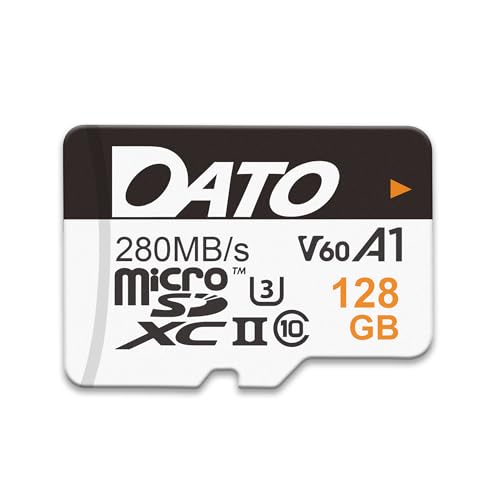
| 128GB High-Speed | UHS-II, U3, V60 | 60 MB/s | Up to 280 MB/s | Short aerial drone flights, 4K action cameras |
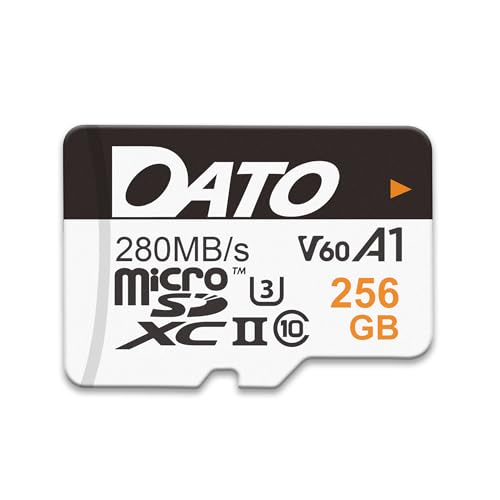
| 256GB Professional | UHS-II, U3, V60 | 60 MB/s (130-180 MB/s burst) | Up to 280 MB/s | All-day 4K video recording, burst RAW photography |
| 512GB Extended Capacity | UHS-II, U3, V60 | 60 MB/s (130-180 MB/s burst) | Up to 250 MB/s | Multi-day shoots, handheld gaming libraries |
Application Performance Class for Apps and Gaming
Beyond video recording capabilities, microSD cards are widely utilized in smartphones, portable gaming consoles, and handheld computing hardware. These computing environments require rapid random read and write operations rather than continuous sequential data streams.
The Application Performance Class rating, denoted as A1 or A2, indicates random Input/Output Operations Per Second (IOPS). An A1 rating guarantees a minimum of 1500 read IOPS and 500 write IOPS, ensuring responsive game loading and reliable application execution.
When purchasing memory media for handheld gaming systems or mobile computing platforms, look for an A1 designation alongside the V60 rating. This ensures that the card handles game patches, save files, and operating system assets without sluggish boot delays.
Thermal Throttling and Heat Management
Compact action cameras and enclosed drone bodies generate substantial internal heat during extended high-resolution recording sessions. When memory cards get too hot, built-in controller safeguards may throttle write speeds down to prevent physical flash memory damage.
Quality V60 cards utilize specialized controller firmware and thermally conductive materials to dissipate operating heat evenly across the card surface. This thermal endurance prevents unexpected write speed dips that lead directly to dropped frames or sudden recording halts.
To maintain optimal thermal performance, avoid recording at maximum bitrates inside non-ventilated protective camera housings during direct midday sun exposure. Giving your gear brief cool-down intervals between long continuous takes preserves both memory longevity and device stability.
Build Durability and Environmental Protection
MicroSD cards deployed in action cameras and outdoor equipment regularly face extreme weather conditions, moisture exposure, and physical vibration. Rugged flash memory construction is essential for preserving irreplaceable footage captured in harsh environments.
Top tier manufacturers design memory cards with multi-proof protection, shielding internal silicon against water immersion, shock impacts, X-ray scanning, and static discharge. High-grade polymer casings also resist physical bending when cards are handled during fast field swaps.
Always check the operating temperature rating on memory packaging, which typically spans from minus 13 to 185 degrees Fahrenheit. This wide operating range ensures your card will function dependably whether filming snowy mountain slopes or hot desert landscapes.
Full-Size SD Adapter Quality and Compatibility
Most high-speed microSD cards include a full-size SD adapter inside the retail packaging to expand device versatility across full-size camera bodies. However, not all adapter sleeves are manufactured to the same rigorous performance standards.
Because V60 speeds rely on dual-row UHS-II pin connections, the included adapter must feature matching internal UHS-II pass-through circuitry. Using a standard UHS-I adapter sleeve with a V60 card will immediately choke data transmission back down to UHS-I speeds.
Test your adapter sleeve in a high-speed card reader before relying on it for crucial multi-camera mirrorless shoots. Ensure that the physical write-protect lock slider on the side of the adapter fits snugly and does not slip into lock position accidentally.
Software Health Management and Data Recovery Tools
Flash memory cells naturally degrade over hundreds of write and erase cycles, gradually increasing the possibility of read errors over extended ownership. Leading storage brands provide specialized companion software utilities to monitor card health and refresh memory blocks.
Health management tools can scan the physical controller status to alert you before memory cells reach their theoretical end-of-life cycle. Furthermore, proprietary recovery utilities help reconstruct fragmented or accidentally deleted video files before formatting.
If your workflow involves regular daily shooting, running a diagnostic refresh utility every few months helps restore maximum baseline speed. Having an accessible recovery license provides vital peace of mind when unexpected file system corruption occurs in the field.
Why You Should Trust Us
Our editorial approach focuses on verified technical specifications, controller architectures, and real-world interface performance. We analyze flash memory controller reliability, bus standard compliance, and sustained transfer benchmarks to separate marketing claims from genuine performance capabilities.
Rather than relying on short burst write metrics, we prioritize minimum guaranteed throughput standards that protect your video capture workflows. You can review our broader technology evaluations to understand how we assess digital hardware consistency across product categories.
Our comparison database updates continuously to reflect changing memory pricing tiers, warranty revisions, and emerging controller updates. We remain completely independent, providing objective evaluations designed to help you invest in hardware that genuinely supports your production needs.
Final Thoughts
Selecting the best memory card depends on matching your device bitrates, capture resolutions, and offload time constraints. For professionals who require dependable aerial cinematography performance and comprehensive software diagnostics, the microSD Card V60 (256GB) stands out as an exceptionally reliable overall choice.
Creators seeking blistering transfer speeds for high-resolution photo bursts and rapid workstation offloads will appreciate the Lexar 256GB Gold Micro SD Card, 280MB/s Read, 4K. Its 280 MB/s read speed significantly streamlines media ingest times during busy post-production days.
If you are working with tighter production budgets or require an affordable high-speed card for an action camera or handheld console, consider the DATO 128GB Lightning microSD Card, UHS-II, A1. It delivers true V60 minimum throughput without demanding a massive financial investment.
For extensive multi-day shoots where changing cards mid-session is impractical, the ProGrade Digital microSDXC UHS-II V60 Gold Memory delivers expansive storage capacity backed by professional-grade controller stability. Explore our home gear insights to keep your creative workstations organized and productive.
Frequently Asked Questions
What does the V60 rating indicate on a microSD card?
The V60 designation is an official Video Speed Class standard established by the SD Association. It guarantees that the card can maintain a minimum sustained write speed of 60 megabytes per second without dropping below that threshold.
Can I use Best V60 MicroSD Cards in older UHS-I devices in 2026?
Yes, V60 microSD cards utilize the UHS-II physical interface but remain fully backwards compatible with older UHS-I card slots. However, the card will operate at the maximum transfer limits of the UHS-I host device rather than full UHS-II speeds.
Is a V60 card required for standard 4K video recording?
Standard compressed 4K video often records at bitrates between 100 Mbps and 150 Mbps, which only requires a V30 rating. However, higher bitrates, 10-bit All-Intra codecs, and high-frame-rate 4K at 120 fps demand the sustained 60 MB/s throughput of a V60 card.
What is the difference between V30 and V60 microSD cards?
A V30 card guarantees a minimum sustained write speed of 30 MB/s and typically operates on the older single-row UHS-I bus. A V60 card doubles that minimum sustained speed to 60 MB/s and uses the dual-row UHS-II bus architecture for faster transfers.
Will Best V60 MicroSD Cards improve handheld gaming console performance?
Handheld consoles benefit from the fast sequential read speeds when downloading and launching massive game titles. However, random read performance designated by the A1 or A2 rating is equally important for smooth in-game asset loading and system responsiveness.
Why does my computer show slower transfer speeds than the advertised card rating?
Reaching the advertised 250 MB/s or 280 MB/s read speed requires a dedicated UHS-II compatible USB card reader connected to a fast USB 3.2 port. Standard integrated laptop slots and older UHS-I readers cap data throughput around 90 MB/s to 100 MB/s.
How many hours of 4K video can a 256GB V60 card store?
A 256GB card typically stores between three and five hours of high-quality 4K footage depending on your camera recording codec and bitrate. Highly compressed long-GOP codecs yield more recording time, while uncompressed All-Intra formats fill storage much quicker.
Do microSD to SD card adapters reduce UHS-II data transfer speeds?
A genuine UHS-II adapter contains passive dual-row pass-through pins that transmit data without degrading signal speed or performance. However, placing a V60 card into an older single-row UHS-I adapter limits the entire connection to UHS-I transfer ceilings.
What causes a memory card to drop frames during video recording?
Dropped frames occur when camera data fills the internal buffer faster than the memory card controller can write to flash storage blocks. This problem happens when cards suffer thermal throttling or lack sufficient sustained write speed ratings for the selected video bitrate.
How should I format Best V60 MicroSD Cards for video gear in 2026?
Always format your memory card directly inside the host camera or drone rather than through computer operating system formatting utilities. In-camera formatting optimizes the file allocation table specifically for that device writing characteristics and prevents recording errors.








Write Your Review
No reviews yet. Be the first to share your experience!