

Heating and cooling account for more than half of the average home utility expenses each year. Upgrading to a modern heat pump provides an efficient way to manage indoor temperatures across every season without burning fossil fuels.
Selecting the right equipment requires balancing heating capacity, seasonal efficiency ratings, and your existing home layout. Homeowners exploring options in our Heating, Cooling & Air section often discover that properly sized equipment delivers dramatic operational savings.
We analyzed 3 Best Air Heat Pumps for September 2026 to highlight high-performing systems from leading manufacturers like Senville, Goodman. This comprehensive guide examines key performance metrics, refrigerant standards, and installation requirements to help you choose the ideal system.

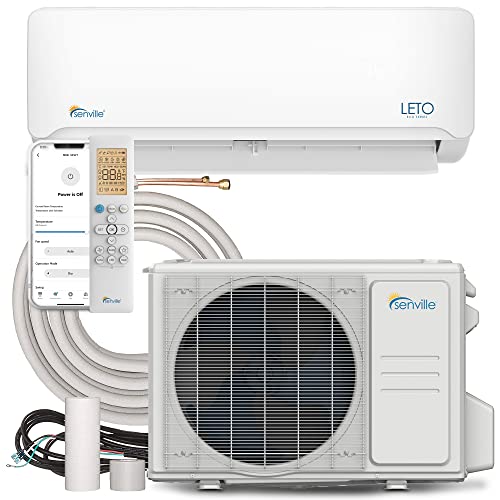
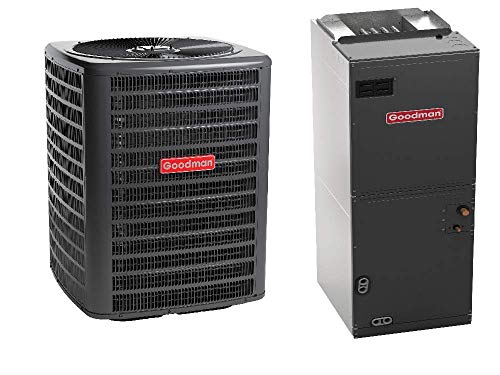
1. Heating and Cooling Capacity (Tonnage and BTU)
System capacity measures the volume of heat an air heat pump can transfer into or out of your home per hour. Capacity is commonly expressed in British Thermal Units (BTU) or tons, where one ton equals 12,000 BTU of thermal transfer capacity.
Selecting the wrong tonnage leads to severe comfort issues and premature component failure. An undersized unit runs constantly without reaching your desired temperature, while an oversized unit short-cycles and fails to properly dehumidify your living space.
A standard residential rule of thumb allocates roughly one ton of capacity for every 400 to 600 square feet of conditioned space. However, high ceilings, large window exposures, and local insulation quality require a formal Manual J load calculation for exact sizing.
2. Seasonal Efficiency Ratings (SEER2 and HSPF2)
Energy efficiency standards determine how effectively an air heat pump converts electrical power into thermal comfort. Modern systems are measured using SEER2 for cooling efficiency and HSPF2 for heating performance under updated regional testing standards.
Higher SEER2 and HSPF2 numbers indicate lower electricity consumption throughout extreme summer afternoons and chilly winter evenings. Investing in a system with 14.5 to 15 SEER2 reduces continuous utility draw while meeting modern building efficiency standards.
When comparing performance numbers, ensure you evaluate AHRI certified combinations of outdoor condensers matched with specific indoor air handlers. Mismatched coils or obsolete indoor units significantly degrade actual field efficiency below rated specifications.
| System Metric | Standard Baseline | High Efficiency | Key Benefit |
|---|---|---|---|
| SEER2 (Cooling) | 13.8 to 14.5 | 15.0 or Higher | Reduced summer electrical consumption and lower peak electric load. |
| HSPF2 (Heating) | 7.5 to 8.0 | 8.5 or Higher | More continuous heat extraction during freezing outdoor temperatures. |
| Refrigerant Type | R-410A (Legacy) | R-32 (Next Gen) | Lower global warming potential and enhanced heat exchange properties. |
| Blower Motor | Single Speed PSC | Multi-Speed ECM | Quiet static pressure compensation and lower fan electricity consumption. |
3. Next-Generation Refrigerant Compliance (R-32 vs R-410A)
The HVAC industry is rapidly transitioning toward modern refrigerants with significantly lower environmental impacts and superior thermodynamic properties. Next-generation systems utilizing R-32 refrigerant offer greater thermal capacity and lower operating charges compared to older chemical blends.
R-32 delivers higher operating efficiency by allowing heat pump coils to transfer energy with less compressor workload. This single-component refrigerant is also easier to recycle and recharge in the field because it does not suffer from fractional boiling separation.
Choosing an R-32 system protects your investment against chemical phaseouts and rising service costs over the coming decade. You can learn more about home system updates in our Guides section before scheduling major infrastructure installations.
4. System Configuration: Central Split vs Ductless Mini Split
Air heat pumps are divided into whole-home central ducted split systems and individual room ductless mini split systems. Central split systems connect a high-capacity outdoor condenser to a centralized air handler that distributes conditioned air through existing ducts.
Ductless mini split systems mount compact air handlers directly onto interior walls, making them ideal for additions, basements, or homes without ducting. These mini splits eliminate thermal losses associated with uninsulated attic duct runs and provide independent room temperature zoning.
If your property already features functional, well-sealed ductwork, a central ducted heat pump remains the most seamless replacement. For isolated workshops, historic properties, or converted garage spaces, a multi-zone or single-zone mini split offers far simpler installation.
5. Air Handler Flexibility and Blower Motor Engineering
The indoor air handler is responsible for circulating air across the internal evaporator coil and throughout your living quarters. Multi-position air handlers can be installed in upflow, horizontal left, horizontal right, or downflow orientations to accommodate tight closets and attics.
Modern air handlers utilize electronically commutated motors (ECM) with multiple speed taps instead of rigid single-speed permanent split capacitor motors. An ECM blower automatically adjusts fan speeds to maintain optimal static pressure across duct restrictions and air filter media.
Verify that your air handler includes corrosion-resistant aluminum coil construction with grooved tubing for maximized heat transfer. Premium coil assemblies resist formicary corrosion caused by household airborne chemicals, significantly extending system longevity.
6. Cold-Climate Heating Performance and Auxiliary Heat Kits
Standard air heat pumps absorb ambient thermal energy from outdoor air, but their total heating output declines as outdoor temperatures drop below freezing. Cold-climate inverter models can maintain heating output down to sub-zero conditions without relying on supplemental heat sources.
In regions with prolonged deep freezes, central air handlers should be fitted with compatible electric resistance heat strip kits. These auxiliary heat kits stage on automatically during defrost cycles or extreme weather when outdoor thermal energy becomes scarce.
Always verify the specific heat kit series required by your air handler chassis, such as dedicated manufacturer-approved bolt-on modules. Purchasing the correct factory-matched electric strip ensures internal circuit breaker compatibility and prevents dangerous electrical faults.
7. Compressor Technology and Inverter Modulation
The compressor is the mechanical heart of any heat pump system, pressurizing refrigerant to drive the heat transfer cycle. Variable-speed inverter compressors modulate output in tiny increments to match the exact thermal demand of the house at any given moment.
Inverter systems avoid the noisy, high-amp starts and stops common to older single-stage compressors. By running continuously at low speeds, modulating heat pumps maintain ultra-stable room temperatures and eliminate the dramatic temperature swings associated with legacy equipment.
Single-stage compressors offer proven durability and lower initial equipment costs, making them popular for budget-conscious whole-house replacements. Evaluating your annual heating hours helps determine whether an advanced modulating inverter or a robust single-stage system delivers superior payback.
8. Sound Output and Operating Noise Levels
Operational noise impacts both your outdoor patio enjoyment and indoor resting spaces. Outdoor condenser sound levels are rated in decibels (dBA), with quiet residential units operating between 50 and 65 dBA during standard heating and cooling cycles.
Ductless indoor units frequently feature whisper-quiet sleep modes that run as low as 25 to 30 dBA by using wide-diameter cross-flow fan assemblies. Central systems minimize interior turbulence through insulated air handler cabinets and multi-speed ECM motors that ramp up smoothly.
When positioning an outdoor condenser, avoid placing the unit directly beneath master bedroom windows or against resonant hollow exterior walls. Installing rubber vibration isolation pads under the mounting brackets further prevents compressor hum from transmitting into your wall framing.
9. Electrical Infrastructure and Installation Requirements
Installing an air source heat pump requires adequate electrical panel capacity to support both the outdoor condenser and indoor air handler. Large 3-ton to 5-ton systems generally require dedicated 208/230-volt double-pole breakers with properly sized copper wiring.
Line sets connecting the indoor and outdoor units must be correctly sized, vacuumed below 500 microns, and leak-tested using nitrogen before charging. Many condensers arrive factory pre-charged for standard line set lengths, but extended piping runs require additional refrigerant adjustments by a certified technician.
For those managing broader home upgrades, our guide on kitchen renovation appliance lineups offers helpful insights on balancing household electrical capacity across major appliances. Ensuring sufficient main breaker amperage before installation prevents costly panel upgrade delays.
Why You Should Trust Us
Our HVAC editorial team evaluates home climate systems through meticulous technical analysis, engineering spec verification, and manufacturer documentation reviews. We cross-examine AHRI performance certificates, SEER2 and HSPF2 ratings, electrical requirements, and refrigerant characteristics across leading brands.
We do not rely on subjective marketing claims or superficial product descriptions. Instead, we examine real-world installation manuals, line set compatibility standards, and warranty registration requirements to provide completely objective guidance.
Our database updates continuously across 2026 to reflect evolving environmental regulations, new refrigerant standards, and equipment availability. This data-driven approach ensures you receive accurate, reliable information for your home climate investment.
Final Thoughts
Upgrading your residential heating and cooling setup delivers immediate energy savings and reliable year-round climate control. Matching equipment tonnage to your home square footage ensures consistent indoor comfort through scorching summers and freezing winters.
For mid-sized homes with existing ductwork, our top recommendation is the Goodman 3 TON 15 SEER2 Multi-Position R-32 Heat. Its 15 SEER2 efficiency, multi-position air handler, and modern R-32 refrigerant offer a balanced combination of performance and environmental compliance.
For larger floor plans requiring maximum airflow and cooling capacity, the Goodman 5 TON 14.5 SEER2 Multi-Position R-32 Heat delivers robust whole-house output backed by a 9-speed ECM blower. Meanwhile, homeowners needing targeted room heating or ductless zoning should consider the Senville LETO Mini Split Air Conditioner for its versatile 4-in-1 functionality and simple installation package.
Explore our broader collection of home comfort insights in the Home & Living section to discover additional strategies for optimizing residential energy efficiency throughout every season.
Frequently Asked Questions
How do Best Air Heat Pumps perform in freezing winter temperatures?
Modern air source heat pumps absorb thermal energy from outdoor air even when ambient temperatures fall well below freezing. Advanced inverter models continue producing usable heat down to sub-zero conditions, while central units utilize auxiliary electric heat kits during severe winter extremes.
What is the difference between SEER and SEER2 ratings on new heat pumps?
SEER2 is the updated efficiency metric implemented by the Department of Energy that tests systems under realistic external static duct pressure. Because the testing conditions are more rigorous, a SEER2 rating provides a more accurate representation of actual field performance than legacy SEER numbers.
Why are manufacturers switching to R-32 refrigerant in 2026?
Manufacturers are transitioning to R-32 refrigerant because it has a significantly lower global warming potential than older R-410A blends. R-32 also features superior thermal conductivity, allowing heat pumps to deliver higher operating efficiency with lower overall chemical volume.
How many square feet can a 3-ton heat pump heat and cool?
A 3-ton heat pump provides 36,000 BTU of capacity, which typically conditions between 1,200 and 1,800 square feet of residential space. Actual coverage depends on ceiling heights, window insulation quality, local climate zones, and home air leakage rates.
Can I install an air heat pump system myself without a professional?
While DIY ductless kits exist for simple spaces, whole-home central systems require professional EPA-certified technicians for proper installation. Licensed installers ensure correct refrigerant line vacuuming, high-voltage electrical connections, and valid manufacturer warranty registrations.
What does a multi-position air handler mean for installation?
A multi-position air handler can be oriented in upflow, downflow, horizontal left, or horizontal right configurations to fit various spaces. This versatility allows the indoor unit to be mounted neatly in basements, vertical utility closets, or tight attic rafters.
How does a heat pump compare to running dedicated space heaters?
Air heat pumps transfer heat rather than generating it from raw electrical resistance, making them up to three times more efficient than portable heaters. You can compare different heating choices in our article on space heaters comparison to evaluate energy costs.
What maintenance does an air heat pump require each year?
Homeowners should replace or wash indoor air filters every one to three months to maintain unrestricted airflow across the coils. Professional annual maintenance should include inspecting electrical contacts, clearing outdoor condenser debris, and checking system operating pressures.
How long do modern air source heat pumps typically last?
A properly sized and maintained residential heat pump system typically operates reliably for 12 to 15 years. Routine filter changes, clean outdoor coils, and timely electrical inspections help maximize compressor lifespan and overall system durability.
What size line set tubing is required for central split heat pumps?
Central split systems generally require a 3/8-inch liquid line paired with either a 3/4-inch, 7/8-inch, or 1-1/8-inch suction line depending on tonnage. Matching line set diameters to manufacturer technical engineering tables prevents excessive oil trapping and pressure drops.






Write Your Review
No reviews yet. Be the first to share your experience!