

Waking up with dry throat irritation or morning congestion often points to unbalanced moisture levels in your sleeping quarters. Maintaining balanced ambient humidity is essential for protecting respiratory comfort, soothing sensitive skin, and promoting deeper rest throughout every season.
In September 2026, modern climate monitors provide far more capability than traditional wall thermometers with tiny stationary screens. We evaluated 5 leading options from top brands like Govee, YoLink, GoveeLife to help you select a dependable device for your home.
Many homeowners assume their central thermostat accurately reflects the microclimate of an enclosed sleeping space. Exploring our heating, cooling, and air quality resources highlights why dedicated bedroom sensors are essential for creating an optimal sleeping sanctuary.



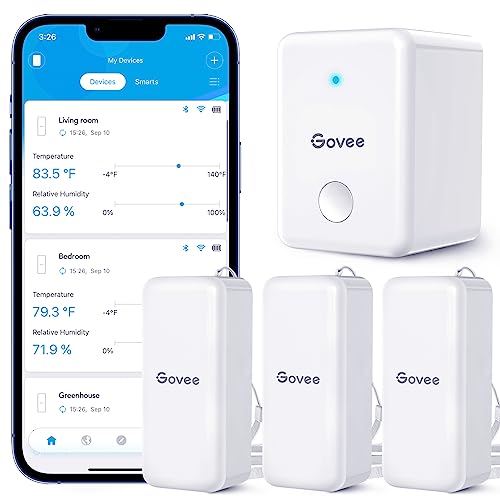
Wireless Connectivity Protocols and Transmission Range
The underlying wireless protocol dictates how far sensor data travels and whether you can monitor bedroom moisture while away from home. Standard Bluetooth sensors connect directly to your smartphone within a typical radius of one hundred to one hundred sixty feet.
Wi-Fi enabled monitors link directly to your residential 2.4 GHz network, allowing continuous remote check-ins from any location with cellular service. However, continuous direct Wi-Fi connections can consume battery reserves faster than low-power radio alternatives.
Advanced sub-gigahertz LoRa protocols provide extended communication distances reaching up to a quarter mile in open space. This robust signal penetrates interior walls, metal furniture, and closed doors with exceptional reliability.
A practical rule of thumb is choosing gateway or LoRa systems for multi-level homes or remote notifications. For simple nightstand tracking where you only check data locally, a standalone Bluetooth model offers excellent value.
Sensor Precision and Component Calibration Standards
Precision is critical when monitoring sleeping spaces because minor shifts in relative humidity drastically affect personal comfort. Quality bedroom monitors incorporate Swiss-manufactured sensing components designed to deliver repeatable and trustworthy climate readings.
Look for hardware specifications offering temperature accuracy within plus or minus 0.54 degrees Fahrenheit and humidity precision within plus or minus 3 percent. Lower quality generic sensors often drift over time, leading to improper humidifier adjustments.
Ensure that the companion software allows user-defined calibration offsets to fine-tune readings against certified reference instruments. This software calibration capability is especially valuable when setting up sensitive environments like baby nurseries.
Positioning your monitor away from direct drafts, exterior windows, and heating registers prevents localized measurement anomalies. Combining precise hardware with thoughtful placement guarantees a true reflection of the ambient bedroom climate.
Data Refresh Intervals and Real-Time Responsiveness
The internal polling speed determines how quickly a device recognizes rapid shifts in ambient room moisture. Top-performing sensors refresh their environmental readings every two seconds, capturing instant updates when humidifiers or air conditioners activate.
While the hardware sensor calculates data continuously, companion applications may sync on periodic intervals to preserve battery longevity. Bluetooth devices generally update upon opening the mobile app, whereas networked hubs push data continuously.
A two-second onboard refresh rate paired with instant threshold alerts delivers the ideal responsiveness for modern bedrooms. You receive timely data without experiencing significant power drain on your monitoring hardware.
Gateway Hub Integration versus Standalone Hardware
Choosing between a standalone sensor and a hub-connected system depends on your automation goals and home layout. Standalone units keep hardware simple and operate independently on bedside tables, dressers, or wall mounts.
Hub-connected setups centralize data transmission for multiple probes distributed across master bedrooms, nurseries, and basements onto one bridge. A single dedicated gateway can manage up to ten separate sensors simultaneously without cluttering your home router.
Gateways also enable seamless integration with third-party smart home platforms like Amazon Alexa and custom IFTTT applets. This connectivity allows automated routines to turn on smart plugs connected to bedroom humidifiers or dehumidifiers.
Verify whether the hub requires a direct Ethernet router connection or pairs wirelessly over standard residential Wi-Fi. Choosing the right gateway architecture ensures effortless initial onboarding and long-term network stability.
Smart Alert Customization and Notification Delivery
Customizable alert thresholds allow you to define safe upper and lower parameters for bedroom temperature and relative humidity. Whenever air moisture rises above 60 percent or falls below 30 percent, your phone receives immediate warnings.
Versatile notification systems deliver warnings through mobile push notifications, email messages, and direct SMS text alerts. Certain smart systems even support critical alerts that bypass silent mode settings during urgent moisture fluctuations.
Look for companion apps that feature alert cooldown periods to prevent repetitive buzzing on your nightstand. Well-designed notification systems ensure you stay informed about mold risks without suffering from alert fatigue.
Historical Data Logging and CSV Export Capabilities
Long-term environmental tracking helps you identify cyclical moisture patterns caused by changing weather systems or seasonal heating. Premium smart monitors store historical trend lines within companion applications for twenty days or longer.
Exporting historical logs into standardized CSV files allows in-depth performance analysis over one-year or two-year spans. This exported data proves useful when evaluating home insulation or discussing climate control with HVAC professionals.
Visual trend graphs let you observe how closed bedroom doors and overnight respiration impact morning humidity levels. Reviewing these charts makes optimizing your evening ventilation routine straightforward and effective.
Display Visibility and Bedroom Lighting Considerations
An integrated display provides immediate visual confirmation of room conditions without requiring you to unlock a mobile device. High-contrast LCD screens featuring bold numerical fonts make reading nightstand numbers effortless across the room.
In dark sleeping environments, harsh unshielded backlights can disrupt circadian rhythms and interfere with natural sleep cycles. Selecting units with non-illuminated LCD panels or soft e-ink screens keeps your sleeping space quiet and restful.
Screenless mini sensors offer a discreet alternative that mounts behind headboards or inside wardrobe closets. These miniature probes eliminate light pollution completely while continuously streaming climate metrics to your smartphone.
Battery Lifespan and Power Management Efficiency
Battery longevity determines how frequently you must replace internal coin cells or standard AAA alkaline batteries. High-efficiency smart sensors utilize optimized power management circuits to achieve continuous operation for up to two years.
Communication protocol selection directly impacts energy consumption, with Bluetooth Low Energy and LoRa demanding minimal current. Sensors transmitting directly over standard Wi-Fi require larger battery capacities or more frequent battery changes.
The companion app should provide an accurate battery percentage indicator and timely low-voltage notification prompts. Reliable battery monitoring prevents unexpected device dropouts during freezing winter nights or humid summer storms.
Multi-Room Expandability and Smart Home Integration
Monitoring a master bedroom often highlights the benefits of tracking climate conditions in guest rooms and nurseries. Expandable sensor ecosystems allow homeowners to manage dozens of monitoring nodes under a single application dashboard.
Organizing individual probes by room name simplifies whole-home assessments and helps identify drafty living zones. You can easily compare master bedroom moisture against main hallway readings to spot localized air stagnation.
Expanding your sensor network allows synchronized smart actions when paired with compatible dehumidifiers and smart plugs. Coordinating these devices creates an automated climate system that maintains optimal sleeping humidity effortlessly.
Pairing smart climate monitors with insulating window treatments helps stabilize bedroom temperatures throughout the night. Discover effective insulation ideas in our valance versus blackout roller shade comparison.
| Sensor Model | Wireless Protocol | Accuracy (Temp / Humidity) | Refresh Rate | Battery Life | Hub Required |
|---|---|---|---|---|---|
| Govee Hygrometer 3 Pack | RF Gateway + Wi-Fi | ±0.54°F / ±3% RH | 2 Seconds | 1 Year | Yes (Included) |
| GoveeLife 2.0 Wi-Fi | Wi-Fi + Bluetooth Gateway | ±0.54°F / ±3% RH | 2 Seconds | 2 Years | Yes (Included) |
| Govee Wi-Fi H5179 | Direct Wi-Fi + Bluetooth | ±0.54°F / ±3% RH | 2 Seconds | 1 Year | No |
| YoLink Smart Sensor | LoRa Sub-GHz + Gateway | ±0.54°F / ±3% RH | Real-Time | 2 Years | Yes (Included) |
| Govee Indoor H5075 | Bluetooth (164 ft) | ±0.54°F / ±3% RH | 2 Seconds | 1 Year | No |
Why You Should Trust Us
Our evaluation process relies on rigorous technical analysis and verified manufacturer hardware specifications. We examined sensor components, wireless transmission frequencies, app stability, and historical data logging capabilities across top market contenders.
Rather than relying on superficial marketing claims, we systematically cross-referenced accuracy ratings, power efficiency benchmarks, and verified user reliability reports. This data-driven framework ensures our recommendations reflect dependable real-world performance for sleep environments.
We continuously update our product comparisons to reflect firmware improvements, protocol enhancements, and emerging smart home standards. Our objective is providing clear, objective guidance that empowers you to build a healthier indoor environment.
Final Thoughts
Maintaining balanced humidity inside your bedroom transforms sleep quality while protecting your home from excess moisture buildup. Investing in dedicated climate sensors provides the accurate data required to optimize humidifiers, air conditioners, and ventilation schedules.
For homeowners seeking complete multi-room coverage with reliable connectivity, the GoveeLife 2.0 WiFi Hygrometer Thermometer delivers exceptional value through its multi-sensor bundle and automated gateway alerts. Those requiring maximum wireless range across larger properties will appreciate the robust reach of the YoLink Smart Temp & Humidity Sensor.
If you prefer a standalone bedside monitor with a clear physical screen and direct phone pairing, the Govee Indoor Hygrometer Thermometer H5075 offers high precision at an entry-level investment. Alternatively, the standalone Govee WiFi Thermometer Hygrometer H5179 with App or the multi-point Govee Hygrometer Thermometer 3 Pack provide reliable choices for customized monitoring setups.
Each of these options eliminates guesswork, helping you maintain ideal sleeping conditions year-round. For broader tips on curating a restorative sleeping sanctuary, explore our furniture and comfort guide collection.
Frequently Asked Questions
What is the ideal humidity level for a bedroom during sleep?
The optimal relative humidity range for a bedroom is between 30 and 50 percent. Keeping moisture within these boundaries prevents nasal irritation while hindering the growth of dust mites and mold spores.
Where is the best place to position a humidity sensor in a bedroom?
Place the sensor on a nightstand or interior wall at roughly bed height, away from open windows and direct HVAC air registers. This placement ensures the sensor measures the actual ambient air you breathe while sleeping.
How do Best Smart Humidity Sensors for Bedrooms connect to smartphones?
Modern sensors communicate using direct Bluetooth Low Energy, home 2.4 GHz Wi-Fi networks, or specialized gateway hubs utilizing LoRa frequencies. Companion smartphone applications allow users to view live metrics, configure alerts, and inspect historical trends.
Can a smart humidity sensor trigger my bedroom humidifier automatically?
Yes, hub-connected sensors can trigger smart plugs or compatible humidifiers using automated rules within their app or third-party platforms like Alexa and IFTTT. This automation ensures your bedroom moisture remains stable without requiring manual adjustments.
What is the top-rated option among Best Smart Humidity Sensors for Bedrooms in 2026?
Top-rated models in 2026 feature Swiss sensing chips, multi-year battery life, and versatile gateway connectivity. Multi-pack systems with Wi-Fi gateways offer the best overall combination of accuracy, coverage, and smart alert functionality.
How often should I calibrate a smart hygrometer?
Most factory-calibrated Swiss sensors maintain accurate performance for twelve to twenty-four months under normal indoor conditions. Performing an annual calibration check using a standard salt test or reference gauge ensures ongoing data reliability.
Do bedroom humidity sensors need continuous internet access to log data?
Smart sensors store historical readings on their internal memory chips even when internet connectivity drops. Once your phone reconnects via Bluetooth or Wi-Fi restores connection, the offline data syncs automatically to the cloud.
How does humidity affect sleep quality and respiratory comfort?
Dry air below 30 percent dries out mucous membranes, leading to throat irritation and frequent nighttime waking. Excessive moisture above 60 percent promotes allergen proliferation; explore our health and family wellness guides to learn more about indoor air health.
Why are Swiss sensors preferred in modern digital hygrometers?
Swiss-manufactured sensing components are renowned for tight manufacturing tolerances, minimal measurement drift, and rapid temperature stabilization. They provide highly dependable readings within ±0.54°F and ±3% relative humidity across wide operational ranges.
Can smart humidity sensors help prevent bedroom mold growth?
Smart sensors actively guard against mold by sending instant smartphone alerts whenever ambient humidity exceeds 60 percent for extended periods. Early warnings allow you to increase ventilation or engage dehumidifiers before microscopic mold spores establish colonies.




Write Your Review
No reviews yet. Be the first to share your experience!