

Cooking with an open flame gives home cooks instant temperature adjustments that electric heating elements simply cannot duplicate. When evaluating the 10 Best Selling Gas Ranges for September 2026, selecting the right appliance comes down to matching your cooking style with dependable heat distribution and cabinet space. Reliable stovetop equipment turns complex recipes into manageable daily meals without unexpected temperature drops.
Many homeowners make the mistake of prioritizing high burner counts without measuring their kitchen ventilation or checking total gas line capacity. Before investing in a full appliance upgrade, reviewing your overall layout through a kitchen renovation appliance lineup ensures smooth utility hookups. Taking the time to evaluate physical dimensions and burner spacing prevents crowded cookware during busy dinner routines.
Modern cooking setups range from compact apartment stoves and multi-function slide-in ranges to ultra-high-output commercial hot plates. This guide breaks down the essential technical specifications, safety certifications, and cleaning configurations across the category. By understanding how British Thermal Units, oven circulation, and conversion hardware interact, you can choose an appliance that delivers consistent culinary results for years to come.





Burner Heat Output and Total BTU Ratings
British Thermal Units measure the total heat energy delivered by each gas burner per hour of continuous operation. Standard residential burners usually range from 5,000 BTU for delicate simmering up to 18,000 BTU for rapid boiling. Commercial-grade hot plates can push upwards of 80,000 BTU per burner to support high-volume stir-frying and stockpot reduction.
High output allows you to sear meats quickly and bring large volumes of water to a boil in minutes. However, a range with only high-powered burners will struggle to maintain low temperatures without scorching delicate sauces. You need a balanced cooktop layout that combines dedicated power burners with specialized simmer burners capable of dropping below 1,000 BTU.
A practical rule of thumb is to calculate your total cooktop power against your kitchen ventilation hood CFM rating. Divide your range total BTU output by 100 to determine the minimum airflow capacity required to remove fumes and heat safely. Matching burner performance to your kitchen exhaust prevents excess heat accumulation in your home living space.
Oven Capacity and Convection Airflow
Oven interior volume directly dictates what size roasting pans, baking sheets, and holiday dishes your appliance can accommodate. Standard 30-inch freestanding ranges typically provide between 5.0 and 5.3 cubic feet of usable cavity space. Compact 20-inch apartment ranges offer approximately 2.0 to 2.5 cubic feet, which accommodates everyday baking while saving crucial floor area.
Internal airflow systems determine how evenly heat distributes around multiple cooking racks during long baking sessions. Standard gas ovens rely on natural thermal convection, which can create warm and cool zones near the burner base. Convection ovens integrate dedicated fans that circulate heated air constantly, reducing hot spots and accelerating roasting times on every rack.
When shopping for an oven, check the internal rack adjustments and usable pan clearance rather than looking only at total cubic volume. Staggered rack positions allow you to roast large cuts of meat while simultaneously baking side dishes underneath. Exploring our comprehensive kitchen planning guides can help you calculate the exact interior capacity your household needs.
Cooktop Configuration and Grate Quality
Continuous cast iron grates provide a stable and unified platform that allows heavy cookware to slide effortlessly between burners. Individual burner grates create awkward gaps where large pans can wobble or spill during high-heat cooking. High-density cast iron retains thermal energy efficiently and prevents heavy stockpots from tipping when moved across the surface.
Modern cooktops frequently integrate specialized center elements, such as elongated griddle zones or high-output oval burners. These configurations accommodate cast iron skillets, breakfast griddles, and oversized roasting pans that standard round burners cannot heat evenly. Evaluating how often you cook multi-item breakfasts or batch meals will determine whether a center griddle burner is worth the space.
Ensure the grates feature durable porcelain enamel coatings or pre-seasoned surfaces that resist rust and corrosion. Uncoated low-grade metals can degrade quickly under repeated exposure to acidic sauce spills and high heat. Look for grates with secure silicone footing pads underneath to protect the underlying stainless steel frame from scratching.
Fuel Compatibility and Conversion Kits
Gas appliances are engineered to operate using either natural gas supplied through municipal utility lines or liquid propane stored in dedicated tanks. Natural gas operates at lower line pressures, whereas liquid propane burns hotter and requires smaller burner orifice nozzles to maintain safe combustion. Most manufacturers configure units for natural gas right out of the box while including liquid propane conversion kits.
Switching an appliance from natural gas to propane involves replacing burner orifices, adjusting air shutters, and resetting the integrated pressure regulator. Operating a gas range on the incorrect fuel source creates dangerous yellow flames, heavy soot accumulation, and hazardous carbon monoxide emissions. Always verify that your chosen model includes the correct regulator fittings and brass conversion nozzles before installation.
Hiring a certified gas technician for the conversion process guarantees correct flame calibration and pressure testing. A properly tuned burner produces crisp blue flames with distinct inner cones, indicating complete and efficient combustion. Never attempt to use a liquid propane tank without installing the designated pressure reduction hardware.
Physical Dimensions and Installation Footprint
Accurate cabinet cutouts are essential when selecting between freestanding ranges, slide-in units, and commercial tabletop hot plates. Standard residential kitchens are designed to accommodate 30-inch wide freestanding units with finished side panels. Compact city apartments and secondary prep areas often require 20-inch footprints to maximize limited counter space.
Slide-in ranges feature front-mounted controls and overlapping lip designs that sit flush against surrounding countertop surfaces. This configuration creates a seamless built-in appearance while preventing food debris from falling into the gaps between cabinets. Freestanding models feature rear backguards containing the main control panel, which allows flexible placement anywhere along a wall.
Always measure the depth of your kitchen walkways to ensure the oven door can swing open fully without hitting opposite kitchen islands. Account for gas supply pipe clearance and electrical wall outlet protrusions behind the unit before finalizing cutouts. Commercial hot plates require heavy-duty stainless steel worktables with non-combustible wall clearances to operate safely.
Cleaning Systems and Maintenance Accessibility
Oven maintenance can be time-consuming without built-in self-cleaning cycles or accessible burner components. Traditional high-heat pyrolytic cleaning cycles incinerate baked-on grease and food residues into fine ash at temperatures exceeding 800 degrees Fahrenheit. Modern steam cleaning cycles operate at much lower temperatures, using water vapor to loosen everyday splatters in under thirty minutes.
Cooktop surfaces require sealed gas burners that prevent liquid spills from dripping down into the interior burner mechanics. Open commercial burners deliver exceptional raw flame power but require removable drip trays underneath to catch runoff. Units with one-piece pressed stainless steel cooktop surfaces eliminate seams and crevices where grease can collect over time.
Select appliances with dishwasher-safe cast iron grates and removable burner caps to simplify post-cooking cleanup. Regular maintenance includes wiping down porcelain surfaces promptly after they cool to prevent acidic marinades from etching the finish. Keeping burner ports clear of debris ensures steady ignition and prevents uneven flame rings.
Safety Features and Flame Failure Systems
Safety mechanisms are paramount when operating open-flame cooking equipment inside residential or commercial kitchens. Flame failure protection systems use internal thermocouples to monitor active heat at each individual burner head. If an open flame is extinguished by a liquid boilover or strong draft, the safety valve immediately cuts off the gas supply.
Electronic spark ignition systems eliminate the need for standing pilot lights, significantly reducing baseline gas consumption and ambient heat. Push-to-turn control knobs prevent accidental gas valve activation by small children or accidental brushing against the front panel. Sturdy anti-tip mounting brackets are mandatory for freestanding ranges to secure the appliance chassis firmly to the floor or wall studs.
Check for third-party safety certifications such as ETL or CSA to confirm the unit complies with rigorous thermal and mechanical safety codes. Proper installation must include a reliable carbon monoxide detector installed nearby in your cooking zone. Reliable safety hardware gives you peace of mind while preparing complex multi-course meals.
Modern Cooking Modes and Air Fry Integration
Modern gas ranges increasingly feature versatile multi-function cooking modes that replace separate countertop appliances. Dedicated air fry settings utilize intense convection air velocity to create crispy fried textures with minimal cooking oil. These integrated modes preheat rapidly and allow you to cook large batches of wings or vegetables on full-size oven racks.
Precision temperature probes and integrated keep-warm cycles prevent overcooking large roasts and keep side dishes serving-ready. Broiler elements located inside the main oven cavity or in a dedicated lower drawer provide concentrated top-down radiant heat for rapid caramelization. Having specialized cooking modes built directly into your main appliance reduces clutter on your kitchen countertops.
When selecting a range with advanced cooking modes, verify that the internal heating elements maintain consistent temperatures without dramatic swings. Quick-start settings save valuable time on busy weeknights by eliminating long preheating waiting periods. Smart kitchen upgrades found across our home and living upgrades section provide helpful context for modernizing your cooking workflow.
Construction Material and Build Durability
The structural integrity of a gas range depends heavily on the grade and thickness of the sheet metal used in its construction. High-grade commercial units utilize 430 or 304 stainless steel across the front panels, sides, and control consoles to resist corrosion. Heavy-gauge metal framing prevents chassis warping and door misalignment over decades of daily thermal expansion.
Door hinges and control knobs experience heavy mechanical wear and must be constructed from durable metal alloys rather than coated plastics. Reinforced double or triple-pane tempered glass oven doors retain internal heat efficiently while keeping the exterior touch temperatures safe. Cast brass burner components withstand extreme heat cycles better than stamped aluminum alternatives without degrading.
Inspect the stability of adjustable leveling legs, which ensure your cooking surface remains perfectly flat on uneven kitchen flooring. Level cooktop grates prevent cooking oils from pooling to one side of your frying pans during delicate sautéing. Investing in durable construction materials pays off through reduced repair costs and consistent cooking performance.
| Range Configuration | Typical Width | Primary Burner BTU | Ideal Kitchen Application |
|---|---|---|---|
| Commercial Hot Plate | 18 to 24 Inches | 25,000 to 80,000 | High-volume boiling, catering prep, outdoor cooking |
| Compact Freestanding | 20 Inches | 5,000 to 10,000 | Apartments, studio kitchens, tiny homes |
| Standard Slide-In | 30 Inches | 5,000 to 18,000 | Residential remodels, modern continuous countertops |
| Professional Freestanding | 36 Inches | 9,000 to 20,000 | Spacious residential kitchens, gourmet home chefs |
Why You Should Trust Us
Our editorial approach focuses on rigorous specification analysis, engineering standards, and verified performance metrics. We evaluate burner thermal output, oven cubic volume, safety certifications, and material construction across leading appliance manufacturers. By examining verified product documentation and structural designs, we provide objective recommendations without commercial bias.
We track industry advancements in fuel efficiency, safety regulations, and smart cooking technology to keep our buying criteria up to date. Our team prioritizes functional utility, long-term durability, and straightforward maintenance over flashy marketing claims. We analyze how different range configurations perform under heavy culinary workloads so you can make informed purchasing decisions.
Final Thoughts
For standard residential kitchens requiring modern cooking versatility and generous capacity, the Whirlpool WFGS5030RZ 5 Cu. Ft. Stainless Built-In serves as an exceptional all-around selection. Its 5.0 cubic foot oven capacity, integrated air fry capabilities, and edge-to-edge grates handle family dinner preparation with ease. The customizable self-cleaning cycle simplifies ongoing maintenance after heavy roasting sessions.
Chefs requiring extreme heat output for high-volume boiling or catering operations will benefit from the COOLCHEF 18-Inch 2-Burner Commercial Gas Hot. Delivering an intense 160,000 total BTU across dual cast iron burners, this heavy-duty stainless steel unit handles demanding stockpots effortlessly. Its convertible gas regulator allows seamless transitions between natural gas and propane supply lines.
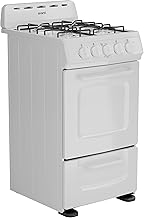
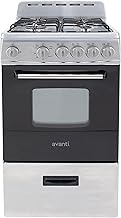
When working within tight spatial constraints or outfitting a secondary apartment kitchen, the Avanti Gas Range Oven, Compact Freestanding maximizes functionality across a compact 20-inch footprint. It provides four responsive burners, electronic ignition, and an integrated oven cavity without taking up valuable prep room. Check our latest reviews across the general appliance review archive to find complementary gear for your cooking space.
Frequently Asked Questions
Why do cooks prefer gas ranges over electric smooth top stoves?
Gas ranges provide visual flame feedback and immediate thermal responsiveness when adjusting heat settings. Unlike electric radiant coils that retain residual heat, gas burners drop temperature instantly when dialed down. This precise control prevents delicate ingredients from overcooking or scorching in thin-bottomed pans.
How many BTUs are necessary for a standard home kitchen gas burner?
Standard home cooking requires a versatile mix of burners delivering between 5,000 and 15,000 BTUs. A low-output 5,000 BTU simmer burner handles delicate sauces and melting chocolate without burning. A dedicated 15,000 to 18,000 BTU burner provides sufficient power for quick boiling and high-heat searing.
Can any gas range operate on liquid propane?
Most modern gas ranges are compatible with liquid propane but require a dedicated conversion kit before use. The conversion requires changing the burner orifices, setting the pressure regulator, and calibrating air shutters. Operating a natural gas stove on propane without installing conversion hardware poses serious fire and safety hazards.
What is the primary difference between slide-in and freestanding gas ranges?
Freestanding ranges have finished side panels and a rear backguard housing the main control console, allowing flexible placement anywhere. Slide-in ranges feature front-mounted controls and unfinished sides designed to sit flush between surrounding cabinets. Slide-in models provide a sleek, custom built-in aesthetic that highlights rear wall tile work.
How does the integrated air fry mode work inside a gas oven?
Air fry modes combine high-velocity convection fans with concentrated burner heat to circulate hot air rapidly around food. This rapid airflow evaporates surface moisture quickly, producing a crisp exterior texture similar to deep frying without excess oil. The process works best when cooking on perforated or wire mesh oven racks.
Which safety features are critical for high output commercial hot plates?
Flame failure protection is essential for commercial equipment to shut off the gas supply if the flame extinguishes unexpectedly. Adjustable non-skid leveling feet ensure the heavy unit remains stable under large, boiling stockpots. Third-party ETL or NSF certifications verify that the materials meet strict sanitation and structural safety codes.
How should you clean heavy cast iron range grates?
Allow the grates to cool completely before removing them from the cooktop to prevent thermal shock and warping. Wash them using warm water, mild dish soap, and a non-abrasive nylon brush to lift baked-on grease. Dry the grates immediately and apply a very light coat of cooking oil to protect the iron from moisture corrosion.
What standard cutout width is required for residential gas ranges?
The standard opening width for most residential kitchen cabinetry is 30 inches between adjacent countertop edges. Compact ranges designed for small spaces or apartments typically require a 20-inch or 24-inch opening. Commercial hot plates and professional gourmet ranges may require 36 inches or more of dedicated counter or floor space.
Are sealed gas burners better than open burners for everyday home cooking?
Sealed gas burners are significantly easier to maintain because they prevent liquid spills from entering the internal chassis. The seamless design directs all drips onto the cooktop surface, where they can be wiped clean quickly. Open burners provide direct flame exposure and higher raw heat, making them popular in commercial prep kitchens.
What is the most versatile option among Best Selling Gas Ranges in 2026?
A full-size 30-inch slide-in unit offering multiple burner heat ratings and convection oven capabilities delivers the greatest versatility for daily cooking. Having dedicated simmer burners alongside high-output boiling elements accommodates complex multi-dish meals. Integrated multi-mode oven settings expand your options for baking, broiling, and rapid air frying in a single footprint.





Write Your Review
No reviews yet. Be the first to share your experience!