

Achieving rich espresso with balanced sweetness requires more than just high pressure extraction. Traditional home machines often blast dry coffee beds with sudden force, creating channels that cause sour and bitter flavors. Modern brewers solve this issue by introducing low pressure water to saturate the puck before full extraction begins.
In this September 2026 guide, we analyze 5 top options across Breville, KitchenAid, EUHOMY to help you elevate your morning routine. Whether you want an all in one station with an integrated grinder or a compact machine for small countertops, our breakdown highlights the right balance of features. When setting up your dedicated coffee corner, exploring our kitchen renovation appliance lineup guide can help you optimize counter space.
Investing in reliable hardware allows you to dial in specialty beans with consistency. By combining digital thermal stability with controlled pre-wetting, these machines bridge the gap between commercial cafes and domestic kitchens. The following comparison highlights the leading models available today.


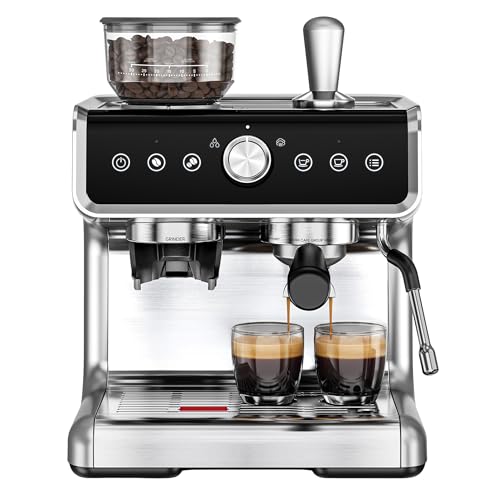


1. Pre-Infusion Technology and Extraction Dynamics
Pre-infusion is the controlled stage where water gently wets the ground coffee bed at low pressure before ramping up to extraction pressure. This initial soak allows the coffee grounds to expand evenly inside the portafilter basket. As the bed swells, microscopic voids and density inconsistencies naturally seal themselves before high pump pressure engages.
When evaluating different machines, look at whether the pre-infusion system is fixed or programmable. Basic models apply low pressure for a set duration of two to five seconds automatically. Advanced semi automatic units allow you to manually adjust pre-infusion timing up to ten seconds or longer, which is ideal for lighter roasts that require deeper saturation.
Without low pressure pre-wetting, water takes the path of least resistance through dry coffee clumps, resulting in severe channeling. Channeling leaves portions of the puck under-extracted and sour while over-extracting the narrow channels into harsh bitterness. Choosing hardware with reliable pre-infusion is the most effective way to guarantee smooth, balanced shots.
2. Digital Temperature Stability and PID Controllers
Water temperature directly dictates the rate of compound extraction from roasted coffee grounds. Even minor thermal swings of two degrees can shift a shot from bright fruit notes to astringent ashiness. Digital Proportional-Integral-Derivative (PID) controllers actively monitor and adjust the heating element to maintain a steady brewing temperature.
Traditional bimetallic thermostats allow wide temperature fluctuations during the brew cycle as cool water enters the boiler. Modern PID equipped machines pulse electricity rapidly to the heating element, keeping brew water within one degree Celsius of your target setting. This level of precision ensures that consecutive shots taste identical regardless of room temperature.
Look for machines that allow user adjustable temperature profiles if you enjoy experimenting with varied roast levels. Dark roasts extract easily and taste best at lower temperatures around 195 degrees Fahrenheit, while dense light roasts demand 203 degrees to unlock delicate floral aromatics. Having digital control takes the guesswork out of recipe development.
3. Portafilter Size and Basket Standard
Portafilter diameter determines puck thickness, water contact area, and accessory compatibility across your entire workflow. The commercial standard is 58mm, which creates a wider, thinner puck bed that promotes even flow across large doses. Domestic compact machines frequently utilize 54mm or 51mm group heads to reduce machine footprint and thermal mass requirements.
A 58mm group head gives you direct access to commercial grade precision baskets, distribution tools, and calibrated tampers. However, a 54mm basket creates a deeper puck that can be more forgiving of minor distribution flaws when brewing standard 18 gram doses. Both sizes can pull exceptional espresso when paired with proper puck preparation technique.
Always verify whether the machine includes single-wall non-pressurized baskets or dual-wall pressurized baskets. Pressurized baskets force espresso through a single pinhole to artificially generate crema from pre-ground coffee. For true specialty espresso, non-pressurized baskets are mandatory because they allow natural resistance from the coffee bed to build authentic crema.
4. Pump Pressure and Overpressure Valve Calibration
Many consumer espresso machines advertise pumps rated for 15 to 20 bars of pressure to highlight pump durability. However, genuine specialty espresso extractions require between 8 and 9 bars of pressure at the group head. Excessive pressure compresses the coffee puck too tightly, causing water to crack the bed and induce channeling.
The crucial component to look for is an Overpressure Valve (OPV), which bleeds off excess pressure before water hits the coffee. An internal OPV calibrated to 9 bars ensures that even if the pump produces 15 bars, the puck experiences smooth, optimal resistance. Machines lacking an OPV can over-pressurize the coffee bed, leading to thin and bitter extractions.
When reviewing machine specifications, check if the unit includes an active extraction pressure gauge on the front panel. A physical gauge provides instant visual feedback during the shot, telling you if your grind size is dialed in correctly. Seeing the needle rise smoothly to the espresso range confirms your pre-infusion and dose are performing as intended.
5. Integrated Grinder Mechanics vs Dedicated Units
Espresso requires microscopic adjustments in grind size to regulate water flow through the compressed coffee puck. Machines with integrated conical burr grinders save valuable kitchen space and streamline your entire morning routine into a single chassis. These built-in systems dose directly into your portafilter with minimal coffee retention and zero countertop clutter.
Examine the number of grind adjustment steps provided by the integrated mechanism. A system offering 30 distinct grind settings gives you the fine resolution needed to dial in challenging beans across seasonal humidity changes. Anti-clog ground chutes and removable hoppers are also essential for easy maintenance and swift bean switching.
If you choose an all in one machine, ensure the burrs are made from hardened stainless steel for long service life. Integrated grinding systems reduce setup steps, allowing beginners to transition from whole beans to extraction in under a minute. Proper grinder calibration remains the single most impactful factor in coffee quality.
6. Steam Wand Design and Microfoam Capability
Crafting silky lattes and cappuccinos requires a powerful steam delivery system capable of creating true microfoam. Commercial style manual steam wands incorporate single or multi-hole tips that spin milk into a tight vortex. This swirling action integrates tiny air bubbles evenly throughout the liquid to create a glossy, paint-like texture.
Avoid machines that rely solely on plastic pannarello frothing sleeves if you want to pour latte art. Plastic frothing attachments inject large, stiff bubbles that separate quickly into dry foam and watery milk. A dedicated stainless steel wand with a 360-degree ball joint allows precise pitcher positioning and superior temperature management.
Check the heating system transition speed when moving from brewing temperature to steam generation. Thermocoil and thermoblock systems with rapid purging purge excess water quickly to deliver dry, high-pressure steam within seconds. Maintaining consistent steam pressure prevents watered-down milk drinks and speeds up multi-drink preparation.
7. Heating System Architecture: Thermoblock vs Boiler
The internal heating architecture dictates machine warm-up speed, thermal recovery between shots, and overall energy consumption. Single boilers hold a fixed volume of water that must be heated to brew temperature and then raised to steam temperature. While boilers hold temperature well, switching back and forth between brewing and steaming requires time and water purging.
Modern thermocoil and thermoblock systems pump fresh water on demand through a heated metal coil block. This architecture allows machines to heat up from a cold start in less than a minute, saving time on busy mornings. Advanced thermoblocks lined with stainless steel prevent mineral buildup from contacting internal aluminum components directly.
Consider how many consecutive milk drinks you plan to make each morning when selecting a heating system. If you regularly entertain guests, look for units with fast thermal recovery or active thermoblock cooling cycles. Reliable heat management ensures your third shot of espresso extracts just as consistently as your first.
8. Water Reservoir Capacity and Built-In Filtration
Water quality constitutes over 98 percent of your finished cup and determines the long-term lifespan of internal heating coils. Large capacity reservoirs holding between 34 ounces and 74 ounces reduce the hassle of frequent refills. Rear or top loading tanks with integrated grab handles make daily maintenance effortless in standard kitchens.
Internal water filtration cartridges actively remove chlorine taste and bind hard mineral ions before they enter the hydraulic lines. Scale buildup from hard tap water is the leading cause of pump failure, blocked thermoblocks, and erratic temperature sensors. Utilizing built-in resin filters preserves internal components and ensures clean tasting extractions.
Explore our broader recommendations across the home and living category to discover other practical upgrades for your residence. Ensuring your espresso machine has an accessible tank prevents unnecessary strain during morning preparation. Easy water access encourages routine rinsing, which keeps your group head hygienic.
9. Build Quality, Chassis Materials, and Footprint
An espresso machine experiences significant mechanical stress each time you lock the portafilter into the group head collar. Machines constructed with metal-clad frames and stainless steel housings absorb this torque without flexing or sliding across the counter. Heavy chassis construction also dampens pump vibration and operating noise during morning brewing.
Countertop clearance is an equally important consideration when selecting a semi automatic espresso station. Units with top-loading bean hoppers require adequate vertical space beneath standard upper kitchen cabinets. Measuring your available clearance before purchasing ensures smooth access for refilling beans and topping off the water tank.
Drip tray design also plays a major role in day to day ownership satisfaction. Look for deep drip trays equipped with visual float indicators that signal when wastewater needs emptying. A spacious drip tray prevents messy overflows on your countertop and accommodates standard coffee scales under your cups.
10. Routine Maintenance, Descaling, and Group Head Cleaning
Coffee oils turn rancid quickly when exposed to heat and oxygen inside the group head shower screen. Machines with automated cleaning cycles and backflushing capability allow you to strip away spent oils with minimal effort. Using a blind filter basket and specialty espresso detergent once a week preserves fresh beverage flavor.
Descaling frequency depends on your local water hardness and the volume of coffee brewed each month. Modern machines feature automated descaling alerts based on internal water flow meter readings. Following guided descaling routines keeps heating channels free of limescale, maintaining optimal heat transfer efficiency year round.
Check our helpful collection of household appliances and maintenance guides for additional step by step upkeep strategies. Removable group head components and steam tips simplify routine sanitization. Investing ten minutes a week in basic maintenance ensures your machine runs flawlessly for years.
| Feature | Entry Level Option | Intermediate Station | Premium Prosumer |
|---|---|---|---|
| Pre-Infusion Type | Fixed 2-3 Second Low Pressure | Automatic Multi-Stage Soak | Programmable Time and Flow |
| Portafilter Size | 51mm Pressurized/Non-Pressurized | 54mm Stainless Precision | 58mm Commercial Standard |
| Thermal Regulation | Mechanical Thermostat | Digital PID Controller | Dual PID with Active Group Heat |
| Grinder Integration | Separate Appliance Required | Built-in Conical Steel Burrs | Precision Stepless Smart Dosing |
| Steam Control | Basic Swivel Wand | Commercial Style 360 Wand | High Velocity Microfoam System |
Why You Should Trust Us
Our editorial team analyzes kitchen appliances through rigorous examination of verified technical data, hydraulic engineering, and thermal stability metrics. We evaluate real world specifications including boiler designs, pump curve tolerances, and burr alignment standards to separate marketing claims from genuine performance. We focus strictly on the features that directly impact cup quality, reliability, and ease of ownership.
Rather than relying on brand reputations, we scrutinize user feedback across thousands of operational hours to identify long term durability patterns. We cross reference replacement part availability, internal valve construction, and manufacturer support policies to ensure our recommendations hold up over years of daily use. Our rankings reflect objective, data-driven comparisons without manufacturer sponsorship.
Our evaluation database updates constantly across 2026 to reflect firmware revisions, model updates, and pricing shifts. By tracking hydraulic performance and temperature consistency standards, we help you make informed buying decisions. We prioritize equipment that empowers you to brew exceptional espresso at home while minimizing routine frustration.
Final Thoughts
For home baristas seeking the ultimate all in one workstation, the Breville BES870BSXL Barista Express Espresso remains our top overall recommendation. Its integrated conical burr grinder, digital PID temperature regulation, and true low pressure pre-infusion deliver exceptional extraction control in a single compact footprint. The commercial style steam wand produces velvety microfoam with ease, making it the benchmark machine for hands-on espresso crafting.
Shoppers looking for professional standard extraction on a budget will appreciate the EUHOMY Espresso Machine with Grinder and Milk. Featuring an anti-clog 30 setting grinder, a commercial grade 58mm portafilter, and precise PID temperature management, it delivers advanced specifications typically reserved for high end units. It provides incredible value for coffee enthusiasts wanting room to master manual distribution and tamping techniques.
If you have tight counter space or need an ultra affordable starting point, the Espresso Machine 20 Bar, Compact Espresso Coffee delivers satisfying espresso and milk steaming without complicated setup steps. Meanwhile, users who want touchscreen simplicity alongside modern Italian aesthetics can explore the De’Longhi La Specialista Touch Espresso Machine or the fully automated convenience of the KitchenAid Fully Automatic Espresso Machine KF6. You can also browse our general product review category for more home kitchen solutions.
Matching your daily coffee habits to the right machine ensures you enjoy the ritual as much as the finished beverage. Investing in solid pre-infusion hardware eliminates channeling frustrations and sets you up for consistent brewing success. Choose the machine that fits your workflow, pick up freshly roasted whole beans, and start mastering your extraction today.
FAQs
Why is low pressure pre-infusion important when brewing espresso?
Low pressure pre-infusion saturates the dry ground coffee bed with gentle water flow before full nine bar pressure engages. This soak allows grounds to expand evenly and eliminates air gaps in the puck. Preventing dry pockets stops high pressure water from tunneling through weak spots, resulting in a balanced extraction without sour or bitter off-notes.
How does a semi automatic espresso maker differ from a fully automatic model?
A semi automatic machine requires you to grind, dose, tamp, and lock the portafilter into the group head manually, giving you total control over extraction variables. Fully automatic machines handle grinding, tamping, and brewing internally at the touch of a single button. Semi automatic units yield superior beverage customization and higher flavor clarity once you master your technique.
What are the top features of Best Semi Automatic Espresso Machines with Pre-Infusion in 2026?
The leading models feature digital PID temperature stability within one degree, integrated conical steel burrs, and calibrated overpressure valves. They also include commercial style steam wands capable of creating dense microfoam for latte art. Having an intuitive pressure gauge provides vital feedback to help you adjust your grind size correctly.
Can I use pre-ground supermarket coffee in a semi automatic espresso machine?
You can use pre-ground coffee if your machine includes pressurized dual-wall filter baskets that artificially create flow resistance. However, pre-ground coffee stales rapidly and lacks the precise particle sizing needed for standard non-pressurized baskets. Grinding whole beans immediately before extraction produces vastly superior crema, aroma, and natural sweetness.
Why do some espresso machines advertise 20 bars of pressure?
Manufacturers advertise 20 bar pump ratings to highlight the maximum output potential of their vibration pumps under zero flow. However, authentic espresso extraction only requires 8 to 9 bars of pressure at the coffee bed. Quality machines utilize internal overpressure valves to regulate this force down to the ideal extraction threshold.
What is the benefit of a 58mm portafilter compared to a 54mm portafilter?
A 58mm portafilter is the commercial standard used in professional espresso bars worldwide. This size accommodates a wider puck with greater surface area, enabling cleaner flow dynamics across large doses. It also gives you access to a vast ecosystem of precision baskets, calibrated tampers, and distribution tools.
How often should I clean and descale my home espresso machine?
You should wipe down the steam wand and purge the group head after every use to prevent milk and oil buildup. Perform a detergent backflush once a week to strip old coffee residues from the shower screen. Descaling should be completed every two to three months depending on your municipal water hardness.
Does PID temperature control really improve the taste of espresso?
Yes, PID temperature control eliminates the wide thermal dips and spikes common with traditional mechanical thermostats. Maintaining consistent brew water temperature prevents sourness from cool water and harsh bitterness from overheated water. This consistency ensures that your dialed-in coffee recipe produces predictable flavor shot after shot.
What type of water is best to use in an espresso machine?
Filtered water with moderate mineral content between 75 and 150 parts per million is ideal for both flavor extraction and machine longevity. Pure distilled or zero-mineral water should be avoided because it leaches metals from internal boilers and tastes flat. Softened, filtered water prevents destructive limescale from coating internal heating elements.
How do I create silky microfoam for latte art at home?
Start with cold whole milk in a stainless steel pitcher and submerge the steam tip just below the surface to incorporate air for a few seconds. Once the milk expands by roughly thirty percent, tilt the pitcher to create a vigorous swirling vortex that incorporates bubbles. Turn off the steam when the pitcher becomes warm to the touch for velvety texture.







Write Your Review
No reviews yet. Be the first to share your experience!