

Maintaining mature trees often presents a serious challenge when limbs stretch far beyond standard ladder reach. Attempting to balance on uneven rungs while operating cutting equipment creates severe safety risks that every homeowner should avoid. Investing in the Best Pole Saws for Tall Trees allows you to keep both feet firmly planted on solid ground while trimming dense canopies with confidence.
For September 2026, our editorial team evaluated 7 manual high-reach trimming systems from trusted manufacturers including Jameson, EZ Kut, LETYANGER and more. Modern pole design has evolved beyond flimsy hardware store extensions, now incorporating rigid epoxy fiberglass, ovalized aircraft aluminum, and friction-reducing SK5 steel blades. Explore our Home & Living resource library to discover how high-reach yard tools fit into your seasonal property care routine.
Whether you need to thin out dead oak branches or harvest fruit from towering palms, selecting the proper reach and leverage system is essential. This guide breaks down pole deflection, tooth geometry, locking collars, and compound pruning mechanisms so you can maintain your property safely and efficiently.
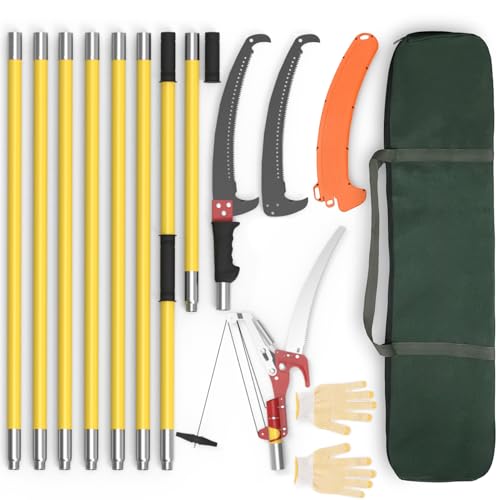

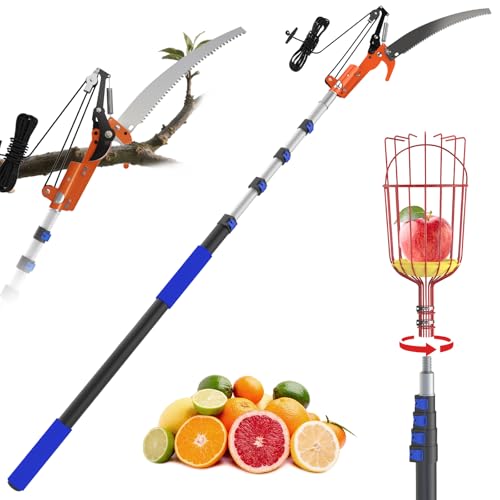
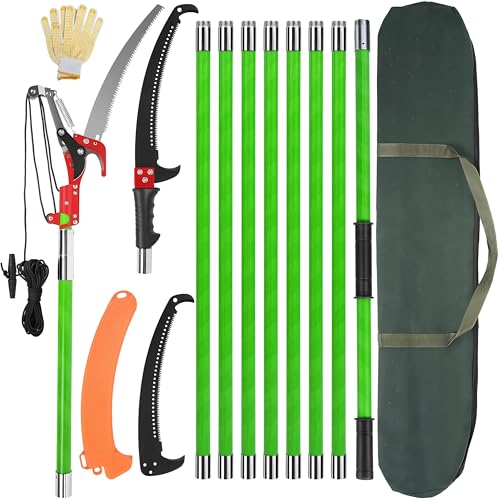


How to Choose the Best Pole Saws for Tall Trees in 2026
1. Maximum Reach vs Physical Pole Length
Understanding the distinction between working reach and actual pole length is the first step in selecting the right tool. Manufacturers frequently market a pole saw by its total working reach, which adds standard human height and arm extension to the physical length of the pole. A tool advertised with a 27-foot reach typically features an 18 to 20-foot assembled pole structure.
When calculating your personal requirements, measure the approximate height of your target branches and subtract four to five feet for your natural standing shoulder height. Holding a pole at a 60-degree angle reduces vertical reach slightly compared to holding it straight overhead. Maintaining an angled cut is crucial for safety so falling limbs do not drop directly toward your body.
Choosing a pole that offers modular sections or smooth telescoping adjustment gives you greater control across various tree heights. Operating an excessively long pole on low branches adds unnecessary leverage and muscle fatigue. For extensive property management, consult our comprehensive outdoor maintenance guides to determine safe pruning heights for different hardwood species.
2. Pole Material: Fiberglass vs Oval Aluminum vs Epoxy Resin
The construction material of your pole directly impacts its overall stiffness, total weight, and flex resistance at maximum extension. Epoxy resin fiberglass poles provide excellent electrical insulating properties and strong lateral stiffness when assembled in sectional pieces. However, hollow fiberglass can feel slightly heavier when managing eight or nine interconnected segments at full elevation.
Telescopic aluminum poles offer lightweight portability and rapid height adjustments using cam-locking collars. Premium models utilize an ovalized tube profile rather than a standard circular tube, which prevents rotational twisting and significantly reduces side-to-side bending under downward saw pressure. High-grade aluminum remains the premier choice for homeowners seeking fast deployment without assembling multiple sectional joints.
Epoxy fiberglass composite tubes deliver high durability against moisture, sap, and outdoor weathering without corroding over time. When selecting your pole material, consider how long you plan to hold the tool aloft in a single pruning session. A lighter aluminum setup saves upper-body energy, while reinforced fiberglass offers unmatched structural toughness against forceful sawing strokes.
3. Blade Metallurgy and Tooth Geometry
The cutting efficiency of any manual pruner depends entirely on blade steel quality and tooth sharpening technology. High-carbon SK5 steel and Japanese SK-4 carbon-enriched steel represent the industry benchmark for durability and edge retention. These alloys undergo impulse hardening, a heat-treatment process that hardens the teeth while leaving the blade spine flexible enough to resist snapping.
Unlike standard wood hand saws that cut on both the push and pull strokes, pole saw blades are engineered exclusively to cut on the pull stroke. Pull-stroke cutting harnesses gravity and natural body weight to draw the teeth through wood grain without buckling the extended pole. Tri-cut or curved tooth profiles clear sawdust rapidly from the kerf, preventing friction buildup and blade binding in wet wood.
Blades manufactured with 65 Mn alloy steel also offer dependable wear resistance for regular residential trimming tasks. Inspect the tooth pitch before purchasing, as aggressive, large teeth rip through green softwood quickly, while finer teeth create clean cuts on brittle hardwoods. High-grade metallurgical treatments ensure your saw glides smoothly through thick boughs without demanding excessive physical exertion.
4. Locking Mechanisms and Joint Stability
A high-reach pole is only as dependable as the locking connections that bind its individual segments together. Sectional poles generally employ electroplated threaded collars combined with dual-locking spring buttons to eliminate joint wobble. Threaded connections prevent the pole segments from uncoupling or rotating while you apply vigorous pulling pressure overhead.
Telescoping systems rely on reinforced quick-release flip locks or heavy-duty cam levers with adjustable tension screws. If a telescoping collar lacks adequate clamping force, the upper pole sections will collapse downward under sawing resistance. Look for locking ferrules constructed from aluminum or heavy-duty polyamide rather than brittle, non-reinforced plastics that degrade in direct sunlight.
Before extending your pole to maximum height, always check that every locking collar is tightened and securely engaged. A loose connection midway up the shaft creates severe whipping motions, making it difficult to keep the saw blade inside the cutting groove. Reliable hardware ensures that your manual force transfers directly to the branch rather than dissipating through joint play.
5. Dual-Action Cutting: Integrated Loppers and Compound Pulleys
Many of the Best Pole Saws for Tall Trees incorporate a 2-in-1 cutting system featuring a fixed saw blade alongside a bypass pruner lopper. While the curved saw blade tackles limbs larger than two inches, the spring-loaded lopper shears smaller crossing branches with minimal effort. This dual capability saves time by eliminating the need to swap tools when navigating complex tree canopies.
High-efficiency lopper attachments utilize a multi-wheel compound pulley system to amplify your manual pulling strength. A four-pulley setup can reduce the physical effort required to cut a one-inch branch by up to 50 percent compared to direct-pull cords. Ensure the pull rope is constructed from high-tensile nylon or braided polyester that resists fraying when rubbing against rough bark.
Operating a lopper head at heights above 20 feet requires steady hand-eye coordination to position the branch inside the jaw. Having a sharp bypass blade prevents crushing live plant tissue, promoting clean bark healing after the cut is completed. Homeowners managing fruit orchards and ornamental flowering trees benefit immensely from this versatile dual-cutting configuration.
6. Double-Hook Blade Geometry and Jam Clearing
A specialized double-hook blade design provides distinct functional advantages when trimming high, tangled canopy branches. The upper hooked tip acts as a positive stop, preventing the blade from slipping out of the cutting kerf during long, vigorous downward strokes. It also serves as a handy utility hook for grabbing and dislodging cut branches caught in lower limbs.
The lower hook knife located at the base of the blade is specifically engineered for scoring the underside of heavy tree limbs. By making an initial undercut through the bottom bark before sawing from the top, you prevent heavy falling limbs from tearing long strips of bark down the tree trunk. This bottom hook also slices through thin dangling suckers and stubborn vine growth.
Using a hooked blade minimizes the frustration of your saw getting pinched or stuck high overhead where you cannot easily free it by hand. When planning broader yard cleanups alongside structural home updates, check our home improvement and appliance planning guide for tips on scheduling major property projects. Hooked blade geometry remains one of the most practical innovations in modern arborist tool design.
7. Total Weight, Center of Gravity, and Ergonomic Balance
The total weight of a pole saw might appear manageable in product specifications, often falling between 8 and 15 pounds. However, when that weight is distributed across a 25 to 30-foot lever, physics amplifies the perceived load on your shoulders, lower back, and forearms. Understanding center of gravity helps you plan your trimming sessions and prevent excessive physical strain.
Premium manufacturers design their tools with tapered pole walls and lightweight alloy saw heads to minimize weight at the upper tip. Keeping the cutting head light dramatically reduces the pendulum effect, making it easier to hold the saw steady against a narrow branch. Foam rubber comfort grips on the base section provide traction, vibration dampening, and improved hand positioning.
When working on extensive trimming projects, taking frequent rest intervals and wearing a supportive back belt can prevent lumbar strain. Practicing proper body stance with one foot back and knees slightly bent creates a stable base of support. Managing tool balance correctly ensures safer cuts and less muscle fatigue during weekend landscaping duties.
8. Protective Coatings, Sap Resistance, and Tool Maintenance
Tree pruning exposes your cutting equipment to sticky sap, acidic plant juices, moisture, and abrasive grit. Blades finished with Teflon non-stick coatings or hard chrome plating resist sap accumulation and prevent premature surface rust. These slick protective coatings reduce cutting friction, allowing the teeth to move freely through dense, fibrous wood.
Maintaining your pole saw after each trimming session takes only a few minutes and significantly extends the lifespan of the tool. Wipe down the steel blade with a rag dampened with mineral spirits or citrus cleaner to dissolve stubborn pine pitch and sap. Apply a thin coat of lightweight machine oil or silicone spray before storing the blade inside its protective sheath.
Inspect the pole sections periodically for dirt buildup in threaded ferrules or locking button holes. Clean, grit-free joints slide together smoothly and lock tightly without jamming in the field. Proper care preserves the sharpness of your cutting edges and keeps telescopic locking levers operating smoothly for years of dependable service.
9. Safe Working Angles and Drop Zone Clearance
Operating a high-reach manual pruner requires strict adherence to safety protocols to prevent personal injury and property damage. Never stand directly beneath the branch you are trimming, as falling wood can bounce erratically off lower limbs. Position yourself at a 45 to 60-degree angle to the limb, establishing a clear escape path behind you before making the first cut.
Always wear essential protective equipment, including an ANSI-approved hard hat, impact-resistant safety glasses, and sturdy non-slip work gloves. Falling sawdust can easily enter unprotected eyes, while small falling twigs cause sudden head injuries if you are looking straight up. High-visibility bright yellow or orange pole colors help maintain awareness of your equipment’s position against dense green foliage.
Clear all bystanders, children, and pets from the work area before extending your pole to maximum height. For more safety insights and seasonal living advice, browse our our latest outdoor gear comparisons for updated recommendations. Staying aware of your drop zone guarantees a safe, productive tree pruning experience every season.
| Pole Material | Typical Reach Range | Flex Resistance | Key Advantage | Best Application |
|---|---|---|---|---|
| Oval Aluminum Alloy | 15 to 20 Feet | High Rigidity | Lightweight & Fast Setup | Residential Yards & Frequent Pruning |
| Epoxy Resin Fiberglass | 20 to 30 Feet | Moderate to High | Modular Section Assembly | High-Reach Canopy Thinning & Palms |
| Hollow Core Fiberglass | 12 to 18 Feet | Maximum Stiffness | Professional Durability | Heavy Limb Cutting & Landscaping |
| Telescopic Composite | 18 to 26 Feet | Balanced Flex | Multi-Attachment Versatility | Fruit Picking & General Tree Maintenance |
Why You Should Trust Us
Our review process relies on rigorous spec verification, metallurgical analysis, and structural engineering principles to evaluate outdoor tools objectively. We analyzed manufacturer blueprints, tensile strength ratings, blade hardness testing data, and joint connection mechanisms across 7 leading manual tree trimmers. This thorough comparative approach ensures that our recommendations reflect authentic build quality rather than marketing claims.
We systematically compare pole wall thickness, weight distribution, blade coatings, and locking clamp tolerances across varied price brackets. In addition, our editorial team continuously aggregates long-term consumer reliability reports to verify how each tool performs against real-world sap buildup, weathering, and heavy stress. We do not accept sponsored placements or complimentary products to influence our ranking order.
By monitoring emerging developments in lightweight materials and arborist equipment, we maintain current and accurate guidance for homeowners and landscaping enthusiasts. Our mission is to provide transparent, practical information that empowers you to complete outdoor projects safely and cost-effectively.
Final Thoughts
Selecting the right manual trimmer transforms an intimidating landscaping chore into a safe, manageable weekend task. For users seeking commercial-grade rigidity and effortless cutting performance, the EZ Kut Professional Pole Saw 20’ Extendable stands out as our top overall recommendation. Its oval aluminum construction eliminates rotational play, while the Japanese SK-4 impulse-hardened blade cuts through hardwood boughs with remarkable smoothness.
Homeowners who need maximum vertical reach for towering palms and mature shade trees should consider the 7.3-27FT Extendable Pole Saw with Scissors. This modular setup combines 8 epoxy fiberglass sections with an upgraded double-lock joint system and a 50 percent labor-saving compound pulley lopper. For maximum versatility on a budget, the SKGPOLE 26FT Reach Pole Saw delivers great multi-functional value by including a padded fruit picker basket alongside its telescoping pruner head.
If you prefer time-tested professional landscaping gear, the Jameson LS-Series Hollow Core Landscaping Tree offers proven hollow-core fiberglass durability and a 16-inch Barracuda tri-cut blade built for precision cuts. You can discover additional home improvement advice and tool guides across our Furniture & Comfort archive. Match your choice to your specific tree heights, blade requirements, and physical comfort to keep your property looking pristine throughout 2026.
Frequently Asked Questions
What makes a manual pole saw the Best Pole Saws for Tall Trees in 2026?
The top options combine rigid pole construction with pull-stroke SK5 carbon steel blades that minimize binding high overhead. Modern designs feature secure dual-lock ferrules, ergonomic grips, and low overall weight to reduce user fatigue during extended use.
How high can I safely trim branches from the ground without a ladder?
Most residential manual pole saws allow you to reach branches between 20 and 27 feet high when standing on flat ground. Operating beyond 25 feet requires careful balance and physical strength, as pole deflection increases noticeably at maximum length.
Why do extended pole saws bend or flex during high branch cuts?
Pole flex is caused by natural leverage acting upon long, slender fiberglass or aluminum tubes under downward pulling pressure. Choosing ovalized aluminum shafts or reinforced epoxy resin poles minimizes side-to-side whip and keeps the blade firmly aligned in the wood kerf.
How does a compound pulley system assist with cutting thick tree limbs?
Compound pulley mechanisms multiply the manual force you apply through the pull cord by routing the line through multiple wheels. This mechanical advantage reduces the effort needed to shear branches up to 1.2 inches thick by roughly 50 percent.
What is the purpose of the upper and lower hooks on pole saw blades?
The upper hook prevents the blade from jumping out of the cut during long pull strokes and helps pull down stuck branches. The lower hook is designed to score bottom bark before top sawing, which prevents falling limbs from ripping bark down the trunk.
Is fiberglass better than aluminum for high reach tree trimming poles?
Fiberglass provides non-conductive properties and high structural toughness against heavy continuous sawing. Aluminum is generally lighter and quicker to adjust via telescoping collars, making it very user-friendly for shorter trimming sessions.
Can I use these manual pole saws near electrical utility lines?
Never operate any manual or powered pole saw near overhead electrical power lines, even if the pole contains fiberglass components. Moisture, dirt, and high voltage can cause severe electrical arcing, so always call a licensed utility arborist for branches near power lines.
How do I prevent tree branches from pinching or binding the saw blade?
To avoid blade binding, always cut on the downward pull stroke without forcing excess downward pressure into the limb. Using the three-cut method relieves gravitational tension on the wood before you make the final flush pruning cut.
How often do I need to sharpen or replace manual pole saw blades?
Impulse-hardened Japanese SK-4 and SK5 steel blades maintain sharp cutting edges through several seasons of regular residential use. Because impulse-hardened teeth are extremely hard, replacing the blade when it eventually dulls is usually more practical than hand-filing.
What is the three-cut method and why is it essential for high branches?
The three-cut pruning technique involves making an initial undercut a few inches from the trunk, a top cut further out to drop the branch weight, and a final clean cut near the branch collar. This sequence protects the tree trunk from tearing and ensures clean healing, as highlighted in our outdoor tree care guides.







Write Your Review
No reviews yet. Be the first to share your experience!