If your laundry room still has just one bottle of all-purpose detergent, you’re probably compromising on something every wash day. Delicate silk blouses need gentler care than grease-stained work pants, and cloth diapers need an entirely different approach to avoid rashes and buildup. Upgrading your detergent shelf isn’t about buying more products for the sake of it-it’s about matching the right formula to the right fabric so everything lasts longer and performs better. This guide walks you through exactly how to build (or rebuild) a smarter detergent shelf, step by step.
Why One Detergent Doesn’t Fit Every Load
Standard detergents are formulated as a compromise-strong enough to lift everyday dirt, mild enough not to irritate most skin, and priced to work across a huge range of fabrics. That compromise means they’re rarely optimal for anything specific. Silk fibers are protein-based and can be damaged by harsh surfactants and enzymes found in regular detergent. Work uniforms often carry oil, grease, and ground-in dirt that standard formulas struggle to fully release. Cloth diapers need detergent that rinses completely clean, since any residue left behind can cause repelling (where the diaper stops absorbing) or skin irritation on a baby. Once you understand these differences, it becomes clear why a single bottle on the shelf is holding your laundry routine back.
Step 1: Audit What’s Actually in Your Hamper
Before buying anything, sort your laundry into categories for a week or two and take note of what keeps showing up. Common categories worth a dedicated detergent include:
- Delicates and silk – blouses, scarves, lingerie, and other protein-based or fine-weave fabrics.
- Work and uniform clothing – scrubs, coveralls, chef whites, or anything exposed to grease, sweat, or heavy soil.
- Cloth diapers – reusable inserts and covers that need residue-free washing.
- Everyday mixed loads – where your current all-purpose detergent is probably fine as-is.
If you find that two or more of the first three categories show up regularly, it’s worth stocking a dedicated bottle for each rather than trying to stretch one detergent across all of them.
Step 2: Choose a Detergent for Silk and Delicates
Silk and other delicate fabrics need a detergent that is free of harsh enzymes, bleach, and optical brighteners, since these ingredients can break down protein fibers and dull natural sheen over repeated washes. Look for formulas labeled specifically for delicates or silk, ideally pH-balanced and low-sudsing so they rinse out completely without agitation. These detergents are typically used in a gentle hand-wash or a machine’s delicate cycle, in cold water, with reduced amounts compared to a regular load.
For a curated comparison of formulas built for this exact purpose, see this roundup of laundry detergents for silk, which breaks down options by gentleness, scent-free formulation, and rinse performance.
Step 3: Choose a Detergent for Work Uniforms
Work uniforms need the opposite approach: a formula with real cleaning power. Grease, motor oil, food splatter, and ground-in dirt call for detergents with strong surfactants and, in many cases, enzyme boosters that break down protein and starch-based stains. Heavy-duty or “industrial strength” detergents are built for this, often paired with a pre-treat step or an extra rinse cycle for the most soiled items. If your household includes mechanics, healthcare workers, restaurant staff, or anyone in a physically demanding job, a dedicated heavy-duty detergent will noticeably extend the useful life of uniforms compared to running them through a standard formula.
To compare options built specifically for tough, recurring workwear stains, check out this guide to laundry detergents for work uniforms.
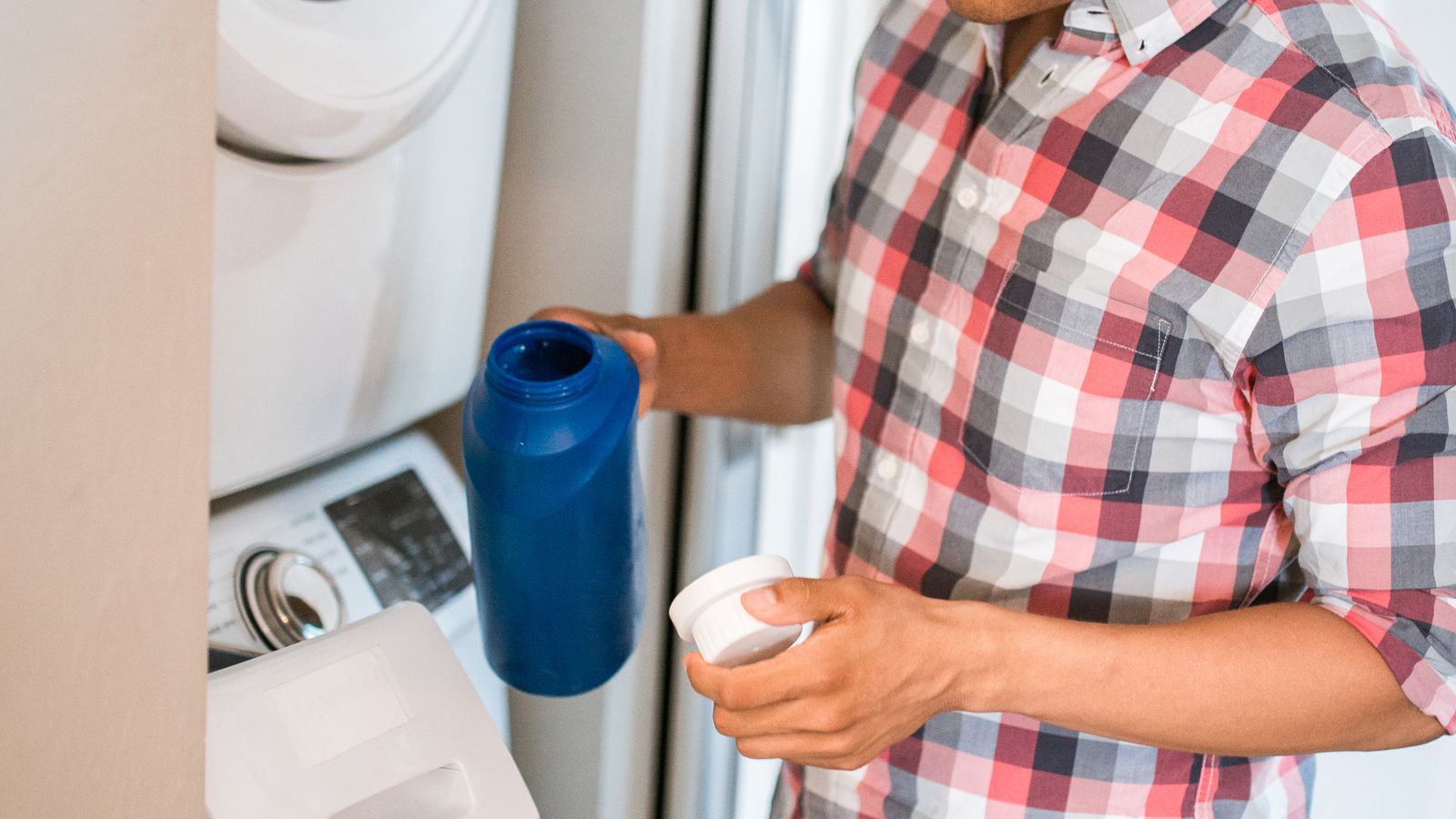
Step 4: Choose a Detergent for Cloth Diapers
Cloth diapering has its own set of rules, and using the wrong detergent is one of the most common reasons parents give up on it too soon. Diaper-safe detergents are free of fabric softeners, added fragrance oils, and optical brighteners, all of which can coat absorbent fibers and cause leaks or skin irritation. Many are also formulated to rinse fully clean in a single cycle, which matters because leftover residue is a leading cause of ammonia buildup and diaper rash. Look for detergents explicitly labeled as cloth-diaper-safe, and follow the recommended dose closely-using too much is just as much of a problem as using too little, since excess detergent is harder to rinse out completely.
For formulas vetted specifically for this use case, browse this list of the best laundry detergents for cloth diapers.
Step 5: Set Up Your Shelf for Easy Sorting
Once you’ve picked your three (or more) detergents, the goal is to make the right choice the easy choice on wash day. A few practical tips:
- Store bottles in the order you use them most, with your everyday detergent at eye level and specialty bottles nearby but clearly labeled.
- Use a permanent marker or a printed label to note “Silk Only,” “Uniforms,” and “Diapers” directly on each cap or lid so there’s no second-guessing mid-load.
- Keep a small dedicated scoop or cap with each bottle so measurements don’t get mixed up between formulas with different concentrations.
- Group hampers or laundry bags by category near the shelf so sorting happens before the wash, not during it.
Step 6: Build the Right Wash Routine for Each Category
Detergent choice is only half the equation-wash settings matter just as much.
Silk and Delicates
Use cold water, a gentle or hand-wash cycle, and skip the spin cycle if your machine allows it. Air-dry flat or on a padded hanger.
Work Uniforms
Pre-treat visible stains before washing, use warm or hot water where the fabric allows, and consider an extra rinse cycle for heavily soiled loads to prevent residue buildup that can trap odors.
Cloth Diapers
Most cloth diapering systems recommend a cold pre-rinse to remove solids, followed by a hot main wash with the diaper-safe detergent, and a final rinse to confirm no suds remain. Skip fabric softener entirely, since it coats fibers and reduces absorbency over time.
Common Mistakes to Avoid
- Using one detergent for everything “to save money.” Damaged silk or a diaper rash costs far more in the long run than a second bottle of detergent.
- Overdosing specialty detergents. More detergent doesn’t mean cleaner clothes-it usually means more residue left behind, especially with diapers.
- Skipping the label. Care labels on uniforms and delicate garments often specify water temperature and cycle type for a reason; ignoring them shortens the garment’s life.
- Adding fabric softener to diaper loads. Softener is one of the most common causes of diaper repelling and reduced absorbency.
- Mixing loads out of convenience. Washing a silk blouse with a grease-stained uniform means either the blouse gets too little cleaning power or the uniform doesn’t get treated aggressively enough.
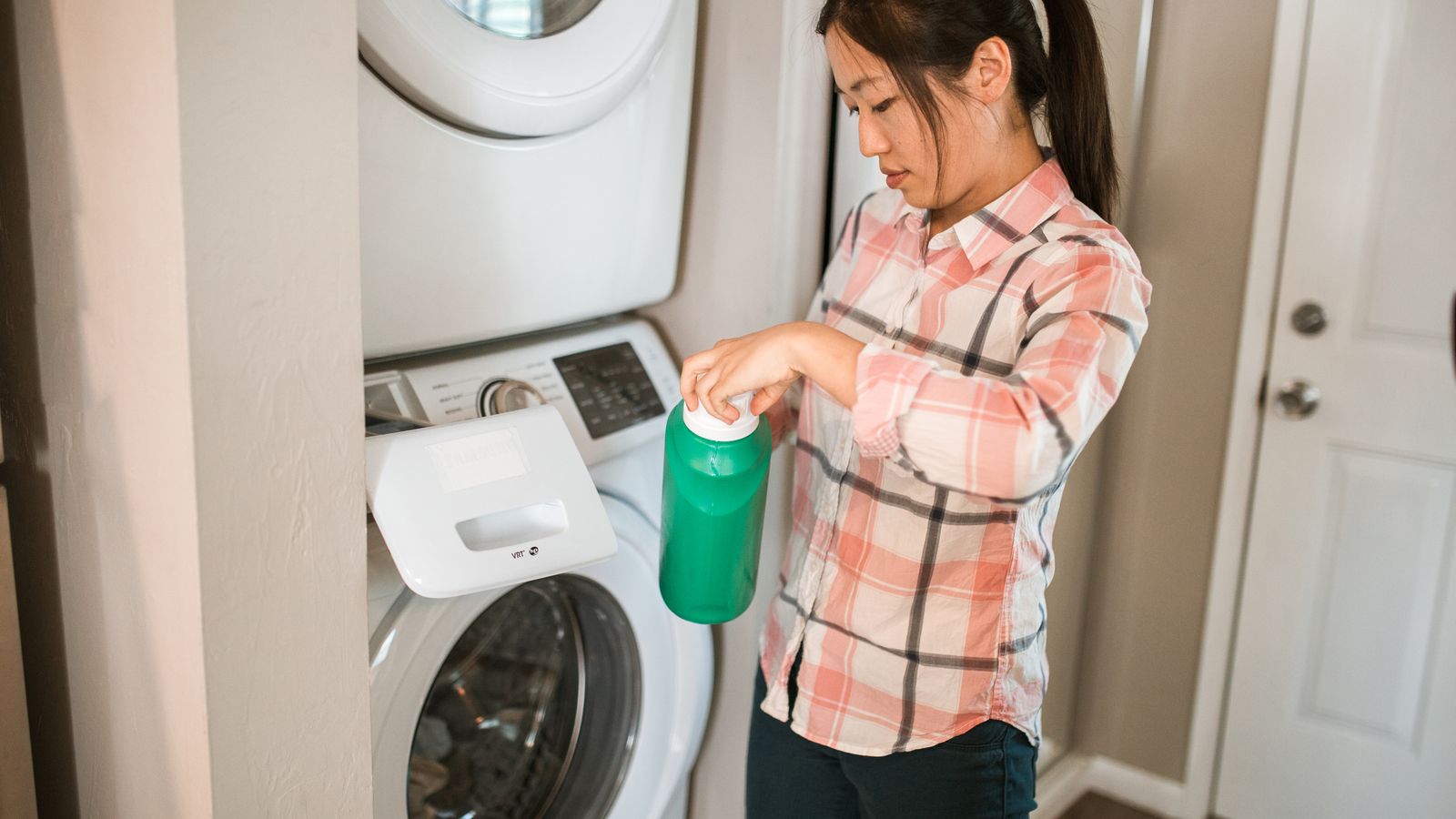
How Many Detergents Do You Really Need?
Most households don’t need a dozen specialty bottles cluttering the laundry room. A practical detergent shelf usually includes one all-purpose formula for mixed everyday loads, plus a dedicated bottle for each specialty category that shows up regularly in your hamper. If you don’t cloth diaper, skip that bottle entirely. If nobody in the house wears a uniform, that category isn’t necessary either. The goal of upgrading your shelf is matching your actual laundry habits, not accumulating products for hypothetical use cases.
Frequently Asked Questions
Can I use regular detergent on silk in a pinch?
You can, but it increases the risk of fiber damage and dulling over time. If it’s a one-time emergency, use the smallest amount possible on a cold, gentle cycle, and switch back to a silk-specific formula for future washes.
Is heavy-duty detergent safe for everyday clothes?
Generally yes, but it’s formulated for tougher stains and can be more concentrated or harsher than necessary for lightly soiled everyday laundry, so it’s usually more cost-effective to reserve it for uniforms and heavily soiled items.
Do cloth diaper detergents work on other baby laundry?
Yes-their fragrance-free, residue-free formulation makes them a safe choice for baby clothes and bedding too, especially for babies with sensitive skin.
How often should I replace bottles on my detergent shelf?
Detergent doesn’t spoil quickly, but check labels for shelf-life guidance, and replace bottles once your washing habits change-for example, once your baby is out of cloth diapers or a job no longer requires a uniform.
Building a specialty detergent shelf takes a small upfront investment of time and a bit of shelf space, but it pays off in garments that last longer, uniforms that come cleaner, and diapers that stay leak-free. Start with whichever category matters most in your household right now, and expand from there.