Three Small Purchases, Three Very Different Problems
A laundry wall shelf, a laundry room rug, and a set of cedar blocks for closets all show up on the same “organize your laundry room” checklists, and it’s easy to assume they’re interchangeable upgrades you can buy in any order. They aren’t. Each one solves a completely different problem: a wall shelf reclaims usable storage space above your machines, a rug protects your floor and your feet from a wet, hard-surfaced work zone, and cedar blocks quietly manage moisture and moths inside the closets where your folded laundry ends up. Picking the wrong one first often means realizing months later that the room still doesn’t function the way you hoped. This guide breaks down what each product actually does, who needs it most, and how to decide which one deserves your budget and wall space right now.
What Each Product Is Actually For
Laundry Wall Shelf
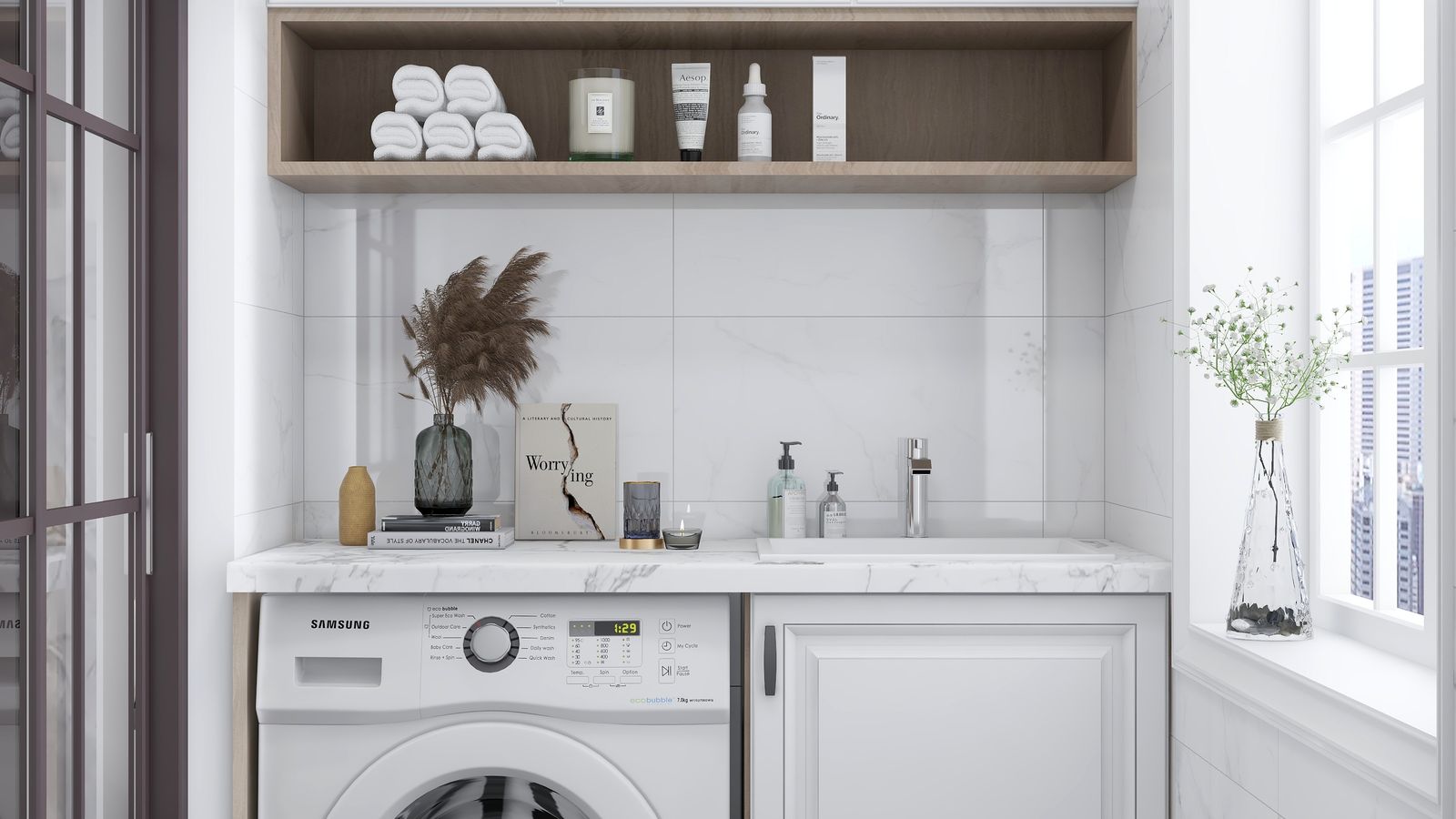
A laundry wall shelf is a storage solution, plain and simple. It mounts above your washer and dryer, over a folding counter, or along an empty wall, and it gives you a place to stack detergent, dryer sheets, stain removers, and baskets without cluttering the counter or the floor. If your laundry room feels cramped, if bottles are lined up on top of the machines, or if you’re storing supplies in another room entirely because there’s nowhere to put them, a wall shelf is the fix. It’s a vertical-space solution to a horizontal-space problem.
Laundry Room Rug
A laundry room rug addresses comfort, safety, and floor protection. Laundry rooms tend to have hard flooring – tile, vinyl, or concrete – because it holds up to moisture. That same flooring is cold underfoot, slippery when wet, and unforgiving if a detergent bottle leaks. A rug adds cushioning for the minutes you spend standing while folding or loading, traps small drips near the machines, and softens an otherwise utilitarian-looking room. It’s a comfort and safety purchase, not a storage one.
Cedar Blocks for Closets
Cedar blocks are the outlier here because they aren’t really a “laundry room” product at all – they belong in the closets where your clean laundry is put away. Aromatic cedar naturally repels moths and other fabric-damaging insects, absorbs excess moisture that can cause mildew or musty odors, and gives stored clothing a fresh, woodsy scent instead of a stale closet smell. If you’ve ever pulled a sweater out of storage and found small holes or a musty smell, cedar blocks are the low-effort, no-chemical answer.
How to Decide What You Actually Need
Start by identifying the specific frustration you’re trying to solve, because these three products don’t overlap much in function.
- You’re constantly running out of counter or floor space in the laundry room. A wall shelf is the priority – it adds storage without adding footprint.
- Your laundry room floor is cold, hard, or feels unsafe when wet. A rug solves comfort and slip risk immediately and cheaply.
- Clothes in storage develop musty smells or you’ve found moth damage. Cedar blocks address a fabric-care problem that has nothing to do with the washer and dryer themselves.
- You’re setting up a laundry room from scratch. Start with the shelf and rug together, since they solve the two most immediate day-to-day annoyances, then add cedar blocks once you assess whether your closets have a moisture or moth issue.
Think of it as triage: the wall shelf and the rug both improve the laundry room itself, while cedar blocks protect the clothing after it leaves that room. If your budget only allows for one purchase this month, address whichever space – the laundry room or the closet – is causing you the most daily friction.
Laundry Wall Shelf: What to Look For
Material and Weight Capacity
Laundry supplies get heavy fast – a single jug of detergent can weigh close to 10 pounds. Look for shelving rated to hold at least 30-40 pounds per shelf, made from solid wood, coated wire, or reinforced MDF rather than thin particleboard that sags over time.
Mounting Style
Wall-mounted brackets need to hit wall studs or use heavy-duty drywall anchors, especially above a washer where vibration is constant. Floating shelves look cleaner but generally hold less weight than bracketed shelving, so match the style to what you actually plan to store.
Depth and Clearance
Measure the space above your machines before buying. A shelf that’s too deep will interfere with opening a top-load washer lid or a cabinet door below it. Shallow shelves (6-8 inches) are usually the safer default for laundry rooms.
For a closer look at specific configurations and load ratings, see this roundup of laundry wall shelves to compare options suited to different laundry room layouts.
Laundry Room Rug: What to Look For
Water and Stain Resistance
Not every rug belongs in a laundry room. Look for materials designed for wet environments – polypropylene, microfiber with a rubber backing, or washable cotton blends. Avoid plush wool or shag styles that hold moisture and are difficult to dry out.
Non-Slip Backing
A rug without a grippy backing can actually increase your fall risk on hard flooring, especially near a washer prone to occasional overflow. A rubber or latex non-slip backing is non-negotiable for this particular room.
Size and Placement
A runner placed directly in front of the washer and dryer covers the highest-traffic, highest-spill zone. If you fold laundry standing at a counter, a second small mat there adds comfort exactly where you need it, rather than covering the whole floor.
Browse a range of water-resistant, non-slip options in this guide to laundry room rugs before deciding on size and material.
Cedar Blocks for Closets: What to Look For
Untreated, Aromatic Cedar
Look specifically for aromatic red cedar (Juniperus virginiana), which naturally contains the oils responsible for repelling moths. Avoid blocks that are painted, sealed, or heavily processed – sealing traps in the scent and defeats the purpose.
Sanding and Refreshing
Cedar’s scent fades over months as the surface oxidizes. Lightly sanding the blocks every few months, or wiping them with a small amount of cedar oil, restores their effectiveness without needing to replace them constantly.
Placement and Quantity
A handful of blocks tucked into drawer corners, hung on closet rods in a mesh pouch, or placed on shelves near folded sweaters covers most standard closets. Dense, tightly packed closets may need a slightly higher concentration to keep the scent effective throughout.
To compare block sizes and shapes suited for drawers versus hanging closets, see this list of best cedar blocks for closets.
Can You Use All Three Together?
Yes, and in a well-organized home, most people eventually end up using all three – they simply aren’t purchased at the same time or for the same reason. A wall shelf keeps the laundry room’s supplies organized, a rug makes the working area of that room comfortable and safer underfoot, and cedar blocks protect the clothing once it’s clean, folded, and put away in the closet. None of them compete for the same budget line or the same physical space, so there’s no real tradeoff in owning all three eventually – the only real decision is sequencing based on your most pressing frustration today.
Budget Considerations
Of the three, a laundry room rug and a set of cedar blocks are typically the lowest-cost entry points, often under $40 depending on size and material. A quality wall shelf with sturdy mounting hardware tends to cost more, particularly if you’re buying a multi-tier unit or one made from solid wood rather than wire or MDF. If you’re working with a tight budget, prioritize based on the triage list above rather than price alone – a $15 rug that prevents a slip-and-fall is a better first purchase than a $60 shelf you don’t urgently need yet.

Common Mistakes to Avoid
- Buying a rug without checking water resistance. A standard indoor rug in a laundry room will hold moisture, develop mildew, and need frequent replacement.
- Overloading a floating shelf. Always check the manufacturer’s weight rating before stacking detergent jugs and supply bins on a shelf rated for lighter décor items.
- Sealing or painting cedar blocks. This blocks the natural oils from reaching the air, which is the entire mechanism that repels moths.
- Ignoring stud placement when mounting a shelf. Anchors alone often aren’t rated to hold a fully loaded laundry shelf long-term, especially with the vibration from nearby machines.
- Forgetting to refresh cedar blocks. Unlike a one-time purchase, cedar needs occasional light sanding to keep working – set a reminder every few months.
Frequently Asked Questions
Do I need a laundry room rug if I already have a mat by the washer?
A small mat covers immediate spill zones, but a full laundry room rug or runner extends comfort and slip protection across the whole working area, including where you stand to fold or transfer laundry between machines.
How long do cedar blocks actually last?
The wood itself lasts indefinitely, but the aromatic oils that repel moths fade over roughly 3-6 months depending on humidity and air exposure. Light sanding restores the scent without needing new blocks.
Can a laundry wall shelf go above a front-load washer and dryer stack?
Yes, as long as you leave clearance for the dryer door to fully open and account for the shelf’s depth so it doesn’t interfere with loading or unloading.
Will a rug trap moisture and cause mold in a laundry room?
Only if it’s the wrong material. Rugs made for wet environments, with breathable backing and machine-washable fabric, are designed to dry quickly and resist mildew when placed on ventilated laundry room flooring.
Are cedar blocks safe to use around pets?
Untreated cedar is generally considered safe in small, well-ventilated quantities, but keep blocks out of reach of pets that chew on wood, and consult a veterinarian if your pet has known sensitivities to essential oils.
Final Thoughts
A laundry wall shelf, a laundry room rug, and cedar blocks for closets solve three distinct problems – storage, comfort and safety, and fabric care – so the right choice isn’t about picking a “best” product among them, it’s about matching the purchase to the frustration you’re actually experiencing. Start with whichever space is causing the most daily annoyance, use the buying criteria above to choose a quality option, and don’t be surprised if you end up owning all three within a year of setting up a functional, well-organized laundry space.