A cluttered laundry room slows down every wash day, turning a simple chore into a scavenger hunt for detergent, dryer sheets, and stray socks. The fix isn’t a total remodel – it’s a smart starter kit built around three workhorse pieces: sturdy laundry room shelving, a compact over washer shelf, and a rolling laundry cart. Together they turn a cramped closet or utility nook into an organized, efficient workspace without requiring any construction. This guide walks you through exactly how to plan, choose, and assemble that starter kit, step by step.
Why a Laundry Toolkit Matters
Most laundry rooms are small, oddly shaped, and packed with plumbing, vents, and outlets that eat into usable space. Without a plan, detergent bottles end up balanced precariously on top of the washer, dryer sheets get lost in a junk drawer, and there’s nowhere to set folded clothes. A well-designed toolkit solves three problems at once: it adds vertical storage where floor space is scarce, it reclaims the dead zone above the washer and dryer, and it gives you mobile storage that can move wherever the work happens – folding, pretreating stains, or hauling supplies between floors.
Building this kit isn’t about buying random bins and hoping they fit. It’s about matching each piece to your room’s dimensions, your storage needs, and your daily laundry routine.
Step 1: Measure Your Space Before You Shop
Before buying anything, grab a tape measure and note the following:
- The width and depth of the wall space above your washer and dryer.
- The ceiling height and any obstructions (vents, pipes, light fixtures, cabinet doors).
- The clearance between your appliances and the nearest wall or doorway, since a laundry cart needs room to roll in and out.
- Any narrow gaps beside or behind appliances where slim shelving units could fit.
Write these numbers down and keep them handy while shopping – it’s the single biggest step in avoiding a return shipment because a shelf unit is two inches too wide for the alcove.
Step 2: Choose Laundry Room Shelving for Vertical Storage
Freestanding or wall-mounted laundry room shelving is the backbone of the kit. It gives you dedicated space for detergent, stain removers, dryer balls, extra hangers, and seasonal items like heavy blankets that only need washing occasionally. When picking shelving, look for:
- Material that resists moisture – coated wire, powder-coated steel, or sealed wood hold up better than raw particleboard in a humid room.
- Adjustable shelf heights so you can fit tall detergent jugs on one level and shorter items like stain sticks on another.
- A footprint that matches your measurements – narrow units (12-16 inches deep) work well beside appliances, while wider units suit an empty wall.
- Weight capacity rated for what you actually plan to store, including bulk detergent packs and bins full of clothes.
If your budget allows for only one purchase in this kit, prioritize shelving – it has the biggest impact on decluttering counters and floors. For a closer look at well-rated options sized for small utility rooms, browse this roundup of laundry room shelving picks before you buy.
Step 3: Add an Over Washer Shelf for the Wasted Space Above
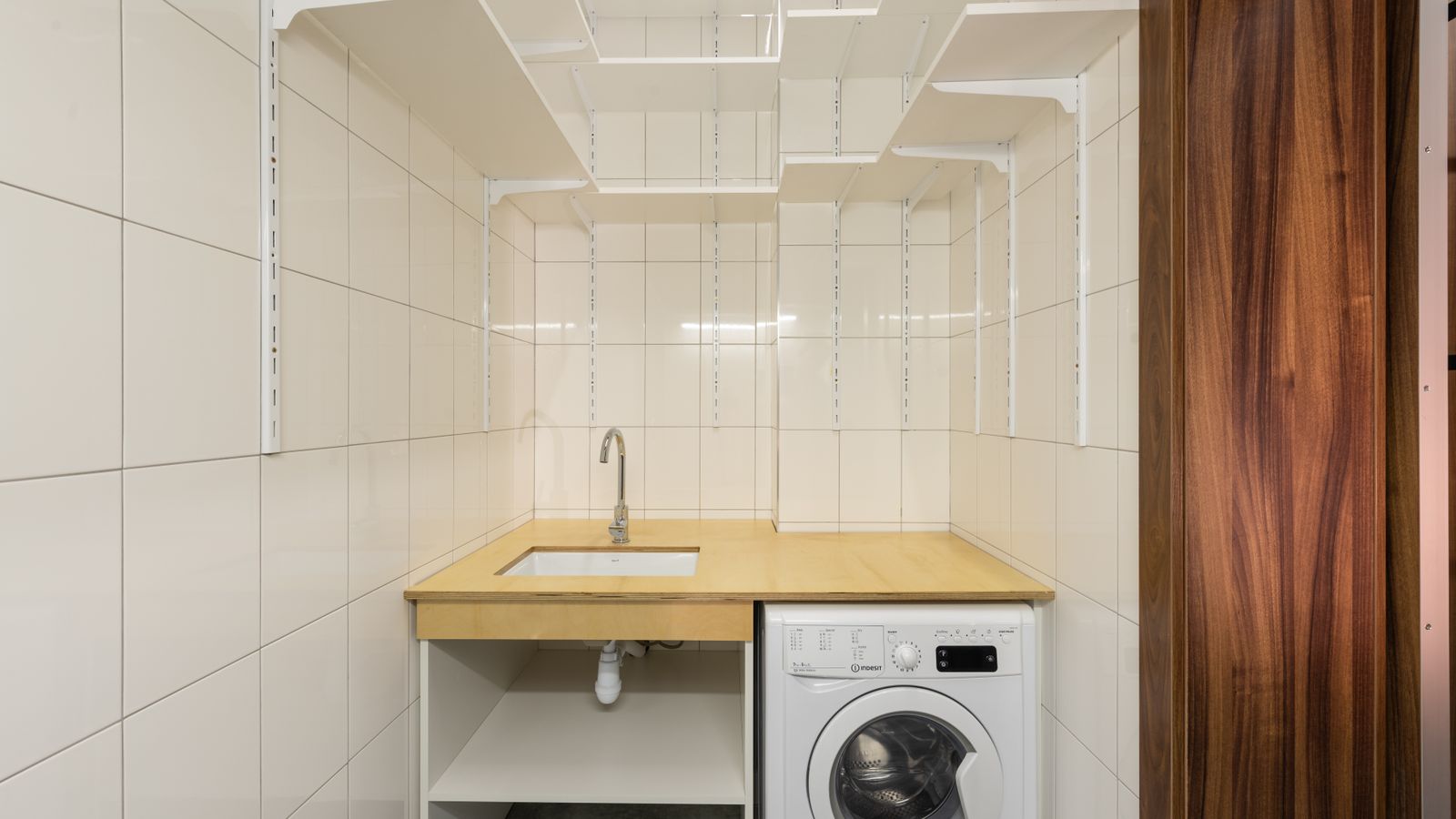
The space directly above a front-load washer and dryer is often completely unused, even though it sits at perfect arm’s reach. An over washer shelf (sometimes called a laundry counter or bridge shelf) spans the gap between two appliances or sits on brackets above a single machine, creating an instant folding surface or extra storage tier. When shopping for one, check:
- Span width – measure the distance between your washer and dryer (or the width of a single appliance) so the shelf sits level without gaps.
- Weight rating – a shelf meant to hold a folded stack of towels needs a higher rating than one used only for decor.
- Mounting style – some rest on brackets screwed into studs, others use adjustable side supports that don’t require permanent hardware, which is useful in rentals.
- Surface material – butcher block or laminate wipes clean easily if detergent spills.
This single addition can double as your folding station, which means you no longer need a separate table crammed into the room. For sizing and style options that fit standard washer-dryer gaps, compare a few over washer shelves before installing.
Installation Tips
- Locate wall studs with a stud finder if the shelf requires wall anchoring – this is critical for weight-bearing shelves.
- Use a level when mounting brackets so stacked items don’t slide.
- Leave at least a few inches of clearance above the washer and dryer lids so they can still open fully.
- If your model is freestanding on side supports rather than wall-mounted, confirm both appliances are the same height, or use adjustable legs to compensate.
Step 4: Bring In a Laundry Cart for Mobility
Shelving and an over washer shelf solve fixed storage, but a laundry cart solves movement. A rolling cart lets you carry hampers of dirty clothes from bedrooms to the laundry room, transport folded clean laundry back upstairs, and hold supplies like stain pens or mesh bags right where you’re working. Look for:
- Locking caster wheels so the cart stays put while you’re loading or unloading it.
- Removable canvas or mesh bins that double as portable hampers.
- A slim profile if it needs to fit through a doorway or beside the washer.
- A flat top surface for sorting or setting down a laundry basket mid-task.
A cart is especially useful in multi-level homes or apartments where the laundry room is separate from bedrooms. Explore a range of rolling options in this guide to the best laundry carts to find one sized for your hallway or closet.
Step 5: Assemble and Arrange the Three Pieces Together
Once all three items have arrived, plan the layout before bolting anything down:
- Install the over washer shelf first, since it usually needs the most precise measurements and may require studs.
- Position the laundry room shelving on the wall with the most open floor space, ideally within reach of the washer so detergent isn’t a stretch away.
- Park the laundry cart in a spot that doesn’t block appliance doors, but stays close enough to load directly from the dryer.
- Group like items together: cleaning supplies on the lower shelves, everyday items like dryer sheets at eye level, and rarely used items like a sewing kit up top.
Safety Notes
- Always anchor tall or top-heavy shelving to the wall, especially in households with kids or pets.
- Keep detergent pods and cleaning chemicals on higher shelves, out of reach of small children.
- Don’t overload an over washer shelf beyond its stated weight rating – vibration from the washer’s spin cycle adds stress over time.
- Check that cart wheels lock before setting anything heavy on top, particularly on hard flooring where an unlocked cart can roll.
Common Mistakes to Avoid
- Skipping measurements. Buying shelving or a shelf before measuring is the number one reason for returns and awkward gaps.
- Ignoring moisture. Laundry rooms run humid; untreated wood or cardboard-based organizers warp and sag within months.
- Overbuying storage before decluttering. Sort through existing supplies first – you may need less shelving than you think, or a taller unit instead of a wider one.
- Forgetting appliance clearance. Shelving or a shelf mounted too low can block the washer or dryer lid from opening.
- Choosing a cart too wide for doorways. Measure your narrowest hallway or door frame before ordering.
Maintaining Your Laundry Toolkit
Wipe down shelving and the over washer shelf monthly with a damp cloth to prevent detergent residue buildup. Check bracket screws twice a year to make sure vibration from the appliances hasn’t loosened anything. Empty and wipe out cart bins regularly, especially if they’re used to haul damp towels, since trapped moisture can lead to mildew odors. A quick seasonal review of what’s stored where also helps you catch expired cleaning products or supplies you no longer use.
Frequently Asked Questions
Do I need all three pieces, or can I start with just one?
You can build the kit in stages. If budget is tight, start with laundry room shelving for the biggest organizational impact, then add the over washer shelf and cart as funds allow.
Will an over washer shelf work if my washer and dryer are different heights?
Many shelves have adjustable legs or brackets to compensate for mismatched appliance heights, but always check the product’s adjustable range against your own measurements before buying.
Can I use these pieces in a small apartment laundry closet?
Yes. Look for narrower, freestanding shelving units and a slim-profile cart specifically designed for tight closets rather than full-size utility rooms.
How much weight can a typical over washer shelf hold?
It varies by model, so always check the manufacturer’s weight rating rather than assuming – some are rated for light decor only, while sturdier versions can hold stacked laundry baskets.
Is a laundry cart worth it if my laundry room and bedrooms are on the same floor?
It’s still useful for sorting, hauling supplies between the washer and folding area, and keeping loose items contained, even without stairs to navigate.
Final Thoughts
A functional laundry room doesn’t require a renovation – it requires the right combination of vertical storage, a folding surface above your appliances, and mobile storage that keeps supplies within reach. By measuring first, choosing shelving and a shelf sized to your actual space, and adding a cart for flexibility, you can build a complete laundry toolkit in a single weekend. Start with the piece that solves your biggest pain point today, and expand the system as your routine and budget evolve.