Every home eventually needs a dedicated spot for cleaning products, and getting that spot organized is one of the simplest upgrades you can make to your household routine. A well-planned cleaning supply cabinet saves time, prevents dangerous chemical mix-ups, and makes it far easier to grab exactly what you need before a guest arrives or a spill happens. If you are starting from scratch, or just trying to fix a cabinet that has become a chaotic junk drawer, this guide walks through everything you need to know: what to buy, how to organize it, and how to keep it running smoothly for years.

Why a Dedicated Cleaning Supply Cabinet Matters
Scattering cleaning products across the kitchen, bathroom, garage, and laundry room might feel convenient in the moment, but it almost always leads to duplicate purchases, expired bottles, and wasted time hunting for a specific spray. A single, well-organized cabinet (or a small set of zones) turns cleaning from a scavenger hunt into a five-minute task. It also matters for safety: many household cleaners are hazardous when combined, and consolidating them into one clearly labeled space makes it easier to keep incompatible chemicals apart and out of reach of children and pets.
Beyond convenience and safety, a proper cabinet setup helps you actually see what you own. Most households already have enough cleaning products to handle 90% of their needs – the problem is usually not having enough supplies, but not being able to find or identify them quickly.
Assessing Your Space Before You Buy Anything
Before you purchase a single organizer or bottle, take stock of the physical space you have available. Cleaning supplies typically end up in one of a few locations: under the kitchen sink, a hall or linen closet, a laundry room cabinet, or a dedicated utility closet. Each has different constraints.
Under-Sink Cabinets
These are the most common storage spot but also the most awkward, thanks to plumbing pipes cutting through the usable space. Measure the width, depth, and height on both sides of the pipe before buying bins or shelving, since a single wide organizer often will not fit.
Closets and Utility Rooms
A closet gives you vertical space to work with, which is ideal for tall items like mop and broom handles, vacuum attachments, and stacked storage bins. If you have this option, it is generally easier to organize than an under-sink cabinet because you are not working around plumbing.
Laundry Room Storage
Many households keep detergents, stain removers, and fabric care items separate from general household cleaners, storing them near the washer and dryer instead. This is a reasonable approach as long as you are consistent about where each category of product lives so you are not searching two or three rooms for one item.

The Core Categories Every Cleaning Cabinet Needs
Rather than buying products room by room, it helps to think in categories. A well-stocked cabinet generally covers these groups:
- All-purpose cleaners: A multi-surface spray for counters, appliances, and general wipe-downs.
- Glass and mirror cleaner: Streak-free formulas for windows, mirrors, and glass shower doors.
- Bathroom-specific cleaners: Tile, grout, and toilet bowl cleaners formulated for soap scum and mineral buildup.
- Kitchen-specific cleaners: Degreasers, dish soap, and appliance-safe cleaners.
- Floor care products: Cleaners matched to your flooring type – hardwood, tile, and laminate all have different needs.
- Disinfectants: EPA-registered disinfecting wipes or sprays for high-touch surfaces.
- Specialty cleaners: Products for specific materials, such as leather furniture, stainless steel appliances, or wood polish.
- Tools: Microfiber cloths, sponges, scrub brushes, a bucket, and rubber gloves.
You do not need every category on day one. Start with the essentials – an all-purpose cleaner, glass cleaner, a bathroom cleaner, and a basic set of cloths – then build out from there as specific needs come up.
Choosing Products for Different Surfaces
One of the most common mistakes new homeowners make is treating every surface the same. A cleaner that is perfectly safe on ceramic tile can dull or damage sealed wood, and a harsh degreaser meant for stovetops can strip the finish off leather furniture. Before buying, take a quick inventory of the materials in your home: countertop type, flooring, upholstery, and any specialty finishes like leather or stainless steel.
Leather furniture in particular needs its own dedicated product rather than a general spray, since standard cleaners can dry out and crack the material over time. If you have leather sofas, chairs, or car interiors, it is worth reviewing a guide to leather cleaners to find a formula designed to condition rather than strip the material.
Similarly, kitchen appliances like garbage disposals and dishwashers benefit from products designed specifically for them rather than general-purpose sprays, which are not built to reach into drains or interior compartments. A dedicated disposal cleaner breaks down the buildup that causes odors, and a proper dishwasher deodorizer clears residue and mineral scale that regular detergent leaves behind. If those appliances have been neglected, browsing options for garbage disposal cleaners and best dishwasher deodorizers is a good next step once your general cabinet is stocked.
Organizing the Cabinet Itself
Once you know what you are storing, the layout matters almost as much as the products themselves. A few organizing principles make a big difference:
Group by Room or Task
Keep kitchen products together, bathroom products together, and general-purpose items in their own section. This mirrors how you will actually use the cabinet – you are rarely grabbing a kitchen degreaser and a toilet bowl cleaner at the same time.
Use Risers and Bins
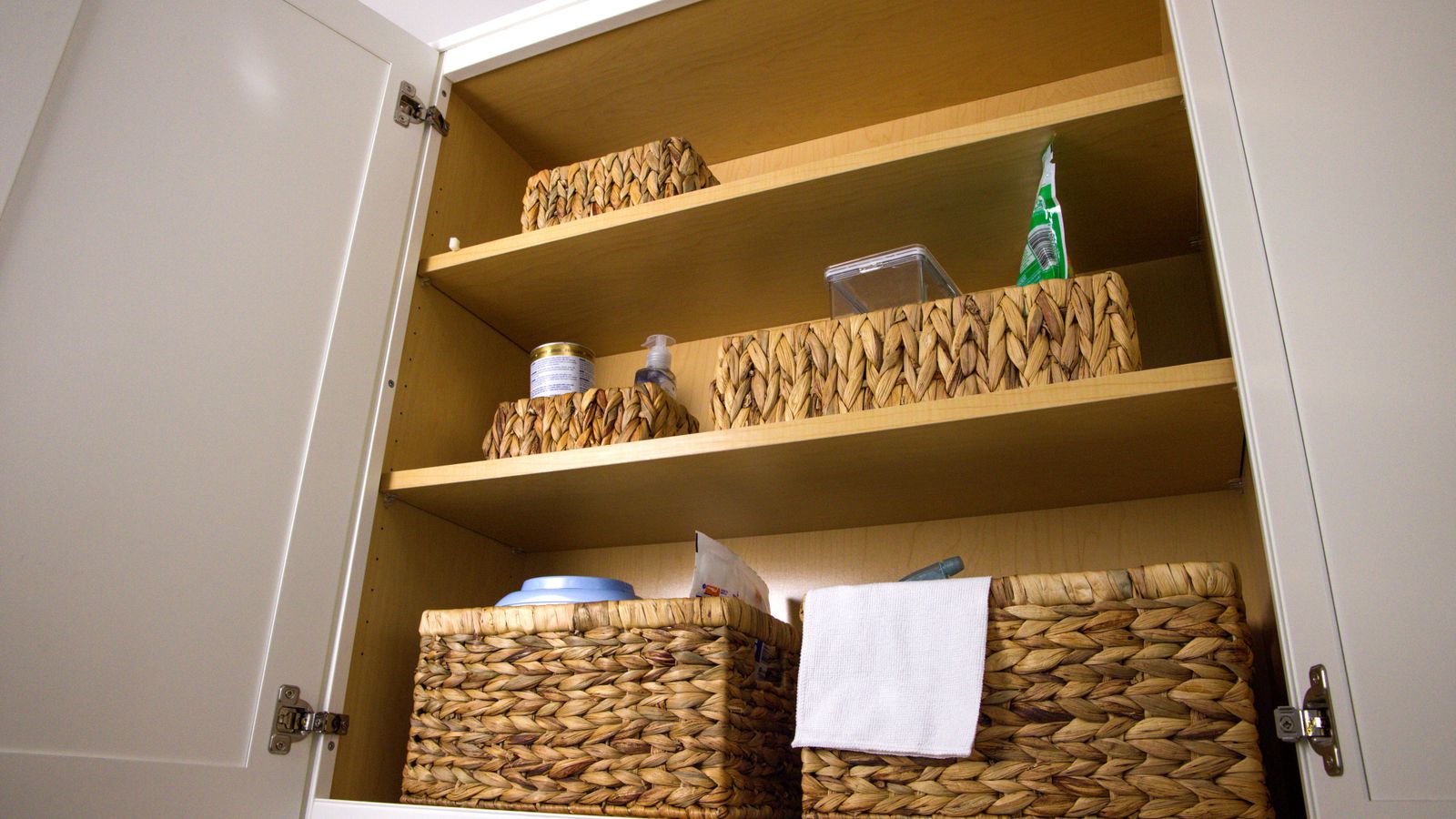
Tiered shelf risers let you see bottles stacked at the back of a cabinet instead of digging past the front row. Clear bins group loose items like sponges, gloves, and cloths so they do not roll around loose.
Store Heavy Items Low, Light Items High
Bulk jugs of detergent or large containers of bleach should sit on the floor of the cabinet or the lowest shelf, both for stability and to make lifting easier. Lighter sprays and specialty items can go higher.
Label Everything
Even if a bottle already has a label, adding a category tag (“Kitchen,” “Bathroom,” “Floors”) to a shelf or bin helps anyone in the household put things back in the right spot – which is often the real reason cabinets fall into disorder.
Safety Considerations You Should Not Skip
Cleaning products are chemicals, and some combinations are genuinely dangerous. A few rules are worth memorizing:
- Never mix bleach and ammonia-based products – the combination produces toxic chloramine gas.
- Keep acidic cleaners (like some toilet bowl formulas) away from bleach-based products as well, for the same reason.
- Store everything in its original container with the label intact, so anyone handling it – including emergency responders – knows exactly what it is.
- Use a lock or high shelf if there are small children or pets in the home.
- Keep the cabinet ventilated if possible, since fumes can build up in an enclosed space over time.
Budgeting for Your Cleaning Cabinet
You do not need to buy everything at once, and you do not need premium pricing to get effective results. A reasonable starting budget covers the essential categories above with mid-range products, then adds specialty items – like leather conditioner or an appliance deodorizer – only as those specific needs arise. Buying in concentrated or refillable formats also cuts long-term costs, since you are paying less for water and packaging and more for actual cleaning agent.
It also helps to buy tools once and well rather than repeatedly. A quality microfiber cloth set, a sturdy bucket, and reusable gloves will outlast several rounds of disposable alternatives, saving money over the course of a year even though the upfront cost is slightly higher.
Maintaining the System Over Time
An organized cabinet only stays organized if you build in a light maintenance habit. Once every few months, pull everything out, check expiration dates (yes, cleaning products do expire and lose effectiveness), wipe down the shelves themselves, and reassess whether your categories still match how you actually use the space. If you consistently find yourself buying a product you already have, that is usually a sign the labeling or grouping needs adjusting rather than a sign you need more storage.
Common Mistakes to Avoid
- Overbuying specialty products before you have the basics covered.
- Storing chemicals near food in pantry-adjacent cabinets.
- Ignoring appliance-specific care like disposal and dishwasher maintenance, which prevents odors before they start rather than masking them after.
- Using the wrong cleaner on the wrong surface, which can cause lasting damage to leather, wood, or stone.
- Letting bins and labels slide after the initial organizing push, which is how most cabinets end up cluttered again within a few months.
Frequently Asked Questions
How many cleaning products do I actually need to get started?
Most households can cover the majority of their needs with four to six core products: an all-purpose cleaner, glass cleaner, a bathroom-specific cleaner, a floor cleaner matched to your flooring, disinfecting wipes, and a basic set of cloths. Everything else can be added as specific needs come up.
Where is the best place to store cleaning supplies?
Under the kitchen sink and a dedicated hall or utility closet are the two most common and practical options. Choose whichever gives you the most usable, ventilated space and is out of reach of children and pets.
How often should I clean out and reorganize the cabinet?
Every three to six months is a reasonable cadence. This is enough time to catch expired products and reassess whether your current organizing system still fits your routine.
Is it safe to store all cleaning products in the same cabinet?
Generally yes, as long as they remain in their original, sealed containers and you avoid storing bleach-based and ammonia-based products in a way that risks accidental mixing, such as leaning bottles against each other with loose caps.
Do I need separate products for leather furniture or appliances like the dishwasher?
Yes. General-purpose sprays are not designed for these surfaces and can cause damage or leave odors unaddressed. Dedicated leather, garbage disposal, and dishwasher products are formulated for those specific jobs.
Final Thoughts
Setting up a cleaning supply cabinet is not a one-afternoon project you finish and forget – it is a small system you build once and refine over time. Start with the essentials, organize by category, keep safety in mind, and add specialty products only when a real need shows up. Once the system is in place, the payoff is immediate: less time searching, fewer duplicate purchases, and a home that is genuinely easier to keep clean.