An espresso machine and a slow cooker sit at opposite ends of the countertop cooking spectrum – one is fast, precise, and hands-on; the other is slow, forgiving, and mostly hands-off. Yet on a real kitchen counter, both appliances often end up living side by side, competing for the same outlet, the same square footage, and the same visual real estate. Matching them well is not about buying a matched “set” from one brand – it is about choosing sizes, finishes, and placements that work together so your countertop feels organized instead of cluttered. This guide walks through a practical, step-by-step process for pairing an espresso machine and a slow cooker into a cohesive countertop cooking lineup, plus the safety notes and common mistakes worth avoiding along the way.
Why Matching These Two Appliances Actually Matters
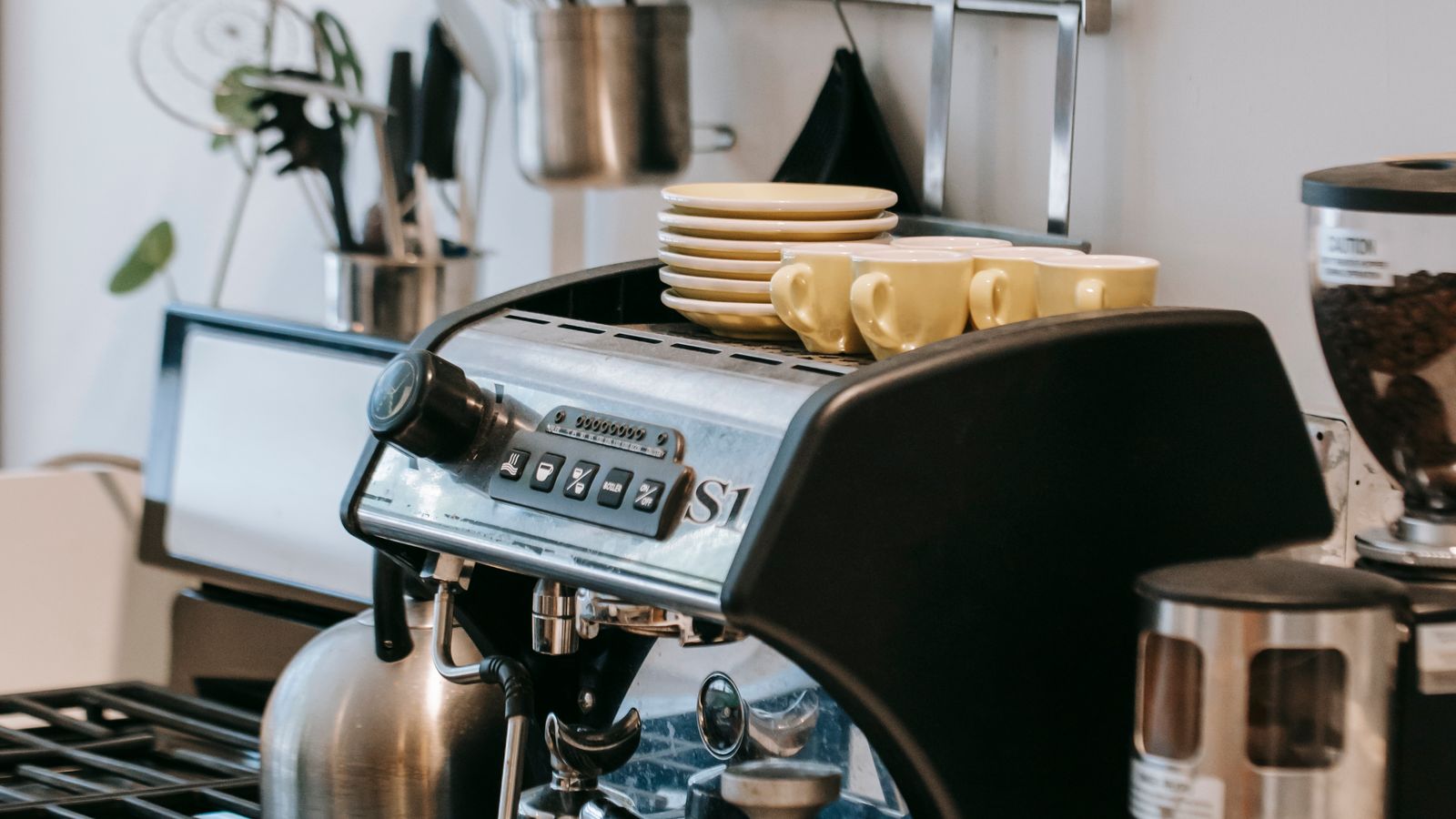
It is easy to treat appliance shopping as a series of unrelated decisions: buy the espresso machine that gets good reviews, buy the slow cooker that fits your family size, done. But when both appliances share a counter – which they usually do in apartments, condos, and mid-size kitchens – mismatched proportions, finishes, and footprints create daily friction. A tall, narrow espresso machine next to a wide, squat slow cooker can look accidental rather than intentional. A stainless espresso machine next to a black plastic slow cooker can clash under kitchen lighting. And if neither appliance’s footprint was measured against your actual counter depth, you may end up with one or both pushed awkwardly into a corner, blocking a cabinet or the backsplash outlet.
A cohesive lineup is not about matching brands exactly. It is about matching intent: two appliances that read as “this person cooks and drinks coffee here on purpose,” not “these accumulated over five years of random purchases.” Getting there takes a bit of planning before you buy, plus a few adjustments if you already own both.
Step 1: Measure Your Available Counter Space First
Before comparing finishes or styles, get concrete about space. Most espresso machines need a footprint of roughly 8 to 12 inches wide and 12 to 17 inches deep, plus clearance above for filling the water tank and, on some models, for the portafilter to swing free. Slow cookers vary more widely – a compact 3-quart model might be under 10 inches wide, while a 7 or 8-quart family-size unit can approach 16 to 18 inches wide and equally deep.
Lay out painter’s tape on your counter to represent both footprints side by side, including a few inches of breathing room between them. If the combined footprint eats more than a third of your usable counter, consider either a smaller slow cooker capacity or a compact espresso machine, or plan to store the slow cooker elsewhere and only bring it out for use. Also check outlet placement: many kitchens have just one or two outlets per counter run, so confirm both appliances can be plugged in without an extension cord crossing the workspace, which is itself a safety hazard.
Quick Measuring Checklist
- Width and depth of the counter section you want to use
- Width, depth, and height of the espresso machine (including opened water tank/lid)
- Width and depth of the slow cooker, including handles
- Distance from the counter edge to the nearest outlet
- Clearance below upper cabinets, especially for a slow cooker’s rising steam
Step 2: Decide on a Shared Finish and Color Language
Once space is settled, the biggest visual lever is finish. Espresso machines commonly come in brushed stainless steel, matte black, or occasionally a retro enamel color like red or cream. Slow cookers lean toward stainless steel bodies with black accents, all-black designs, or (in retro-style lines) a similar enamel palette. The simplest path to a cohesive look is picking the same finish family for both – stainless with black accents is the most common and easiest to shop for, since it is the dominant finish across nearly every appliance category.
If you already own one appliance and are shopping for the other, bring a photo of the existing one (or its exact finish name from the manufacturer spec sheet) when comparing options. “Stainless steel” alone is not precise enough – there is a real difference between a mirror-polished stainless and a brushed, fingerprint-resistant stainless, and mixing the two on the same counter is a common mismatch. If your kitchen already leans toward warm tones (wood cutting boards, brass hardware), a matte black pairing on both appliances can look more intentional than stainless, since black recedes visually and lets other counter elements stand out.
Step 3: Match Proportions, Not Just Colors
Color-matched appliances that are wildly different in scale can still look disjointed. A tiny single-serve espresso machine next to a hulking 8-quart slow cooker will always read as mismatched, no matter the finish. Aim for a similar visual “weight” – if you have a compact household and prefer a smaller single- or double-shot espresso machine, pair it with a mid-size 4 to 5-quart slow cooker rather than the largest family model. Conversely, if you regularly host and want a larger semi-automatic or prosumer espresso machine, a bigger 6 to 8-quart slow cooker will feel proportionally right next to it.
This is also where checking manufacturer capacity and dimension specs pays off, since photos on a product page can be misleading about true scale. Read the listed height, width, and depth for both appliances and do a rough side-by-side comparison before buying, rather than relying on the thumbnail images alone.
Step 4: Plan the Physical Layout on the Counter
With appliances chosen, arrange them with actual daily use in mind, not just symmetry:
- Put the espresso machine near the sink or a water source. You will refill its tank often, so minimizing the walking distance matters more than it seems on day one.
- Keep the slow cooker near an outlet you are comfortable leaving occupied for 6 to 8 hours. Slow cookers are often left running unattended for a full workday.
- Leave at least 3 to 4 inches between the two appliances so steam from the slow cooker’s lid vent does not drift into the espresso machine’s electronics.
- Group them by frequency of use. If you use the espresso machine daily and the slow cooker weekly, keep the espresso machine in the most accessible spot.
Step 5: Coordinate Accessories and Nearby Items
A cohesive lineup extends beyond the two appliances themselves. A shared tray or mat under both appliances visually unifies them and protects the counter from coffee drips and slow cooker condensation alike. Matching or coordinating canisters, a coffee scoop, or a trivet nearby extend the finish language without requiring more appliance purchases, and using a cord clip or wrap on any excess cable keeps an otherwise tidy setup from looking loose.
If you are also considering a third countertop appliance for the same lineup – an air fryer or an indoor grill, for example – apply the same measuring and finish-matching process described above before adding it, so the whole lineup stays proportionate rather than growing cluttered one purchase at a time.
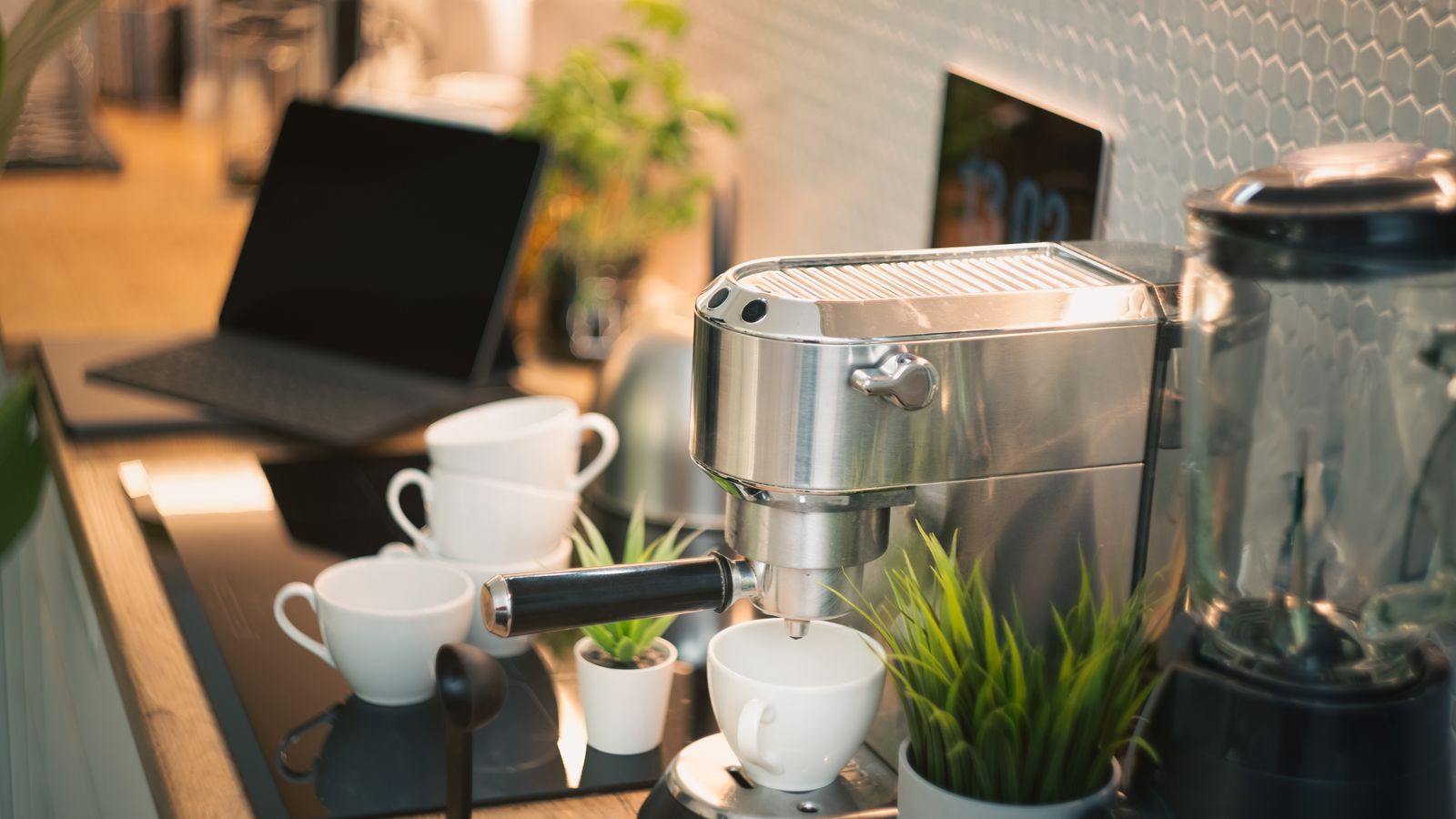
Safety Notes for Running Both Appliances Together
Espresso machines and slow cookers are both safe individually, but placing them close together introduces a few extra considerations. Avoid stacked or daisy-chained power strips – both appliances draw meaningful current, especially an espresso machine’s heating element during warm-up, so plug each directly into a wall outlet when possible. Keep the slow cooker’s steam vent pointed away from the espresso machine’s control panel or water tank opening to avoid condensation dripping into electronics, and never place either appliance directly under an upper cabinet without clearance, since slow cooker steam can warm cabinet bottoms over long cook times and espresso machine steam wands need room to angle for frothing.
Common Mistakes to Avoid
- Buying based on photos alone. Product photography rarely conveys true scale; always check listed dimensions against your taped-out counter space.
- Ignoring outlet count and placement. A beautifully matched pair is useless if you end up running an extension cord across the counter daily.
- Overcommitting counter space to appliances you use rarely. If the slow cooker only comes out twice a month, consider storing it in a lower cabinet and keeping the counter reserved for daily-use items like the espresso machine.
- Mixing finishes without a plan. A polished chrome espresso machine next to a matte black slow cooker can still work, but only if the rest of the kitchen shares a similar mixed-metal theme – otherwise it reads as accidental.
Where to Start Shopping
If you are building this lineup from scratch, start by narrowing down each appliance separately using detailed comparisons, then cross-check finish and size before finalizing either purchase. A good starting point is browsing curated picks for espresso machines to identify a few models in your preferred finish and footprint, then doing the same with slow cookers to find a capacity and style that pairs well in scale and color. If your countertop lineup is expanding further, a resource on best smokeless indoor grills can help you extend the same matched approach to a third appliance without disrupting the balance you have already built.
FAQ
Do the espresso machine and slow cooker need to be the same brand?
No. Matching brand is far less important than matching finish, proportion, and footprint. Two different brands in the same finish family will look more cohesive than two appliances from the same brand in mismatched colors or wildly different sizes.
How much counter space should I reserve for both appliances?
As a rough guide, reserve at least 24 to 30 inches of linear counter space for both appliances plus a few inches of breathing room between them, though this varies with the specific models you choose. Always measure your actual footprints rather than relying on this range alone.
Can I store the slow cooker away and only bring it out when needed?
Yes, and for many households this is the more practical choice. If counter space is limited, prioritize keeping the espresso machine accessible since it is typically used daily, and store the slow cooker in a nearby cabinet, bringing it out for meal prep days.
Is it safe to run both appliances on the same outlet at once?
It is best to avoid it. Both appliances can draw significant current during heating cycles, and combining them on a single outlet or a shared power strip increases the risk of a tripped breaker or overheated cord. Use separate outlets whenever your kitchen layout allows it.
What if my kitchen has limited counter space for both?
Consider a compact single-serve espresso machine paired with a smaller-capacity slow cooker, or a slow cooker with a lid designed to nest with the base for smaller storage. Vertical storage solutions, like a shelf or rack above the counter, can also help free up space for daily rotation between the two appliances.