Kitchen curtains take more daily abuse than almost any other window treatment in the house. Between cooking grease, steam from boiling pots, direct sunlight bouncing off countertops, and constant opening and closing over the sink, it’s no surprise they wear out faster and misbehave more often than the curtains in your living room or bedroom. If your panels are sagging, sticking, fading, or smelling faintly of last week’s stir-fry, you don’t necessarily need to replace them. Most kitchen curtain problems have simple, fixable causes once you know where to look.
This guide walks through the most common issues kitchen curtains develop – and exactly how to diagnose and fix each one, from hardware failures to fabric damage to persistent odors.
Before You Start: Identify the Problem Category
Kitchen curtain issues generally fall into four buckets: hardware (rods, rings, hooks), fabric (staining, fading, shrinking), function (curtains that won’t open or close smoothly), and odor/grease buildup. Working out which category your problem belongs to saves time, because the fix for a hardware issue is completely different from the fix for grease-stained fabric. Walk up to the window, operate the curtain fully open and closed, and inspect the rod, the fabric, and the hem before deciding on a repair path.
Problem 1: Curtains Sag in the Middle or Won’t Hang Straight
Likely causes
- A rod that’s too thin or too long for the fabric weight, causing it to bow
- Uneven curtain rings or clips spaced too far apart
- A rod mounted with brackets that have loosened from repeated tugging
How to fix it
- Take the curtain down and check the rod for visible bowing. If the rod flexes noticeably when you press the center, it’s undersized for the span – swap it for a thicker-gauge rod or add a center support bracket.
- Re-tighten wall anchors and brackets. If the screws spin freely in the drywall, remove them, pack the hole with a wall anchor or a matchstick-and-glue plug, and reinstall.
- Redistribute curtain rings or clips so they’re evenly spaced, roughly every 4 to 6 inches, to prevent gaps that let fabric pool.
- For lightweight fabrics like sheers, consider a smaller-diameter rod so the fabric doesn’t slide unevenly under its own weight.
Problem 2: Curtains Won’t Slide Smoothly Along the Rod
Likely causes
- Dust and cooking grease buildup on the rod or inside curtain rings
- Bent or misaligned rings/hooks
- A rod that isn’t perfectly level
How to fix it
- Wipe the rod down with a damp cloth and a little dish soap to cut through grease film – this alone solves the problem more often than people expect in kitchens.
- Inspect metal rings for bends or rust; replace any that are deformed rather than trying to bend them back, since they tend to snap.
- Use a small level across the rod. Even a slight tilt causes panels to bunch on the low side. Re-level and re-anchor as needed.
- For rings that still stick, rub a bar of plain soap or a silicone lubricant stick lightly along the rod – it’s a low-cost trick that restores glide almost instantly.
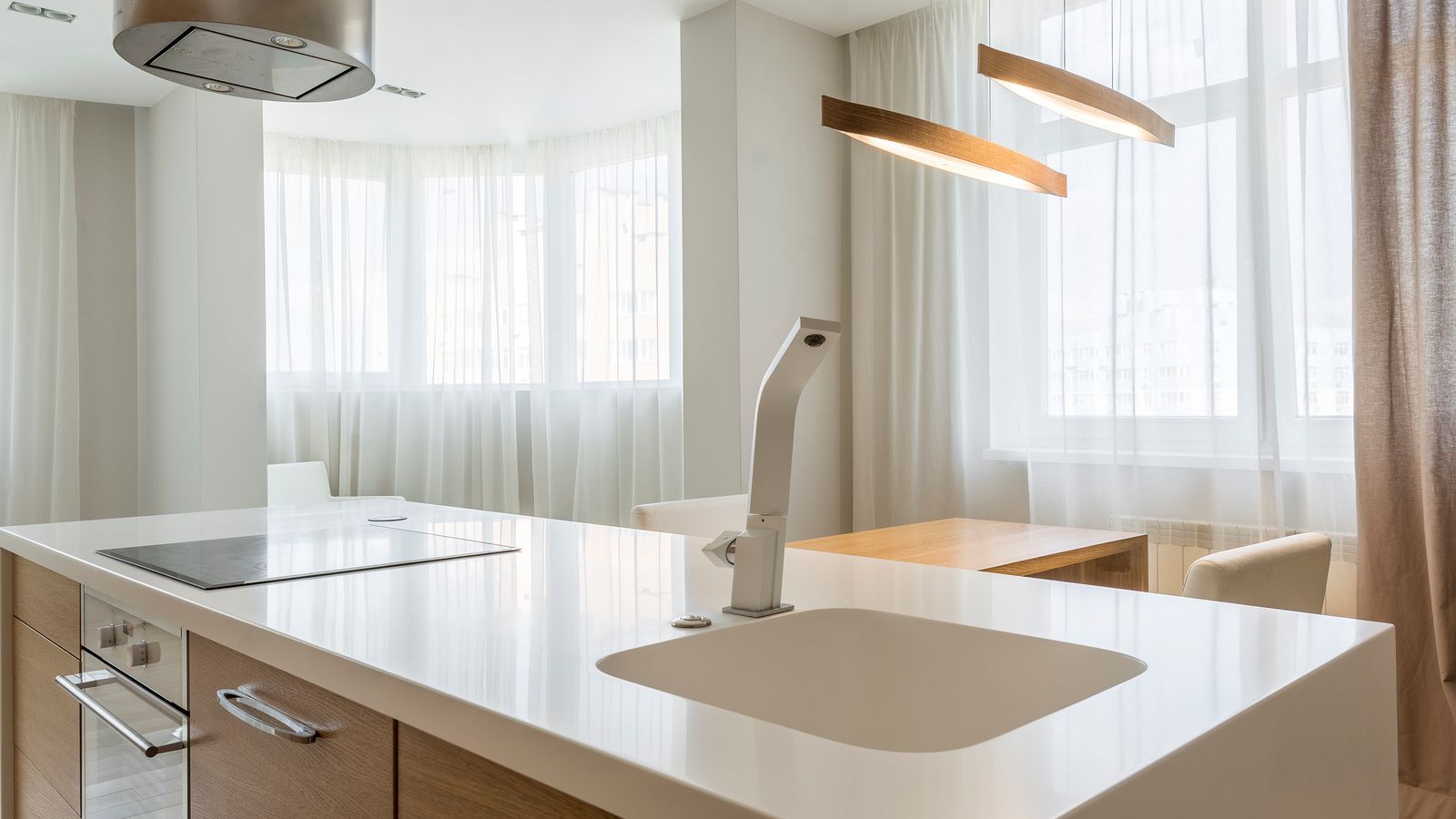
Problem 3: Grease Stains and Cooking Residue on the Fabric
Likely causes
- Panels hung too close to the stove or a frequently used range
- Airborne grease from frying or sautéing settling on fabric fibers over weeks
How to fix it
- Pretreat visible grease spots with a dish soap made for cutting grease (the same one you use on pans works well) – apply directly to the stain and let it sit 10-15 minutes before washing.
- Check the care label. Most cotton and polyester-blend kitchen curtains are machine washable on a gentle, cool cycle. Avoid hot water on grease stains, since heat can set oil-based residue permanently.
- Air dry rather than tumble dry when possible to prevent shrinkage and to check the stain fully lifted before it’s exposed to heat.
- If the panels hang within 2 feet of an active burner, consider moving them farther away or switching to an easy-wipe material such as vinyl or treated cotton, which resists grease absorption far better than sheer fabrics.
Problem 4: Fading From Sun Exposure
Likely causes
- South- or west-facing kitchen windows with strong, direct afternoon sun
- Thin or unlined fabric with no UV protection
How to fix it
- Fading itself generally can’t be reversed once the dye has broken down, but you can slow further damage by rotating panels left to right every few months so wear is even.
- Add a liner or switch to a curtain with a UV-resistant backing for future purchases – this is the single most effective prevention step.
- Consider layering a hard treatment behind sheer curtains, such as roman shades or bamboo shades, which block more direct UV while still letting you keep the curtain panels for softness and style.
- If fading is already severe, it’s usually more cost-effective to replace the panels than to try to restore color, especially for budget-friendly fabrics.
Problem 5: Curtains Feel Stiff, Shrunk, or Warped After Washing
Likely causes
- Washing or drying at too high a temperature
- Overloading the washer, which causes fabric to twist and set unevenly
- Skipping the care label entirely
How to fix it
- Always check the tag before the first wash. Cotton and linen blends shrink noticeably in hot water; polyester and blends handle machine washing better overall.
- Wash on a cool or cold, gentle cycle, and skip the dryer’s high-heat setting – line dry or use low heat only.
- If curtains have already shrunk slightly, try re-wetting them and gently stretching the fabric back to size while damp, then let them air dry flat or hanging at full length.
- Iron on a low setting with a pressing cloth if wrinkles set in, and never iron directly over any decorative trim.
Problem 6: Persistent Cooking Odors in the Fabric
Likely causes
- Curtains act like a sponge for cooking smells, especially frying, fish, or strong spices
- Poor kitchen ventilation during cooking
How to fix it
- Run curtains through a normal wash cycle with a half-cup of white vinegar added to the rinse – it neutralizes odor without leaving a strong scent of its own.
- Between washes, mist lightly with a fabric refresher spray and let air dry with a window cracked.
- Run the range hood fan or open a window whenever cooking anything with strong smells to cut down on how much odor the fabric absorbs in the first place.
- Wash more frequently than you would in other rooms – kitchen curtains generally need a wash every 4 to 6 weeks, compared to every few months elsewhere in the home.
Common Mistakes to Avoid
- Ignoring the care label: Hot water and high dryer heat are the top causes of shrinkage and warping.
- Hanging sheers too close to the stove: Thin fabric absorbs grease and odor fastest and is also more of a fire hazard near open flame.
- Overtightening or yanking curtains shut: This is the leading cause of loosened brackets and bent rings over time.
- Waiting too long between washes: Grease film builds up gradually and becomes much harder to remove the longer it sits.
- Using bleach on stains: Bleach can discolor and weaken most curtain fabrics; stick to grease-cutting dish soap or a gentle stain remover instead.
When to Replace Instead of Repair
Some issues genuinely aren’t worth fixing. If fabric has thinned to the point of tearing, if grease stains persist after two or three wash attempts, or if fading has left visible discoloration across most of the panel, replacement is usually the better investment. Kitchens are hard on fabric by nature, so it’s worth choosing a replacement built for the environment rather than repeating the same problem with a delicate material. Browse a dedicated roundup of window curtains for kitchens to find panels made from grease-resistant, machine-washable fabric designed specifically for this kind of daily wear.

Safety Notes
- Never hang curtains directly beside an open flame or unshielded burner – even a brief flare-up can ignite fabric.
- Use a step stool rather than standing on countertops or chairs when adjusting rods and brackets.
- Check that wall anchors are rated for the weight of heavier curtain fabrics, especially lined or blackout-style panels.
- Unplug or move small appliances away from the window before doing any hardware repair work to avoid accidental contact with cords or hot surfaces.
FAQ
How often should kitchen curtains be washed?
Every 4 to 6 weeks is a reasonable baseline for a kitchen that sees regular cooking, compared to every 2 to 3 months in other rooms, because of the extra grease and moisture exposure.
Can I fix a sagging curtain rod without replacing it?
Often, yes. Adding a center support bracket or tightening the wall anchors at each end usually resolves mild sagging without buying a new rod.
What’s the best fabric to avoid future grease stains?
Tightly woven cotton blends, polyester, and treated or coated fabrics resist grease absorption much better than sheer or loosely woven materials.
Should I choose curtains or a hard window treatment for a kitchen?
Many kitchens do well with a hybrid approach – a hard treatment for light and UV control paired with curtain panels for style. Both options are worth comparing directly, and it can help to look through options like the best roman shades if you want an easier-to-clean layer closer to the glass.
Why do my curtains keep sticking to the wall or window frame?
This is often static buildup, especially in drier winter months. A light mist of water or a fabric static-guard spray usually resolves it quickly.
Final Thoughts
Most kitchen curtain problems trace back to one of a handful of root causes: heat, grease, sun exposure, or simple hardware wear. Working through the checklist above – checking the rod, inspecting rings, treating stains promptly, and washing on the right schedule – resolves the vast majority of issues without needing a full replacement. When a panel is truly past saving, treat it as an opportunity to choose fabric and hardware better matched to how your kitchen actually gets used, so the next set lasts longer with less maintenance.