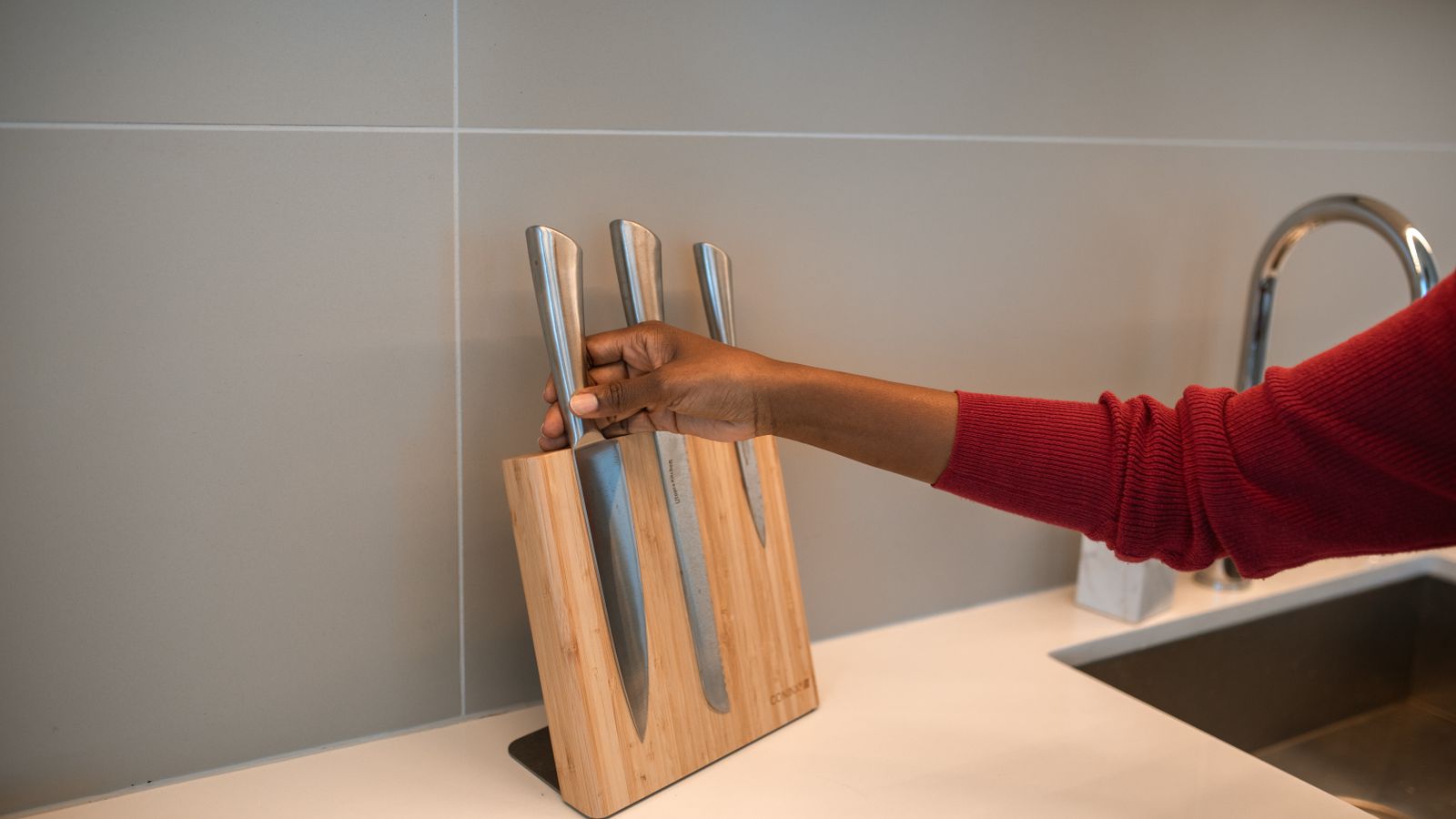
A wooden knife block sits on the counter every day collecting crumbs, moisture, and stray bits of food debris in its slots, and most people never clean it beyond wiping the outside. Over time that neglect turns the block into a hidden source of bacteria and mildew, and it can even dull or rust your blades. This step-by-step guide walks you through a full deep clean of your countertop knife block, from emptying the slots to drying it properly so it lasts for years.
Why Your Knife Block Needs Regular Deep Cleaning
Every time you slide a wet or freshly washed knife back into its slot, you introduce moisture into a dark, enclosed space. Add in food particles that fall from the blade as you insert it, and you have the perfect environment for mold, mildew, and bacterial growth. A knife block that looks fine on the outside can be harboring buildup inside the slots that you simply cannot see without pulling everything out and inspecting closely.
Beyond hygiene, a dirty block can also affect your knives. Trapped moisture promotes rust on carbon steel and even some stainless blades, while gunk inside the slots can dull the edge slightly every time you sheath and unsheath the knife. Deep cleaning your block every one to two months, with a quick wipe-down weekly, keeps both your knives and your countertop setup in good shape.
What You’ll Need Before You Start
Gathering your supplies ahead of time makes the process faster and keeps you from stopping halfway through to hunt for something. Most of what you need is already in your kitchen.
- Mild dish soap or a gentle all-purpose cleaner
- Warm water in a bowl or the sink
- A soft-bristled brush – an old toothbrush, bottle brush, or pipe cleaner works well for narrow slots
- Cotton swabs for tight corners
- A microfiber cloth or clean kitchen towel
- White vinegar or a food-safe disinfectant spray
- A can of compressed air (optional, but useful for loosening dry crumbs)
- A clean, dry surface or dish rack for drying
Avoid bleach-based cleaners on wooden blocks, since bleach can strip the wood’s natural oils and cause cracking over time. Vinegar diluted with water is a safer, still-effective disinfecting option for wood.
Step-by-Step: How to Deep Clean Your Knife Block
Step 1: Remove All the Knives
Take every knife out of the block and set them aside on a towel. This is also a good moment to inspect each blade for rust spots, chips, or a dull edge that needs sharpening. If any knives are visibly dirty, wash and dry them separately before returning them to the block later.
Step 2: Turn the Block Upside Down and Shake Out Debris
Hold the block over a trash can or sink and turn it upside down, tapping the base gently. Crumbs, sawdust-like wood particles, and stray bits of food will fall out. This simple step removes a surprising amount of loose debris before you even introduce any cleaning products.
Step 3: Use Compressed Air or a Brush to Loosen Stuck Debris
For anything still clinging to the inside of the slots, a few short bursts of compressed air can dislodge it. If you don’t have compressed air, a narrow bottle brush or pipe cleaner works just as well – insert it into each slot and gently scrub the walls in a twisting motion to knock loose dried food or dust.
Step 4: Wipe Down the Exterior
Dampen a microfiber cloth with warm water and a small amount of mild dish soap, then wipe down the entire outside of the block, including the base and any decorative grooves. Wring the cloth out well so you’re not soaking the wood, then follow with a dry cloth to remove excess moisture.
Step 5: Clean Inside Each Slot
Dip a cotton swab or the tip of a soft brush into a mix of warm water and a few drops of dish soap, then run it along the inside walls of each slot. Work slowly and rotate the swab to reach all sides. For narrower slots designed for paring knives, a pipe cleaner dipped in the soapy water is often the easiest tool.
Step 6: Disinfect With a Vinegar Solution
Mix equal parts white vinegar and water in a small spray bottle or bowl. Lightly mist or dab the solution into each slot using a cotton swab, then let it sit for two to three minutes to kill lingering bacteria. Vinegar is acidic enough to disinfect effectively without damaging the wood finish the way harsher chemicals can.
Step 7: Wipe Away Excess Moisture
Use a dry corner of your cloth or a fresh cotton swab to soak up any leftover liquid inside the slots. The goal is to leave the block just barely damp, not dripping, since standing moisture is exactly what causes mold in the first place.
Step 8: Air Dry Completely Before Reloading Knives
Set the block upside down or on its side on a drying rack, or prop it at an angle so air can circulate through the slots. Let it dry fully for at least four to six hours, ideally overnight, before placing any knives back inside. Returning knives to a still-damp block undoes most of the work you just did.
Safety Notes While Cleaning
Always keep the knives separated from your cleaning workspace with the blades pointed away from your hands. When brushing inside slots, move slowly rather than jabbing the brush in and out, since a sudden slip can nick your fingers on a nearby blade edge if you’re working near the knives at the same time. If you use compressed air, direct the nozzle away from your face and work in a well-ventilated area.
Common Mistakes to Avoid
- Soaking the block in water. Wooden blocks are not dishwasher-safe and should never be submerged, since prolonged water exposure warps and cracks the wood.
- Using bleach or harsh chemicals. These strip protective oils from wood and can leave residue that transfers to your knife blades.
- Reinserting damp knives. Always dry knives fully before storing them, even in a freshly cleaned block, to avoid reintroducing moisture.
- Skipping the interior slots. Wiping only the outside leaves the real problem areas – the dark, enclosed slots – untouched.
- Forgetting to dry the block fully. Rushing this step is the single most common reason mold reappears within weeks of cleaning.
How Often Should You Deep Clean Your Knife Block?
A quick wipe-down of the exterior once a week keeps dust and surface grime under control. A full deep clean of the interior slots, following the steps above, is generally enough every four to eight weeks for most households. If you cook frequently, live in a humid climate, or notice any musty smell coming from the block, clean it more often, roughly every two to three weeks.
Maintaining a Cleaner Setup Going Forward
Beyond regular cleaning, a few habits go a long way toward keeping your knife block fresher between deep cleans. Always dry knives completely with a towel before sliding them back in, wipe the block’s exterior weekly, and keep it away from the sink or stove where splashes and steam add extra moisture. If your current block is cracked, warped, or has slots that are impossible to clean thoroughly no matter how hard you try, it may be time to consider a replacement. Browsing a curated selection of countertop knife blocks can help you find a design with wider, easier-to-clean slots or antimicrobial materials.
If counter space is tight and you’re rethinking your whole knife storage setup, it’s also worth comparing options beyond a traditional block. Wall-mounted magnetic strips and slot-style holders keep blades fully exposed to air, which makes them far easier to keep clean since there are no enclosed slots to trap moisture. Take a look at some under cabinet knife racks if you’d rather free up counter space entirely, or explore kitchen wall organizers for a broader storage solution that keeps knives, utensils, and other tools within easy reach while staying easy to wipe down.
Frequently Asked Questions
Can I put my knife block in the dishwasher?
No. Wooden knife blocks should never go in the dishwasher. The prolonged exposure to water and heat will warp the wood, crack the glue joints, and ruin the finish. Hand cleaning with a damp cloth and brush is the only safe method.
What if my knife block already has mold or a musty smell?
Follow the full deep clean process above, paying extra attention to the vinegar disinfecting step in the affected slots. If the smell persists after a thorough cleaning and full drying, the mold may have penetrated the wood fibers, and replacing the block is usually the safer option for food hygiene.
How do I clean a bamboo or plastic knife block differently?
Bamboo blocks follow the same no-soak rule as wood, but plastic or acrylic blocks are typically more water-resistant and some are even dishwasher-safe on the top rack. Check the manufacturer’s care instructions, since materials vary widely between brands.
Is it better to store knives in a block or on a magnetic strip?
Both work well when maintained properly. A block offers a tidy, self-contained look, while a magnetic strip or rack exposes blades to open air, which naturally reduces moisture buildup and makes cleaning faster. The right choice comes down to your kitchen layout and how often you’re willing to deep clean an enclosed block.
How can I tell if my knife block needs to be replaced instead of cleaned?
Look for visible cracks, warping, loose glue joints, or a persistent musty odor that doesn’t go away after a deep clean. If slots have become too tight or damaged to insert a brush for cleaning, that’s another sign the block has reached the end of its useful life.