A crowded laundry shelf can turn a simple wash day into a guessing game – you know you own a detergent for muddy paws and another for delicate blouses, but finding the right bottle in the moment is another story. Specialty detergents like pet-odor formulas and silk-safe cleansers each do a very specific job, and storing them side by side without a system almost guarantees you’ll grab the wrong one. This guide walks you through a practical, low-effort way to organize your detergent shelf so every bottle has a home, every label is visible, and every load gets the right formula the first time.
Why Specialty Detergents Deserve Their Own System
Most households don’t need more than one or two everyday detergents, but once you add specialty formulas the shelf gets complicated fast. A pet-odor detergent is usually enzyme-heavy and formulated to break down proteins in urine, drool, and dander – it’s meant for bedding, blankets, and towels that pets touch regularly. A silk-safe detergent, on the other hand, is pH-balanced and free of harsh surfactants so it won’t strip the natural sheen or weaken delicate fibers. These two products couldn’t be more different in purpose, and mixing them up can mean a ruined blouse or a still-smelly dog bed.
Because these detergents are used less often than your everyday formula, they’re the ones most likely to get buried, misplaced, or left unlabeled. An organized shelf keeps them front-of-mind so you actually reach for the right bottle instead of defaulting to whatever’s easiest to grab.
Step 1: Sort Your Detergents Into Use Categories
Before you touch a shelf or bin, group everything you own into simple categories. This is the foundation the rest of the system builds on.
- Everyday detergent – your go-to formula for regular loads.
- Pet-focused detergent – enzyme cleaners and odor-eliminating formulas for pet bedding, leashes, and washable pet gear.
- Delicate-fabric detergent – silk, wool, and other gentle-wash formulas.
- Boosters and additives – stain removers, oxygen boosters, fabric softeners, and scent boosters.
Lay everything out on a counter or table first. It’s common to discover duplicate bottles or half-used products you forgot you had – this is the moment to consolidate or toss anything expired.
Step 2: Choose a Shelf Layout That Matches How You Use Each Product
Once sorted, think about frequency of use. The detergents you reach for most should sit at eye level or in the most accessible spot, while less-frequent specialty items can go slightly higher, lower, or to the side – as long as they’re still clearly visible.
Eye-level zone
Reserve this for your everyday detergent and anything you use weekly. This is prime real estate, so don’t let a rarely used specialty bottle take up this space.
Secondary zone (just above or below eye level)
This is the ideal spot for your pet-odor and silk-safe detergents. You’ll use them often enough that digging through a cabinet is annoying, but not so often that they need to dominate the shelf.
Overflow or backup zone
Unopened backup bottles, seasonal items, or bulk-bought refills belong in a lower cabinet, closet, or storage bin – out of the way but still logically grouped by category.
Step 3: Use Bins, Trays, or Dividers to Keep Categories Separate
Even a well-thought-out layout falls apart if bottles are just lined up loosely – they tip, slide, and drift into the wrong section over time. A few inexpensive tools solve this:
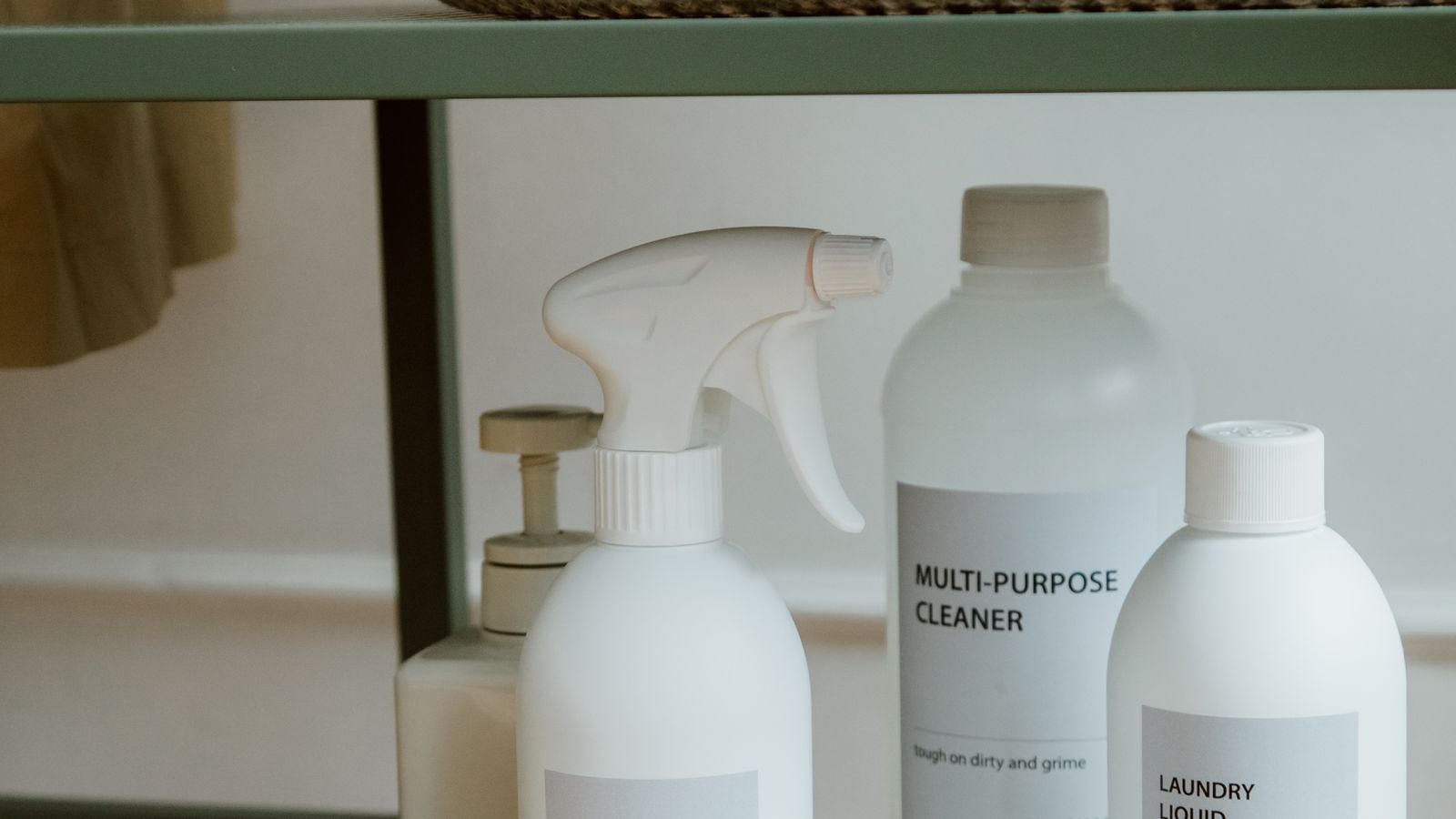
- Clear plastic bins – one for pet-care products, one for delicate-fabric products, one for boosters. Clear sides let you see contents at a glance.
- Lazy Susans – great for narrow cabinets where you’d otherwise have to move three bottles to reach the one in back.
- Shelf risers – add a second tier to a single shelf so shorter bottles (like concentrated pet-odor formulas) don’t get lost behind taller ones.
- Drip trays – placed under liquid detergents to catch residue and protect the shelf surface, especially important for enzyme-based pet formulas that can be sticky.

Step 4: Label Everything Clearly
Labels are the single biggest upgrade you can make to a shared laundry space, especially if more than one person in the household does the wash. A simple label maker or even painter’s tape and a marker works fine. Label:
- The bin or shelf zone itself (“Pet Loads,” “Delicates,” “Everyday”)
- Any decanted or refilled bottles, since generic containers all start to look alike
- Wash instructions if a product has unusual dosing (many concentrated pet-odor detergents use less per load than standard formulas)
If you’re building out a small specialty section, it’s worth browsing a few dedicated roundups so you know what’s actually available before you commit shelf space to it. For pet households, laundry detergents for pet odors are worth comparing side by side, since formulas vary a lot in scent strength and enzyme concentration. If your wardrobe includes delicate blouses, scarves, or other fine fabrics, it’s equally useful to look at laundry detergents for silk before deciding which one earns a permanent spot on your shelf.
Step 5: Keep Similar-Purpose Products Together, But Never Identical Bottles Side by Side
One organizing mistake is grouping bottles purely by size or brand instead of by function. Two nearly identical-looking bottles – say, a standard detergent and a silk-safe one from the same brand line – sitting next to each other invite mix-ups, especially in low light or when you’re rushing. Instead, put visually similar bottles in different zones, or add a bold label directly on the cap so the difference is obvious even from a quick glance.
It’s also smart to keep any musty-towel or odor-specific formulas grouped near your pet-care products, since the use case often overlaps – gym towels, pet towels, and mildew-prone gym bags all benefit from odor-fighting formulas. If that’s a recurring issue in your house, it’s worth checking out laundry detergents for musty towels as a companion product to your pet-odor formula.

Common Mistakes to Avoid
- Storing detergent near heat or direct sunlight. Enzyme-based pet formulas especially lose effectiveness when stored above a dryer or near a window, since heat breaks down active enzymes over time.
- Leaving caps loose or missing. Concentrated silk-safe detergents can evaporate or thicken if left uncapped, throwing off your dosing.
- Skipping the “top shelf” for kid- or pet-accessible cabinets. If pets or small children can reach your laundry cabinet, keep detergents – especially concentrated pet-odor formulas – on a higher shelf regardless of how convenient a lower one seems.
- Buying duplicates because you forgot what you had. This is the most common outcome of a disorganized shelf, and it’s the easiest to prevent once everything is labeled and visible.
Maintaining the System Over Time
An organized shelf doesn’t stay that way automatically. Set a quick reminder – once a season works well – to do a five-minute check: wipe down any sticky residue, confirm labels are still legible, toss anything past its expiration date, and re-sort if you’ve added new products. If you find yourself constantly shuffling bottles to reach one in particular, that’s a signal to reassign its zone rather than fight the layout every wash day.
FAQ
Can I store pet-odor and silk-safe detergents in the same bin?
You can, but it’s not ideal. These formulas have very different jobs and dosing instructions, so keeping them in separate labeled bins reduces the odds of grabbing the wrong one during a rushed laundry day.
How much shelf space should specialty detergents actually get?
Enough that you’re not shoving them behind everyday bottles, but not so much that it crowds your most-used products. A small dedicated bin or a shelf riser section is usually enough for a few specialty formulas.
Do I need separate scoops or caps for each detergent?
It’s a good habit, especially for concentrated formulas. A shared scoop can cross-contaminate a delicate detergent with enzyme residue from a pet-odor formula, potentially affecting how gently it treats fine fabrics.
What’s the best way to organize a small laundry closet with limited shelving?
Prioritize vertical space with stackable bins or risers, and keep only your most-used specialty detergents at eye level. Backup bottles and rarely used boosters can move to a higher or lower shelf, or even a nearby closet, as long as they’re clearly labeled.
Final Thoughts
Organizing a detergent shelf isn’t about making it look pretty – it’s about making sure the right formula is easy to find when you need it. A little upfront sorting, a few bins or dividers, and consistent labeling go a long way toward preventing wasted product, laundry mishaps, and last-minute scrambling. Once your pet-odor and silk-safe detergents each have a clear, labeled home, wash day becomes far less stressful – and your delicates and pet bedding both get the treatment they actually need.