Speed ovens and ice machines rarely compete for the same footprint on paper, but they often compete for the same slice of your kitchen budget and countertop or cabinet space. One promises faster, more flexible cooking; the other promises restaurant-quality ice on demand. Comparing them side by side before you buy helps you avoid an expensive appliance that ends up underused because it never fit your actual routine.

This guide walks you through a practical, step-by-step way to weigh a speed oven against a home ice machine, so you can decide which one (or both) truly earns a spot in your kitchen.
Before You Start: Know What Each Appliance Actually Does
A speed oven combines convection heat with microwave energy (and sometimes a broiler element) to cook food dramatically faster than a conventional oven, while still browning and crisping like one. It’s built for households that want oven-quality results without the 350°F preheat wait.
A home ice machine is a standalone or built-in unit dedicated to producing a steady supply of nugget, bullet, or clear cube ice, typically 12 to 50 pounds per day depending on the model. It solves a different problem entirely: never running out of ice for drinks, coolers, or entertaining.
Because these appliances solve unrelated problems, the comparison isn’t really “which is better” – it’s “which one addresses a real, recurring pain point in your home.”
What You’ll Need to Prepare
- A tape measure and your kitchen’s cabinet/counter dimensions
- A list of your household’s daily cooking and drink habits for one typical week
- Your available power outlets (and whether a water line is nearby, for ice machines)
- A rough budget range for each appliance category
- Notes on noise tolerance in your kitchen or nearby living space
Step 1: Define the Problem You’re Actually Solving
Start by being honest about your triggers. Do you find yourself waiting on a slow oven on weeknights, reheating leftovers that come out soggy in a microwave, or wishing you could get crispy results without turning on a full-size oven? That points toward a speed oven.
Do you instead run out of ice constantly, buy bags of ice for parties, or notice your fridge’s built-in ice maker can’t keep up with a full house? That points toward a dedicated ice machine. Write down the actual frequency – “twice a week” versus “twice a year” – because infrequent needs rarely justify a built-in appliance.
Step 2: Compare Installation Requirements
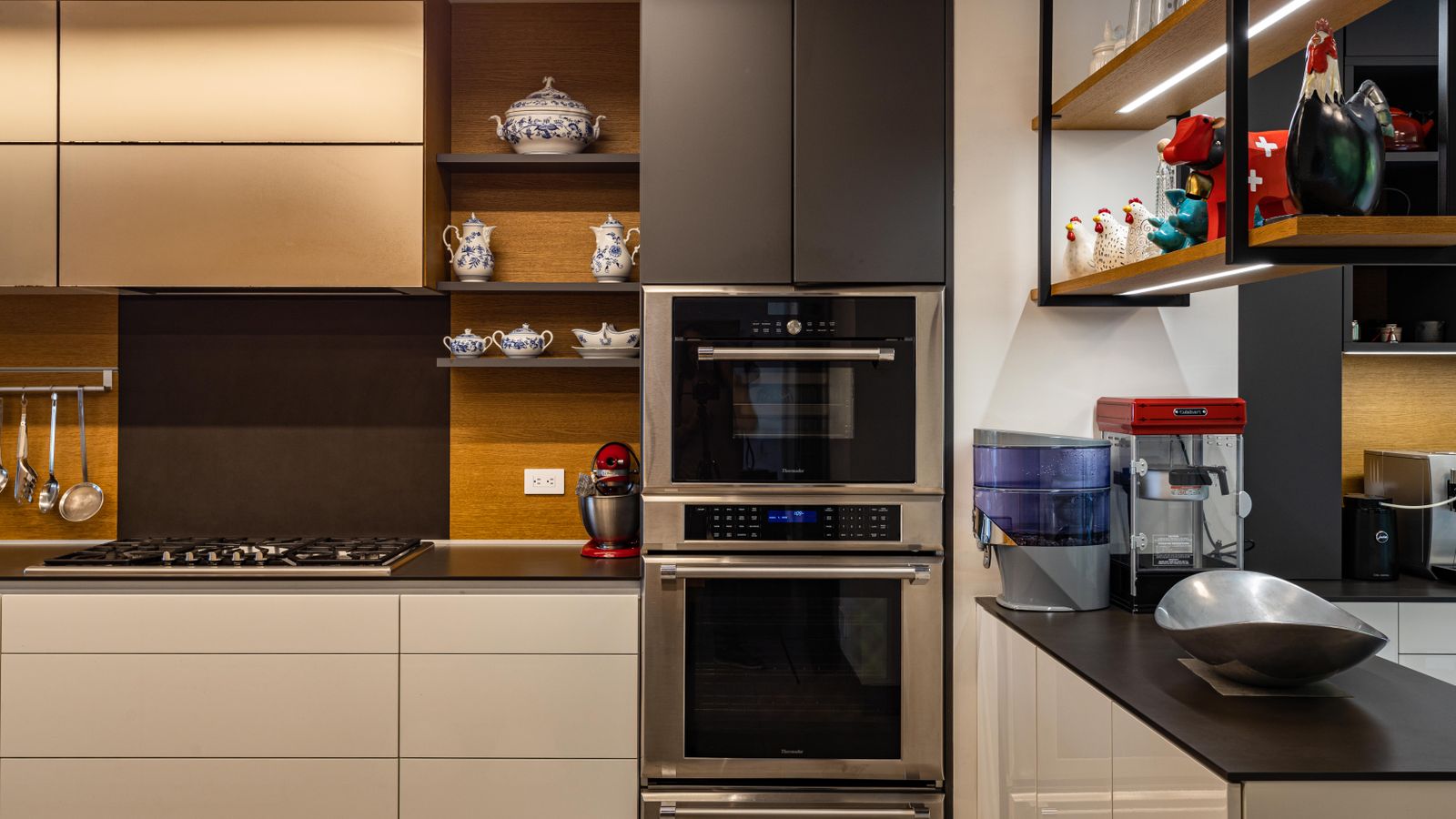
Speed ovens are typically installed as built-ins, replacing a wall oven or fitting into a dedicated cabinet cutout with standard 120V/240V wiring, similar to a conventional wall oven. Some countertop speed oven models exist too, needing only a standard outlet.
Home ice machines split into two camps: portable countertop units that just need power and a drain bucket, and built-in undercounter models that require a dedicated water line, drain, and sometimes 115V power on its own circuit. If you don’t already have plumbing near your intended installation spot, a built-in ice machine can add meaningful cost and complexity to the project.
Quick Installation Checklist
- Confirm whether you need built-in or portable/countertop
- Check for existing water line access if considering a built-in ice machine
- Verify outlet voltage and amperage match the appliance spec sheet
- Measure cabinet cutout height, width, and depth (including door clearance)
- Decide if professional installation is needed or if it’s a DIY swap
Step 3: Compare Capacity and Output Against Your Household Size
For a speed oven, capacity usually means interior cubic feet and whether it can fit a 9×13 baking dish or a small roasting pan. A 1.0-1.2 cubic foot interior fits most households of two to four; larger families may want to check for extra-wide interior specs before assuming any speed oven will fit their usual dishes.
For an ice machine, capacity means daily production (pounds of ice per 24 hours) and storage bin size. A household of two that occasionally hosts guests may be fine with a unit producing 12-15 pounds a day. Larger families, home bars, or frequent entertainers should look at units producing 25 pounds or more daily with a bin that holds a few pounds of reserve.
Step 4: Compare Everyday Convenience and Learning Curve
Speed ovens generally have more of a learning curve. Between convection-only, microwave-only, combination, and broil modes, plus preset recipe functions on smart models, it can take a few weeks to get comfortable dialing in results for your favorite meals. The payoff is real time savings once you know the settings.
Ice machines are almost entirely “set it and forget it.” Fill the reservoir, plug it in, and most units start producing ice within 10-15 minutes, cycling continuously as long as water and power are supplied. There’s very little day-to-day decision-making involved, which makes them easier to evaluate quickly in a showroom or via specs alone.
Step 5: Compare Maintenance and Long-Term Upkeep
Speed ovens need occasional interior wipe-downs, filter or vent cleaning (on models with a fan), and door seal checks to keep heat and microwave energy contained efficiently. Maintenance is light and infrequent – usually monthly.
Ice machines require more consistent attention. Mineral scale from tap water can build up in the ice-making mechanism, so most manufacturers recommend a descaling cycle every 1 to 3 months depending on your local water hardness. Skipping this step is the single most common reason ice machines under-produce or fail early, so factor recurring maintenance time into your decision, not just the purchase price.
Step 6: Compare Noise and Placement Considerations
Speed ovens run quietly during cooking cycles, with fan noise comparable to a standard convection oven – rarely a concern regardless of placement, since they’re used intermittently.
Ice machines, by contrast, run near-continuously and include a compressor plus periodic harvest cycles that can produce a noticeable clunk or hum. If you’re placing one in an open-concept kitchen near a living room, look specifically at the manufacturer’s decibel rating and consider models marketed as “quiet operation” for near-continuous use.
Step 7: Compare Total Cost of Ownership
Purchase price is only part of the picture. For speed ovens, factor in installation labor if you’re replacing a built-in wall oven, plus any cabinetry modification. For ice machines, factor in the water line installation (if built-in), filter replacements, and the descaling supplies mentioned above.
Energy use also differs: a speed oven draws power only while actively cooking, while an ice machine’s compressor cycles on and off around the clock, adding a small but constant line to your electricity use – worth noting if you’re comparing two appliances that otherwise seem similarly priced upfront.
Common Mistakes to Avoid
- Buying based on features you won’t use. A speed oven with a dozen presets is wasted if you’ll only ever reheat and roast.
- Underestimating ice machine water quality needs. Hard water without a filter shortens the appliance’s life significantly.
- Ignoring clearance for ventilation. Both appliance types need airflow space behind or around them – check the spec sheet, not just the front-facing dimensions.
- Skipping a test of your actual dishes. Bring your go-to baking dish or pitcher size measurements when shopping in person.
- Assuming built-in always beats countertop. A quality countertop model of either appliance can outperform a cheap built-in if space or budget is tight.
Safety Notes
Always match the appliance’s electrical requirements to a properly rated, grounded circuit – do not use extension cords for either a speed oven or an ice machine long-term. For built-in ice machines connected to a water line, use a licensed installer or follow the manufacturer’s plumbing instructions closely to avoid leaks behind cabinetry. Let a speed oven’s interior cool before cleaning, and never block its vents, since restricted airflow can affect both cooking performance and safety.
Which One Should You Buy First?
If your kitchen already handles ice needs fine (via a fridge dispenser or occasional store-bought bags) but you’re constantly frustrated by slow cooking times, start with a speed oven. If you regularly entertain, fill coolers for trips, or find your freezer’s ice tray never keeps up, prioritize the ice machine. Many households eventually add both, but sequencing the purchase around your most frequent pain point avoids buyer’s remorse.
For a closer look at top-rated options once you’ve decided on direction, browse our picks for speed ovens or our roundup of the best ice machines for homes. If instant hot water for tea, coffee, or cooking is also on your radar, it’s worth reviewing the best instant hot water dispensers as a complementary upgrade during the same kitchen refresh.
FAQ
Can a speed oven make ice or a built-in ice machine cook food?
No. These are single-purpose appliances despite both often being built into cabinetry – a speed oven only cooks, and an ice machine only produces ice.
Do I need a plumber for either appliance?
Only for a built-in ice machine with a dedicated water line. Portable ice machines and virtually all speed ovens need only standard electrical hookup.
Which appliance is better for small kitchens?
A countertop speed oven typically has a smaller footprint than a built-in ice machine, making it the easier fit for compact kitchens where cabinet space is limited.
How long do these appliances typically last?
With regular maintenance, a speed oven can last 8-10 years, and a well-maintained ice machine typically lasts 5-8 years, though descaling frequency significantly affects ice machine longevity.
Is it worth buying both at once?
Only if your budget and installation plan (electrical and plumbing) can support both without compromising quality on either. Otherwise, prioritize the one solving your most frequent daily frustration first.