Bookends seem like the simplest shelf accessory you can own, until they stop working the way you expect. Books lean, slide, tip over, or slowly migrate across the shelf despite your best efforts to keep them upright. If you have ever wondered why a perfectly good pair of bookends suddenly feels useless, you are not alone. Most bookend problems come down to a handful of predictable causes: mismatched weight, the wrong surface, poor placement, or simply the wrong type of bookend for your book collection. This guide walks through the most common issues people run into with bookends on shelves and gives you clear, step-by-step fixes for each one.
Before You Start: Diagnose the Problem
Troubleshooting bookends is much easier when you first identify exactly what is going wrong. Spend a minute observing the shelf in its normal state before touching anything.
- Do the books lean toward one side, or do they slowly drift across the shelf over days or weeks?
- Do the bookends themselves slide along the shelf when books are pushed against them?
- Is the shelf itself level, or does it tilt slightly toward one end?
- Are the bookends too light, too small, or mismatched in height for the books they are holding?
Once you know which symptom you are dealing with, you can jump to the matching fix below rather than guessing at solutions.
Tools and Materials You May Need
Most bookend fixes require nothing more than items you already have at home. Gather these before you begin so you are not interrupting the process halfway through:
- A soft cloth or microfiber towel for cleaning shelf surfaces
- A small level (a smartphone level app works fine)
- Felt pads or non-slip shelf liner
- A tape measure or ruler
- Optional: museum putty or removable adhesive strips for extra stability
Problem 1: Books Keep Sliding or Tipping Over
This is the most common complaint, and it almost always comes down to weight. Lightweight bookends made of thin metal, acrylic, or hollow plastic simply cannot resist the constant lateral pressure of a full row of hardcovers.
How to Fix It
- Remove the books and check the bookend’s weight by lifting it. If it feels light in your hand, it is likely too light for the job.
- Look for bookends with a solid metal, stone, or weighted base – these resist sliding far better than hollow designs.
- Reload the shelf with the heaviest books closest to the bookend, tapering to lighter books toward the open end.
- If replacement is not an option right now, add a strip of felt or rubber shelf liner underneath the bookend to increase friction against the shelf surface.
If you are shopping for a sturdier replacement, a dedicated resource on Bookends for Shelves can help you compare weighted and non-slip designs before you buy.
Problem 2: Bookends Slide Along the Shelf Themselves
Sometimes the books stay upright but the whole bookend slowly creeps forward or backward on a smooth, polished, or glass shelf. This happens because the bottom of the bookend has little to no grip on the surface.
How to Fix It
- Wipe down the shelf and the base of the bookend to remove dust, which reduces friction even further.
- Apply small felt or silicone grip pads to the underside of the bookend, spaced evenly across the base.
- For particularly slick surfaces like glass or lacquered wood, try a thin strip of non-slip drawer liner cut to the size of the base.
- Avoid placing bookends near the very edge of a shelf, where minor vibrations from foot traffic or nearby doors can nudge them out of position over time.
Problem 3: Bookends Scratch or Mark the Shelf Surface
Metal and unfinished wood bookends can leave scuffs, scratches, or discoloration on painted, laminate, or wood shelving, especially if they are moved often.
How to Fix It
- Check the base for sharp edges or exposed metal corners and sand or file them smooth if needed.
- Add self-adhesive felt pads to every corner that touches the shelf.
- Lift and place bookends rather than dragging them across the surface when rearranging books.
- For shelves that already show marks, a light coat of matching furniture polish or touch-up marker can minimize visible scuffing.
Problem 4: Bookends Look Mismatched or Out of Place with Your Decor
Functional problems aside, bookends that clash with the rest of a room can make an otherwise tidy shelf look cluttered or unfinished. This is a styling issue rather than a mechanical one, but it is one of the most common reasons people replace bookends altogether.
How to Fix It
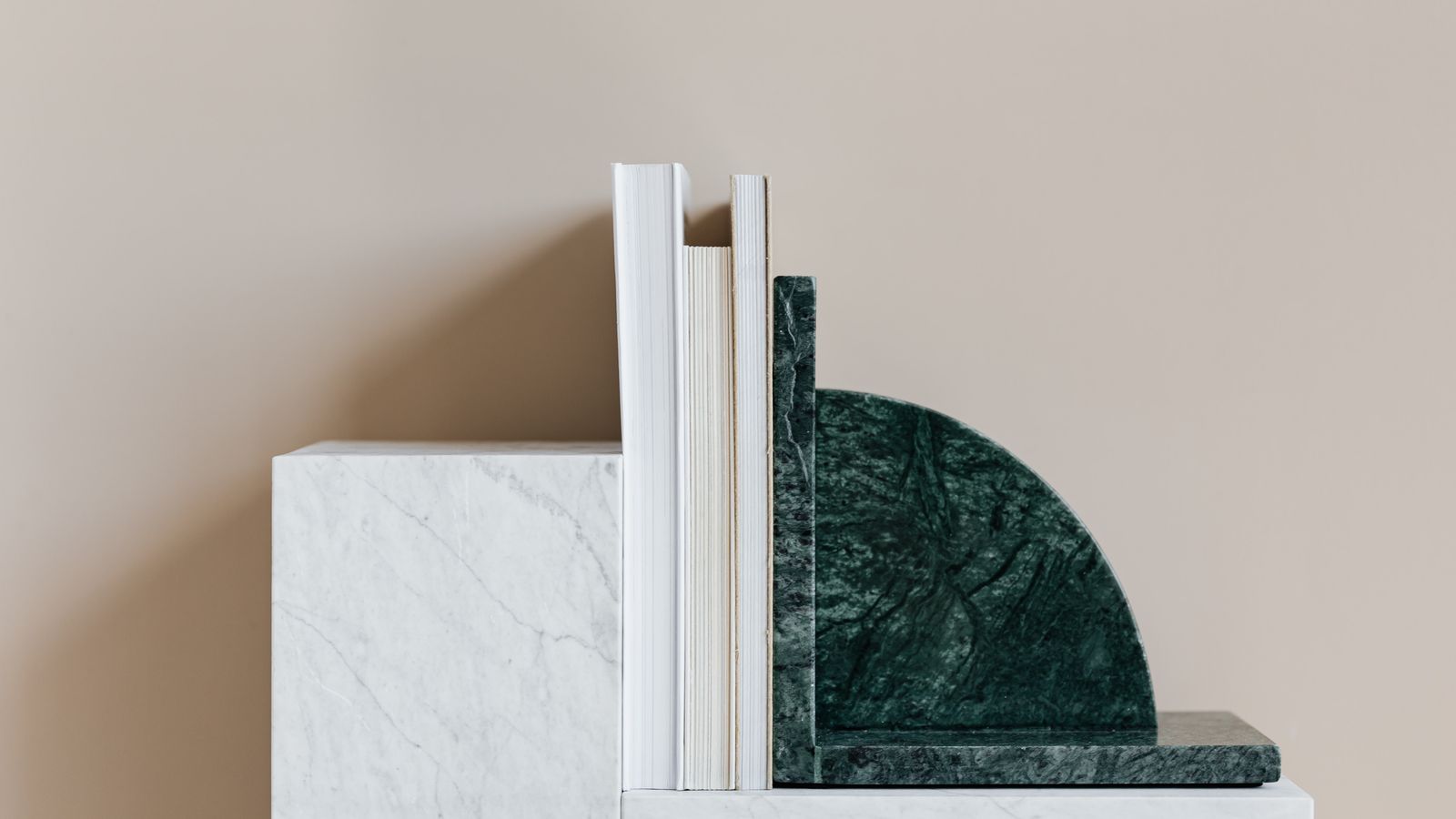
- Choose a finish (brass, matte black, natural wood, marble) that echoes at least one other accent already in the room, such as a lamp base or picture frame.
- Pair functional bookends with small decorative touches nearby, like a trailing plant or a set of best artificial plants tucked beside the books for a layered, curated look without the upkeep of live greenery.
- If your shelving backs onto a plain wall, consider adding removable wall decals behind the bookshelf to tie the whole vignette together without committing to paint or permanent decor.
Problem 5: Not Enough Weight to Hold a Full Row of Books
Even a well-designed bookend can be overwhelmed by an especially heavy or tall row of books, like oversized art books or a dense encyclopedia set.
How to Fix It
- Split large collections into two smaller sections with a bookend on each end instead of relying on a single pair for the whole shelf.
- Use L-shaped or angled bookends, which distribute pressure along the base of the books rather than relying purely on the vertical panel.
- If a shelf regularly holds oversized volumes, look for bookends explicitly rated for heavy-duty use rather than decorative sets designed for paperbacks.
Safety Notes
- Never overload a shelf beyond its stated weight capacity just to avoid buying a second bookend – this risks shelf sagging or collapse.
- Check that wall-mounted shelves are securely anchored before adding heavy stone or metal bookends, which add significant weight to the load.
- Keep bookends with sharp corners or pointed decorative elements out of reach of small children, especially on lower shelves.
- When applying adhesive pads or putty, test on a small hidden area first to make sure it will not damage the shelf finish.
Common Mistakes to Avoid
- Buying based on looks alone. A beautiful bookend that is too light for your book collection will fail within days.
- Ignoring shelf material. What works on carpeted or textured surfaces often fails on glass or polished wood.
- Overcrowding the shelf. Cramming too many books between bookends increases lateral pressure and accelerates sliding.
- Skipping the felt pads. This one small addition solves a surprising number of scratching and sliding complaints at once.
- Forgetting to check shelf level. Even a slightly tilted shelf can undo an otherwise solid bookend setup.
Quick Troubleshooting Checklist
- Confirm the shelf itself is level using a small level or phone app.
- Test bookend weight by hand – heavier, solid bases resist sliding best.
- Add felt or non-slip pads to the base of every bookend.
- Arrange books heaviest-to-lightest working outward from the bookend.
- Split oversized collections into two supported sections instead of one.
- Clean shelf surfaces regularly to maintain grip and prevent buildup.
FAQ
Why do my bookends keep falling over even with books in place?
This usually means the bookend is too lightweight for the books it is holding. Switch to a weighted or wide-based design, or add felt pads for extra grip against the shelf.
How do I stop bookends from scratching a wood shelf?
Add self-adhesive felt pads to every point of contact, and always lift bookends rather than sliding them when rearranging your shelf.
Can I use bookends on a glass shelf?
Yes, but glass is especially slick, so non-slip pads or a thin liner strip underneath the base are essential to prevent sliding.
What is the best way to arrange books between bookends?
Place the heaviest, tallest books closest to the bookend and taper down to lighter or shorter books toward the open side of the row for the most stable arrangement.
Do decorative bookends work as well as plain functional ones?
Many decorative bookends work just as well, as long as they have a solid, weighted base. Style and function are not mutually exclusive if you choose the right materials.
Most bookend problems are fixable without buying anything new, though a sturdier or better-matched set can make ongoing maintenance much easier. If your current setup is a lost cause, browsing options built specifically for stability and style is a good next step, and a few thoughtful decor touches nearby can turn a fixed shelf into a genuinely finished display.