If your kitchen counter is already crowded and your ventilation options are limited, an indoor smokeless grill can be one of the most useful small-space appliances you own. It lets you sear burgers, grill vegetables, and cook chicken thighs indoors without setting off the smoke alarm or filling your apartment with lingering odors. But not every smokeless grill is actually built for tight kitchens – some models are bulkier than a full-size air fryer or take up more counter real estate than they’re worth. This guide walks you through exactly how to pick the best smokeless indoor grill for a small kitchen, apartment, dorm room, or condo, so you get real grilling performance without sacrificing precious counter space.
Step 1: Measure Your Available Counter and Storage Space First
Before you look at a single product listing, grab a tape measure. Open the cabinet or shelf where you plan to store the grill when it’s not in use, and measure the width, depth, and height of that space. Then measure the stretch of counter you’re willing to dedicate to it during cooking. Many smokeless grills advertised as “compact” are still 15-18 inches wide and 10-12 inches deep once you include the drip tray and handles – bigger than most people expect from a photo. Write these numbers down and keep them in your phone; they will save you from returning an oversized grill later.
Account for Clearance, Not Just Footprint
Smokeless grills need airflow around the vents to work properly, and many models release steam or a light haze upward during cooking. Leave at least 6 inches of clearance above the unit and away from upper cabinets, curtains, or wall-mounted shelving. If you’re tucking the grill under a cabinet, check the manufacturer’s clearance guidelines before you commit.
Step 2: Understand How Smokeless Grills Actually Work
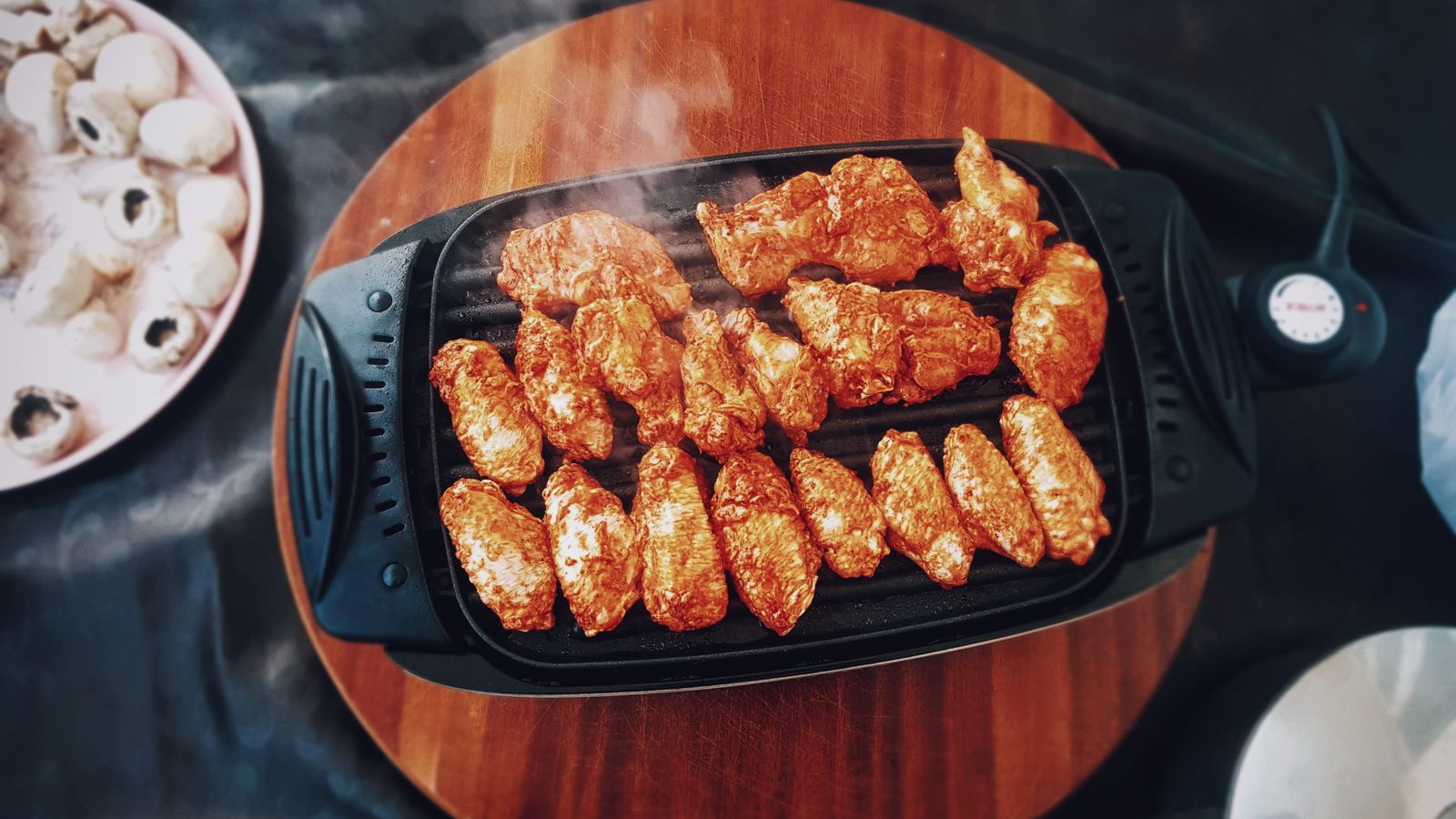
Most indoor smokeless grills use a combination of a downdraft fan, a water-filled drip tray, and a non-stick ridged cooking plate. As fat and juices drip off the food, the fan pulls smoke down and away from the surface, where it’s cooled by the water below instead of rising into your kitchen. This is different from a countertop panini press or a griddle, which have no smoke-management system at all. Knowing this mechanism matters because the size of the fan housing and water reservoir is often what makes a grill bulkier than it needs to be – and it’s the first thing to check when comparing footprints.
Grill Plate Size vs. Overall Unit Size
Two grills can have nearly identical cooking surfaces but very different overall footprints, because one has a slimmer housing around the fan and reservoir. When comparing options, look specifically at the cooking surface dimensions (usually listed in square inches) separately from the overall product dimensions. A grill with a smaller housing-to-cooking-surface ratio gives you more usable grilling area per inch of counter space.
Step 3: Match Grill Capacity to How You Actually Cook
It’s tempting to buy the smallest grill available to save space, but an undersized cooking surface just means more batches, more time, and more cleanup. Think honestly about your typical cooking session:
- Cooking for 1-2 people: A compact grill with roughly 130-160 square inches of surface (enough for 4-6 burgers) is usually the sweet spot.
- Cooking for 3-4 people: Look for at least 200 square inches, even if it means a slightly larger footprint – you’ll thank yourself when you’re not grilling in three shifts.
- Frequent entertaining in a small space: Consider a grill with a removable plate that stores flat, so the appliance itself can shrink down when not cooking for a crowd.
Step 4: Prioritize Easy Storage Features
In a small kitchen, how a grill stores away matters almost as much as how it cooks. Look for these space-saving design details when comparing models:
- Flat, vertical storage: Some grills are designed to stand on end in a cabinet, cutting their footprint nearly in half when not in use.
- Detachable, stackable components: A grill plate, drip tray, and lid that separate cleanly and nest together are far easier to tuck into a cabinet than a single bulky unit.
- Wrapped, tucked-in cords: Built-in cord storage prevents a tangle of cable from eating into your drawer space.
- Lightweight construction: If you’re pulling the grill out and putting it away every time you use it, weight matters. Aim for something you can lift with one hand.
Step 5: Check Power Draw and Heat Output for Small Kitchens
Small apartment kitchens sometimes share a circuit with a microwave or a coffee maker, so it’s worth checking the wattage of any grill you’re considering, especially if you plan to run multiple appliances at once. Most countertop smokeless grills draw between 1200 and 1800 watts. Higher wattage typically means faster preheat and better searing, which is especially useful if your unit has a smaller plate – you’ll want it to reach temperature quickly rather than compensating with a longer cook time.
Step 6: Prioritize Ventilation-Friendly Design (Even Without a Range Hood)
The whole appeal of a smokeless grill is cooking indoors without a vent hood, but “smokeless” doesn’t always mean zero smell or zero haze – it means dramatically reduced smoke. For the smallest kitchens, look for:
- A tight-fitting lid or splatter guard that traps grease spatter close to the cooking surface.
- An adjustable or high-powered fan setting so you can boost extraction on high-fat foods like sausage or bacon.
- A large enough water reservoir to actually cool the smoke rather than just wetting the pan – undersized reservoirs are a common complaint in cramped kitchens where every bit of odor control counts.
Even with a great smokeless design, it’s smart to crack a window or run a small fan during longer cooking sessions in a studio apartment or small condo.
Step 7: Prioritize Easy Cleanup for Tight Kitchens
Without a dishwasher or a large sink, cleanup speed becomes a real factor in a small space. Favor grills with:
- A non-stick ceramic or PTFE-coated plate that wipes clean with a damp cloth.
- A dishwasher-safe drip tray and lid, if you do have access to a dishwasher.
- A grill plate that’s fully removable rather than fixed in place, so you can rinse it in the sink instead of scrubbing an awkward built-in surface.
Common Mistakes to Avoid
- Buying based on photos alone. Product photography rarely conveys true scale – always check the listed dimensions against your own measurements.
- Ignoring the drip tray’s water capacity. A shallow reservoir needs refilling mid-cook, which is a hassle if you’re grilling a full meal.
- Choosing the biggest grill “just in case.” If it doesn’t fit in your storage space, it will end up permanently taking over your counter – or gathering dust in a closet.
- Skipping the wattage check. An underpowered grill in a small unit can mean longer cook times and less effective searing.
- Overlooking cord length. A short cord can force you to leave the grill closer to an outlet than your layout allows.
Safety Notes for Grilling Indoors
Even the best smokeless indoor grill produces heat and some residual smoke, so a few safety habits go a long way in a compact kitchen:
- Keep the grill at least a few inches from walls, curtains, and paper towel holders while it’s in use.
- Never leave a hot grill unattended, especially in a small space where surfaces are close together.
- Unplug the unit and let it cool completely before moving or storing it.
- Use the tools provided (usually silicone-tipped tongs or spatulas) to avoid scratching the non-stick coating, which can affect the smokeless performance over time.
Where to Start Comparing Models
Once you know your space constraints, cooking capacity needs, and cleanup preferences, the easiest next step is comparing a curated shortlist rather than scrolling endless listings. Our roundup of Smokeless Indoor Grills breaks down footprint, wattage, and storage design across several well-reviewed models, which is a good place to weigh your specific measurements against real specs. If you’re building out a broader countertop lineup for a small kitchen, it’s also worth browsing slow cookers that share similarly compact, stackable designs.
Frequently Asked Questions
How much counter space does a smokeless indoor grill actually need?
Most compact models need roughly 15 by 12 inches of counter space while cooking, plus a few inches of clearance on each side for ventilation. Always check the manufacturer’s exact dimensions rather than relying on the marketing photos.
Are smokeless grills really smoke-free?
Not entirely – they dramatically reduce smoke output compared to an open grill pan, but some haze and cooking odor is still normal, especially with fattier foods. Good ventilation habits, like cracking a window, help in small apartments.
Can I use a smokeless grill in a studio apartment without a range hood?
Yes, that’s exactly the use case they’re designed for. Just be sure to run the fan on its highest setting for greasy foods and keep a window cracked if possible.
What size grill is best for one or two people?
A grill with 130-160 square inches of cooking surface is typically enough for 4-6 burgers or a couple of chicken breasts per batch, which suits most single or two-person households without unnecessary bulk.
Do smokeless grills work well for vegetables too?
Yes – the ridged plate design that helps meat sear also works well for sliced vegetables like zucchini, peppers, and asparagus, making it a versatile single appliance for small kitchens.
Final Thoughts
Picking the best smokeless indoor grill for a small space comes down to matching real measurements – your counter, your storage cabinet, your typical serving size – against the grill’s actual footprint and capacity, not just its marketing copy. Prioritize models with efficient housing-to-plate ratios, easy-to-store components, and strong ventilation performance, and you’ll end up with an appliance that earns its spot in a tight kitchen rather than becoming clutter. Once you’ve nailed down your must-have specs, compare a shortlist of real options in our guide to Smokeless Indoor Grills to find the model that fits your space best.